
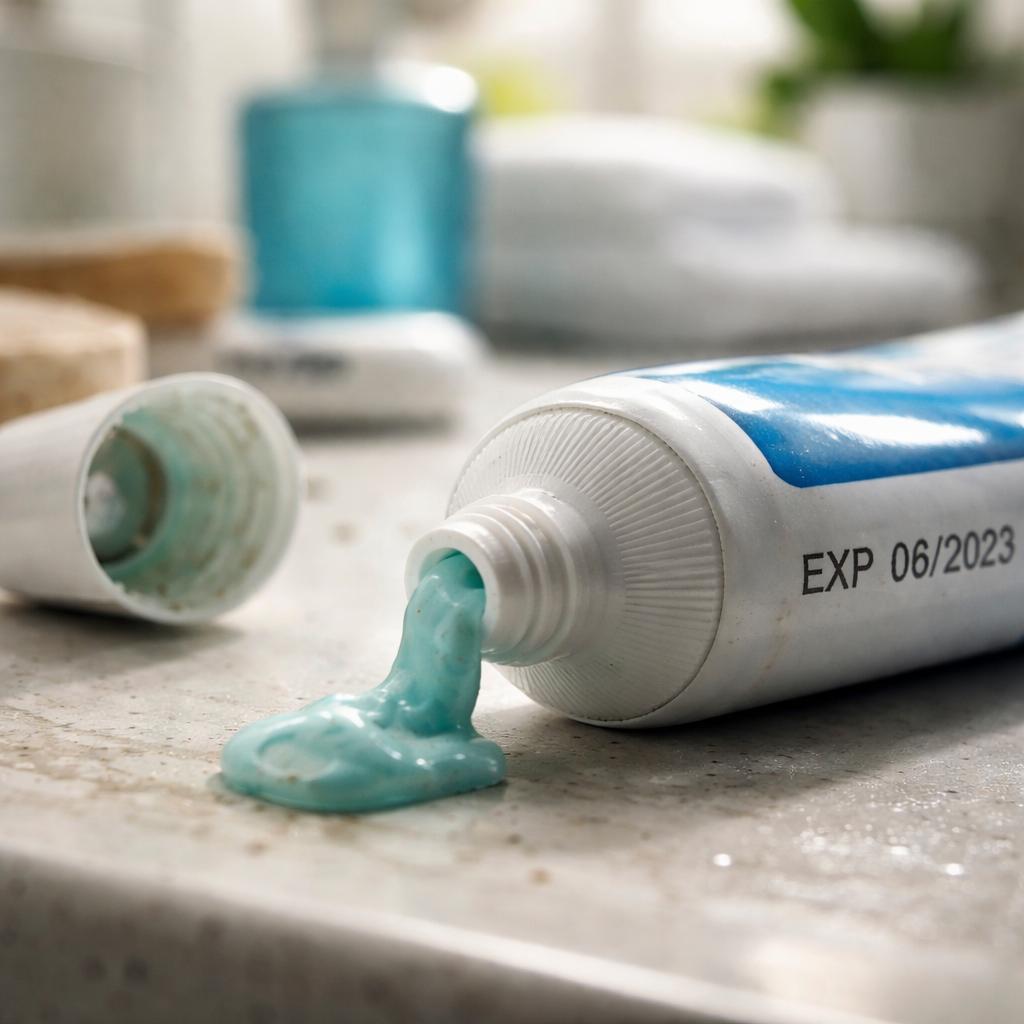
Most people have been there — you reach for your toothpaste in the morning and notice a date stamped on the tube that passed months ago. The question of whether is it safe to use expired toothpaste is more common than you might think, and the answer is less alarming than the word “expired” suggests — but there are still a few things worth knowing before you keep brushing away.
What the expiration date on toothpaste actually means
Unlike expired food or medication, toothpaste doesn’t suddenly become dangerous after its use-by date. The date printed on the packaging indicates the period during which the manufacturer guarantees the product will perform as intended — meaning the active ingredients remain stable and effective at the stated concentrations.
In the United States, the FDA requires toothpastes containing fluoride to carry an expiration date, specifically because fluoride is considered an active drug ingredient. The concern isn’t toxicity after the date passes — it’s efficacy. Fluoride can degrade over time, which means the protection it offers against cavities may gradually diminish.
What actually changes in toothpaste after expiration
The changes are mostly chemical and textural, not dangerous. Here’s what can happen to toothpaste as it ages past its printed date:
- Fluoride concentration decreases, reducing its ability to remineralize enamel and prevent tooth decay
- The texture may become grainy, dry, or separated, making it less pleasant to use
- Flavoring agents break down, which can affect taste — often making it more bland or slightly off
- Preservatives lose their effectiveness, slightly increasing the chance of microbial growth in the tube
- Whitening compounds or baking soda may become less active over time
None of these changes make expired toothpaste immediately harmful to use once or twice in a pinch. However, relying on it as your daily oral care product for months past its date is a different matter.
The fluoride question — why it matters more than you’d expect
Fluoride is not just a buzzword on packaging. It plays a documented role in strengthening tooth enamel and reversing early-stage demineralization — the process that leads to cavities. When fluoride degrades, the toothpaste essentially becomes a cleaning paste without its most clinically meaningful ingredient.
Dentists consistently emphasize that the mechanical act of brushing removes plaque — but it’s the fluoride that provides lasting protection against decay. Removing that element from the equation matters over time.
If you use expired toothpaste occasionally, your oral health won’t immediately suffer. But if expired fluoride toothpaste becomes a regular part of your routine, you may be brushing consistently without one of the key protective benefits.
How long past expiration is still reasonable?
This is the practical question most people actually want answered. There’s no universal rule, but dental professionals generally suggest that toothpaste used within one to two years of its expiration date is unlikely to cause harm. The degradation is gradual, not immediate.
| Time past expiration | Expected condition | Risk level |
|---|---|---|
| 1–3 months | Mostly unchanged | Very low |
| 3–12 months | Mild texture or taste changes; some fluoride degradation | Low to moderate |
| 1–2 years | Noticeable changes in consistency; reduced efficacy | Moderate |
| 2+ years | Significant degradation; preservatives may have failed | Higher — replace it |
These are general estimates. The actual rate of degradation depends on how the toothpaste was stored — heat, humidity, and direct sunlight all accelerate breakdown of the active ingredients.
Storage habits that make a real difference
Even before expiration, poor storage shortens the useful life of toothpaste significantly. The bathroom might seem like the obvious place to keep it, but bathrooms tend to be humid and warm — exactly the conditions that speed up ingredient breakdown.
- Keep toothpaste away from direct sunlight and heat sources
- Store it in a cool, dry area — a cabinet works better than an open shelf near the shower
- Always cap the tube tightly after use to prevent air exposure
- Avoid storing toothpaste near cleaning products or anything with strong chemical vapors
Non-fluoride and natural toothpastes — different rules apply
Natural or fluoride-free toothpastes often rely on plant-derived ingredients, essential oils, and fewer synthetic preservatives. This means they may degrade faster than conventional fluoride toothpaste, and the absence of preservatives increases the likelihood of microbial contamination once the tube has been opened and used over time.
If you use a natural toothpaste, the expiration date deserves more attention — not less. The lack of long-lasting chemical stabilizers means the window between optimal and degraded is often shorter than with standard formulations.
Signs that a tube should go in the bin regardless of the date
Sometimes expiration dates aren’t even needed to make the call. There are clear sensory cues that indicate toothpaste is no longer fit for use:
- A sour, rancid, or strongly off smell when you open the tube
- Visible mold or any discoloration that isn’t part of the original product
- A completely separated or hardened texture that doesn’t return to normal with mixing
- An unusual burning or bitter taste that wasn’t present before
Trust your senses. If something about the product seems wrong, the cost of a new tube is far smaller than the risk of introducing something problematic into your mouth twice a day.
So — brush with it or bin it?
Using expired toothpaste once or twice when you have no alternative is unlikely to hurt you. It will still clean your teeth mechanically, and the mint flavor — even if slightly faded — will leave your mouth feeling fresher than not brushing at all. The real issue is the long-term routine: if you’re relying on toothpaste that’s well past its date, you may be skipping out on cavity protection without realizing it.
Check the tube you’re using right now. If it’s within a few months of its expiration date, carry on. If it’s been sitting in a drawer since a time you can barely remember, it’s probably not doing you the full service your teeth deserve. Fresh toothpaste is inexpensive — your enamel is not replaceable.