
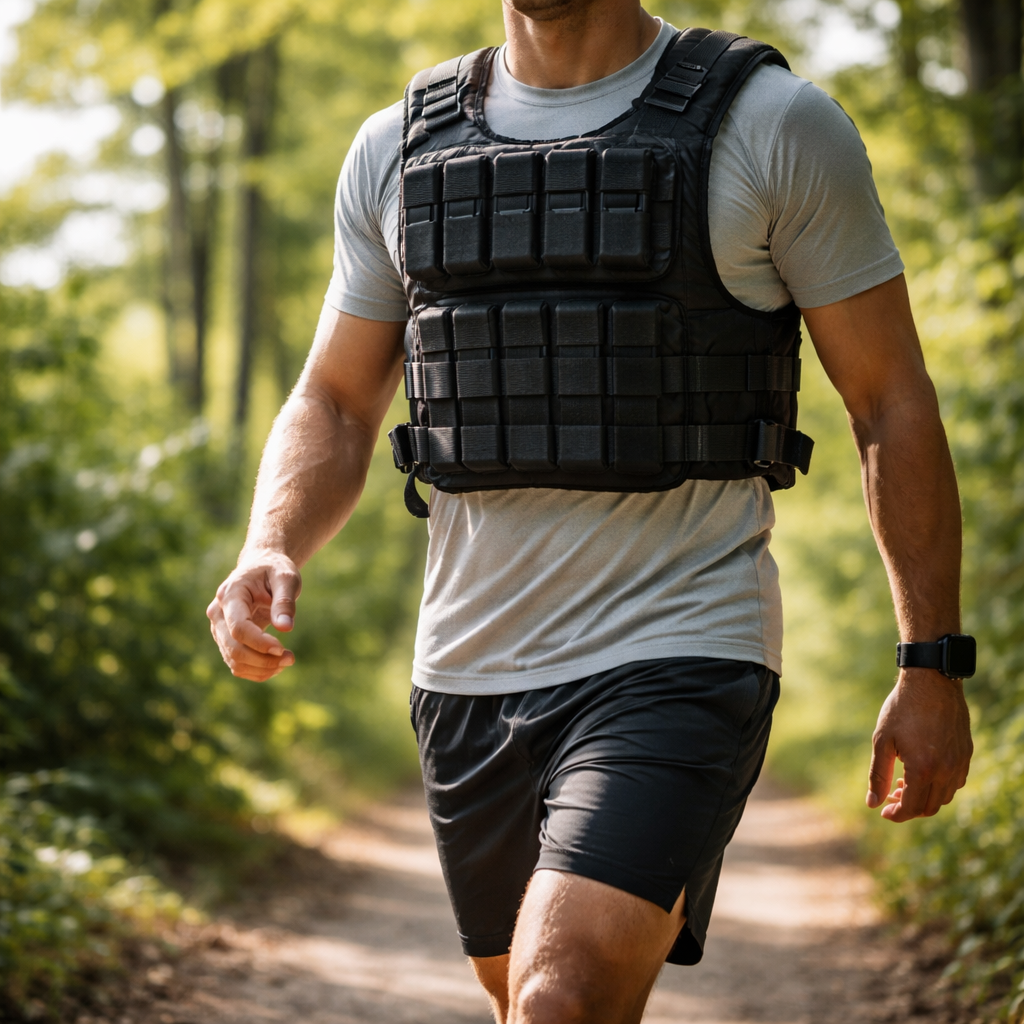
Adding extra weight to a simple walk sounds counterintuitive — yet sports scientists have been studying this approach for decades, and the findings are more nuanced than most fitness blogs let on. If you have ever wondered whether is it safe to use a weighted vest while walking, the honest answer depends on several factors that go well beyond just strapping on some extra pounds and heading out the door.
What actually happens to your body when you walk with added load
Walking with a weighted vest increases the mechanical demand placed on your musculoskeletal system. Your muscles, tendons, and joints must work harder to move the same distance at the same pace. Research published in various sports medicine journals consistently shows that carrying additional load of around 10–15% of body weight elevates heart rate, oxygen consumption, and calorie expenditure compared to unloaded walking at the same speed.
This is precisely why weighted vests attract people who want more from their daily walk without increasing speed or distance. You essentially intensify the session while keeping the movement pattern familiar and low-impact by nature.
The real risks — and who should pay attention
The benefits sound compelling, but the risk profile is equally real. The most commonly reported issues with weighted vest walking include joint stress, altered posture, and overuse injuries when load or duration increases too rapidly.
People who need to be especially cautious include those with existing lower back problems, hip or knee osteoarthritis, spinal compression issues, or a history of stress fractures. The additional vertical load amplifies ground reaction forces with every step, and that adds up quickly over a 30–60 minute walk.
Physical therapists routinely advise that anyone with a pre-existing musculoskeletal condition should consult a healthcare professional before introducing weighted walking into their routine — not to discourage it, but to structure it appropriately.
Healthy individuals with no joint or spinal concerns generally tolerate weighted vest walking well when they follow sensible progression principles. The keyword here is progression — starting light, walking shorter distances, and gradually building over several weeks rather than immediately loading up with the heaviest vest available.
How to choose the right vest weight
There is a widely cited guideline that suggests keeping vest weight at or below 10% of your body weight for walking purposes. Some experienced athletes push closer to 15%, but this upper range carries higher injury risk and is generally not recommended for beginners or casual fitness walkers.
| Experience level | Recommended vest weight | Walking duration to start with |
|---|---|---|
| Beginner | 5% of body weight or less | 15–20 minutes |
| Intermediate | 5–10% of body weight | 20–40 minutes |
| Advanced | Up to 10–15% of body weight | 30–60 minutes |
Beyond the number on the scale, vest fit matters enormously. A poorly fitted vest shifts during movement, throws off your gait, and increases the risk of chafing and uneven load distribution. Look for a vest that sits snugly against your torso, distributes weight evenly between front and back panels, and does not restrict your shoulder movement or breathing.
Posture is the detail most people overlook
One of the less obvious risks of walking with a weighted vest is postural compensation. When the load is unfamiliar or too heavy, many people unconsciously lean forward, round their shoulders, or shorten their stride. These compensations reduce efficiency and increase stress on the lumbar spine and hip flexors.
Paying attention to how you carry yourself throughout the walk is not just about aesthetics — it directly affects safety. A useful check is to periodically scan your body: are your shoulders relaxed and pulled slightly back? Is your gaze forward rather than down at the ground? Is your core lightly engaged rather than completely slack?
Benefits that make it worth the effort
When approached correctly, weighted vest walking delivers a compelling range of benefits that regular walking simply cannot match at the same time investment.
- Increased calorie burn without needing to jog or run
- Greater cardiovascular stimulus at comfortable walking pace
- Improved bone density over time due to added mechanical loading
- Stronger glutes, hamstrings, and core muscles from managing extra resistance
- Better endurance capacity that transfers to other physical activities
The bone density benefit is particularly worth highlighting. Weight-bearing exercise is one of the key factors in maintaining and improving bone mineral density, which matters for long-term skeletal health. Adding a vest amplifies this stimulus compared to unloaded walking, making it potentially valuable for people focused on osteoporosis prevention.
Signals your body sends that you should not ignore
Knowing when to back off is just as important as knowing how to progress. Certain sensations during or after weighted walking are worth taking seriously rather than pushing through.
- Sharp or stabbing pain in any joint — stop immediately
- Persistent lower back ache that does not resolve with rest
- Numbness or tingling in the legs or feet
- Unusual knee swelling after the session
- Heel pain that worsens over several walks
Muscle fatigue and mild soreness in the legs or glutes after the first few sessions is normal and expected — that is simply your body adapting to a new stimulus. The distinction between adaptation discomfort and injury warning signs becomes clearer with experience, but when in doubt, rest and consult a professional rather than guessing.
Walking smarter, not just heavier
Weighted vest walking fits best into a broader, balanced movement routine rather than being used as the only form of exercise. Pairing it with mobility work, stretching, and adequate recovery days helps your body absorb the training stress without accumulating damage over time.
The practice is genuinely safe for most healthy adults who respect gradual progression, choose appropriate load, and pay attention to how their body responds. It is not a shortcut, but it is an intelligent way to get more out of a form of movement that humans are built for. The vest is just a tool — and like any tool, its value depends entirely on how thoughtfully it is used.