
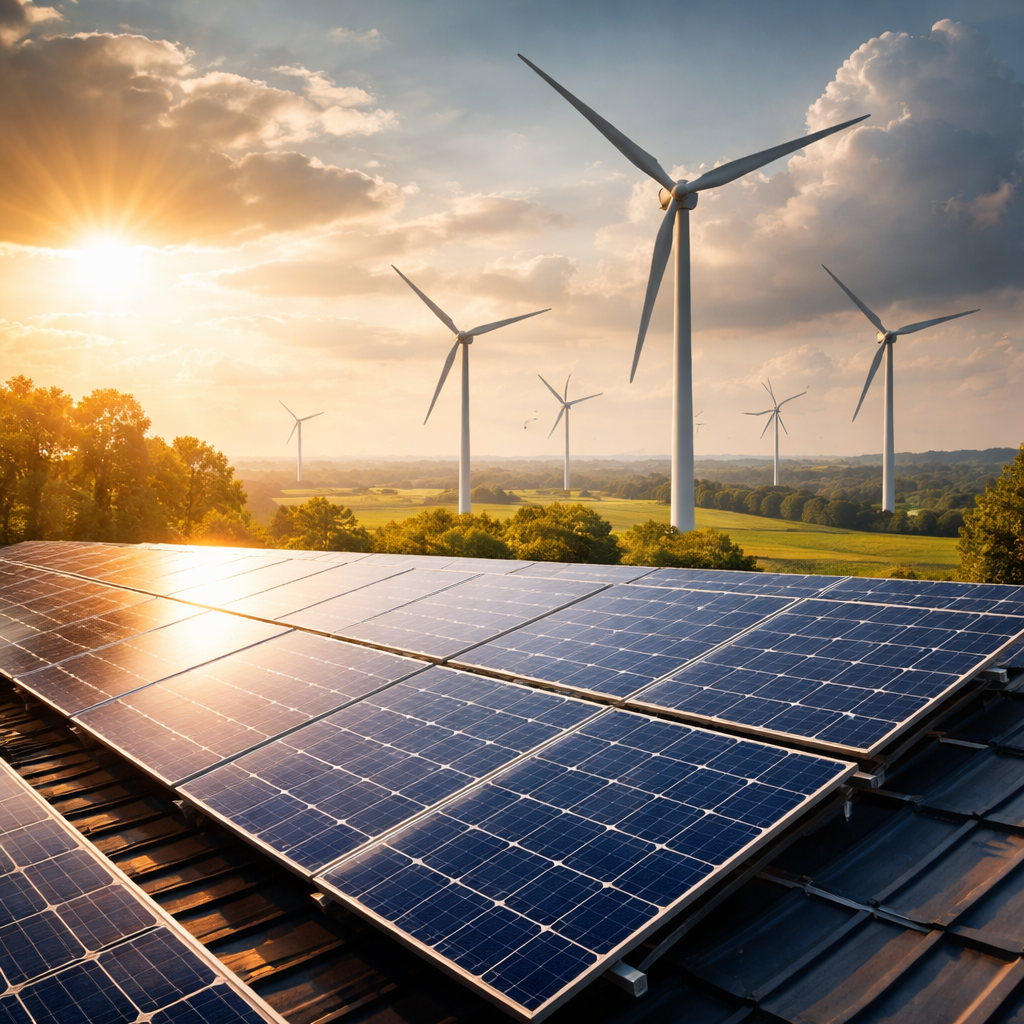
Most people underestimate just how fast the global energy landscape is shifting — and the facts about renewable energy reveal a transformation that’s already well underway, not some distant promise. Solar panels now sit on rooftops in places that once seemed too cloudy for them to be viable. Wind turbines generate electricity in regions where coal plants dominated for decades. The numbers behind this shift are striking, and understanding them changes the way you think about your energy bill, your country’s policy choices, and the planet’s near-term future.
Why the sun and wind are outpacing expectations
For a long time, the assumption was that renewable energy would always be more expensive than fossil fuels — a noble but costly alternative. That assumption has been overturned. Solar photovoltaic electricity has dropped in cost by more than 90% over the past decade and a half, making it the cheapest source of new electricity generation in history, according to data from the International Energy Agency. Wind energy has followed a similar trajectory, particularly offshore wind, which has seen dramatic cost reductions driven by larger turbines and improved installation techniques.
This isn’t a matter of subsidies propping up weak technology. In many regions, building new solar or wind capacity is now cheaper than running existing coal or gas plants. The economics have flipped, and investors have noticed.
Numbers that put the scale in perspective
Raw statistics can sometimes feel abstract, but the following figures are worth pausing on:
- Renewable energy sources — including hydropower, wind, solar, geothermal, and biomass — already account for roughly one-third of global electricity generation.
- Solar energy alone has the theoretical potential to power the entire planet many times over; the Earth receives more energy from the sun in one hour than humanity uses in an entire year.
- China, the United States, and the European Union are the largest installers of renewable capacity, but developing countries are expanding solar access at remarkable speed.
- Hydropower remains the largest single source of renewable electricity worldwide, though solar is rapidly gaining ground.
- Offshore wind turbines can now reach heights exceeding 250 meters — taller than most skyscrapers — allowing them to capture stronger, more consistent winds.
“The transition to clean energy is happening faster than almost anyone predicted just ten years ago — and the main drivers are cost, not policy.”
— International Renewable Energy Agency (IRENA) analysis
Renewable energy storage: the problem that’s being solved
One of the most common objections to solar and wind energy is intermittency — the sun doesn’t always shine, and the wind doesn’t always blow. This is a real challenge, but the solutions are advancing rapidly. Battery storage technology, particularly lithium-ion batteries, has followed a cost curve similar to solar panels: prices have fallen dramatically while capacity has grown.
Grid-scale battery installations are now operational across multiple continents, storing excess solar energy during peak production hours and releasing it when demand is high. Beyond batteries, pumped-storage hydropower remains the most widely used form of energy storage globally, essentially using surplus electricity to pump water uphill, then releasing it through turbines when needed.
| Storage Technology | Primary Use | Maturity Level |
|---|---|---|
| Lithium-ion batteries | Grid balancing, home storage | Commercial scale |
| Pumped-storage hydro | Large-scale grid storage | Mature, widely deployed |
| Green hydrogen | Industrial energy, fuel cells | Early commercial stage |
| Flow batteries | Long-duration storage | Emerging technology |
Jobs, economies, and the human side of the energy transition
The renewable energy sector has become one of the fastest-growing sources of employment worldwide. Solar panel installation, wind turbine maintenance, grid engineering, and battery manufacturing are creating millions of jobs — many of them in regions that previously depended on fossil fuel industries. According to IRENA, the sector employs tens of millions of people globally, and that number continues to grow as capacity expands.
This matters beyond the environment. Energy security is another compelling driver: countries that import oil and gas are increasingly motivated to develop domestic renewable resources to reduce their exposure to volatile global commodity prices. A solar farm built domestically produces electricity without depending on international supply chains or geopolitical stability in distant regions.
Common myths that the data keeps dismantling
Despite the momentum, misinformation about clean energy remains widespread. A few myths are worth addressing directly:
- Myth: Renewable energy is unreliable for baseload power. Reality: Countries like Denmark routinely generate more than 100% of their electricity demand from wind on certain days, exporting the surplus to neighboring grids.
- Myth: Solar panels produce more carbon during manufacturing than they save over their lifetime. Reality: The energy payback period for modern solar panels is typically between one and four years, and panels last 25–30 years.
- Myth: Renewables require too much land. Reality: solar installations can be combined with agriculture (agrivoltaics), placed on rooftops, or deployed offshore, dramatically reducing land-use pressure.
Where the energy mix is heading
The trajectory is clear even if the pace remains debated. Fossil fuels still dominate global energy supply when you account for heating, transportation, and industrial use — not just electricity. But the electricity sector is decarbonizing faster than any other, and electrification of transport and heating means that a cleaner electricity grid has multiplying benefits across the whole economy.
Green hydrogen — produced by using renewable electricity to split water into hydrogen and oxygen — is emerging as a potential solution for industries that are difficult to electrify directly, such as steel production and long-haul shipping. It’s not yet cheap enough to compete at scale, but the cost curve is moving in the right direction.
What makes the current moment genuinely different from earlier optimistic predictions about clean energy is that the economics are now driving the transition independently of political goodwill. Technology costs, investor preferences, and grid data are all pointing in the same direction — and understanding that is perhaps the most important thing anyone curious about the future of energy needs to take away from the conversation.