
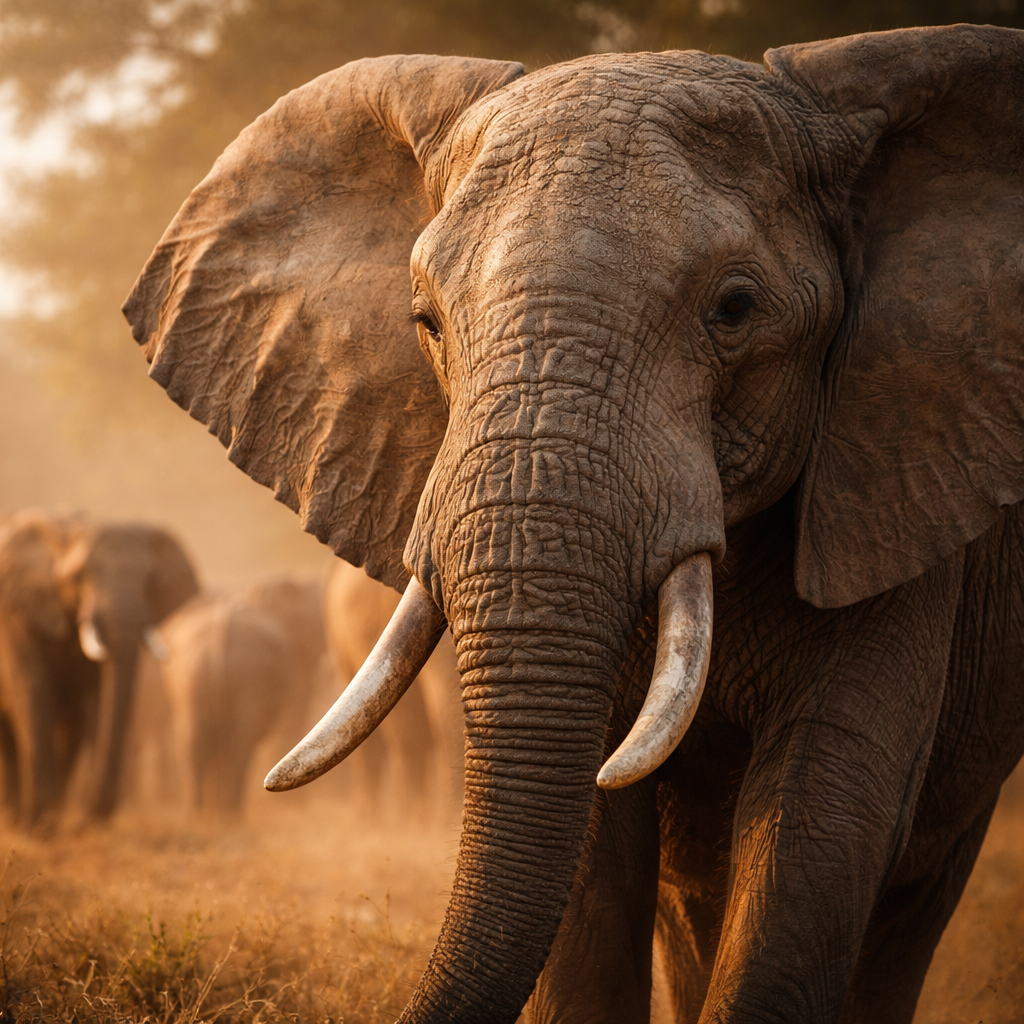
When researchers tracked a matriarch elephant recognizing the calls of over 100 other elephants she hadn’t encountered in years, the scientific community had to rethink what animal memory actually means. Facts about elephants and their memory keep surfacing in behavioral studies, and each new finding tends to be more striking than the last — not because elephants are mysterious, but because their cognitive abilities are genuinely well-documented and measurable.
What “elephant memory” actually means in scientific terms
The phrase “elephants never forget” gets tossed around casually, but the science behind it is far more specific than the idiom suggests. Elephants possess one of the largest brains among land mammals, and their hippocampus — the region associated with long-term memory formation — is proportionally developed in a way that supports complex spatial and social recall.
What sets elephant memory apart is not just its duration but its function. They don’t simply store information passively. They use it to navigate, make decisions, and maintain social bonds across decades. A matriarch leading her herd to a water source she visited 12 years ago isn’t following instinct alone — she’s retrieving and applying stored spatial knowledge.
How elephants recognize individuals — and why it matters
Elephants identify other individuals through multiple sensory channels simultaneously: scent, vocalization, visual cues, and even ground vibrations. Studies conducted on African elephant populations showed that herds can distinguish between calls of familiar and unfamiliar elephants, responding with measurably different behaviors.
Research published in Animal Behaviour demonstrated that elephants could recognize the vocalizations of up to 100 other individuals — a level of social recognition comparable to some primate species.
This individual recognition extends to humans as well. Elephants living near human settlements have been documented remembering specific people — distinguishing between those who posed a threat and those who did not — sometimes after gaps of several years. This isn’t anecdotal; it’s supported by behavioral observation data from wildlife reserves in Kenya and Zimbabwe.
Key facts that reveal the depth of elephant cognition
Rather than listing trivia, it helps to look at what these facts collectively point to — which is a picture of an animal with active, purposeful memory use.
| Cognitive ability | What it demonstrates |
|---|---|
| Long-term spatial memory | Navigating to water and food sources across vast distances, recalling locations visited years prior |
| Social memory | Recognizing family members, allies, and rivals even after long separations |
| Emotional memory | Returning to the bones of deceased relatives and displaying mourning-like behavior |
| Threat recognition | Identifying poaching zones and human settlement patterns, adjusting movement accordingly |
| Mirror self-recognition | Passing the mirror test, suggesting a degree of self-awareness linked to memory of self |
Each of these abilities has been observed and documented in field research — not in captivity alone, where behaviors can be influenced by training. Wild elephant populations demonstrate these traits independently.
The role of matriarchs in preserving collective memory
Elephant herds are matriarchal, and this structure has a direct connection to memory. The oldest female in a group carries the most accumulated knowledge — about migration routes, seasonal water sources, the behavior of predators, and even the locations of safe calving grounds.
Studies comparing herds led by older matriarchs versus younger ones found that groups with experienced leaders had significantly higher survival rates during droughts. The older females remembered where to find resources that the rest of the herd had never encountered. When a matriarch dies — particularly through poaching — the knowledge loss affects the entire group’s ability to navigate and survive.
Grief, mourning, and the emotional dimension of elephant memory
One of the more quietly remarkable aspects of elephant behavior is how they respond to death. When elephants encounter the remains of another elephant — particularly a family member — they often stop, investigate carefully, and sometimes stay for extended periods. They touch bones with their trunks, carry tusks short distances, and return to the same site repeatedly over months or years.
This behavior has been interpreted by researchers as evidence of emotional memory — the capacity to remember individuals not just as data points but with an associated emotional weight. Whether this constitutes grief in the way humans experience it remains a careful scientific debate, but the observable behaviors are consistent and well-documented across different elephant populations on multiple continents.
- Elephants have been observed returning to the site where a family member died, sometimes years later
- They show particular interest in the skulls and tusks of deceased individuals compared to bones of other species
- Calves orphaned early show behavioral changes consistent with trauma, including disrupted social development
- Reunion behaviors after long separations — including vocalizations, touching, and spinning — suggest strong positive emotional associations with remembered individuals
What this means beyond the animal kingdom
Understanding elephant memory isn’t just fascinating for its own sake — it has practical implications for conservation strategy, captive welfare standards, and even neurological research. Elephants are increasingly used as comparative models in studies of memory disorders, because their neural architecture shares certain structural similarities with the human brain, particularly in limbic system development.
From a conservation standpoint, recognizing that herds carry generational knowledge changes how wildlife managers approach elephant relocation and family group disruption. Moving a herd without its matriarch isn’t just removing one animal — it’s effectively erasing a living database of survival knowledge that took decades to accumulate.
What the research consistently shows is that elephant memory is not a metaphor. It’s a measurable, functional system — one that shapes individual behavior, group dynamics, and long-term survival in ways we’re still mapping out. The more closely scientists look, the more structured and purposeful it turns out to be.