
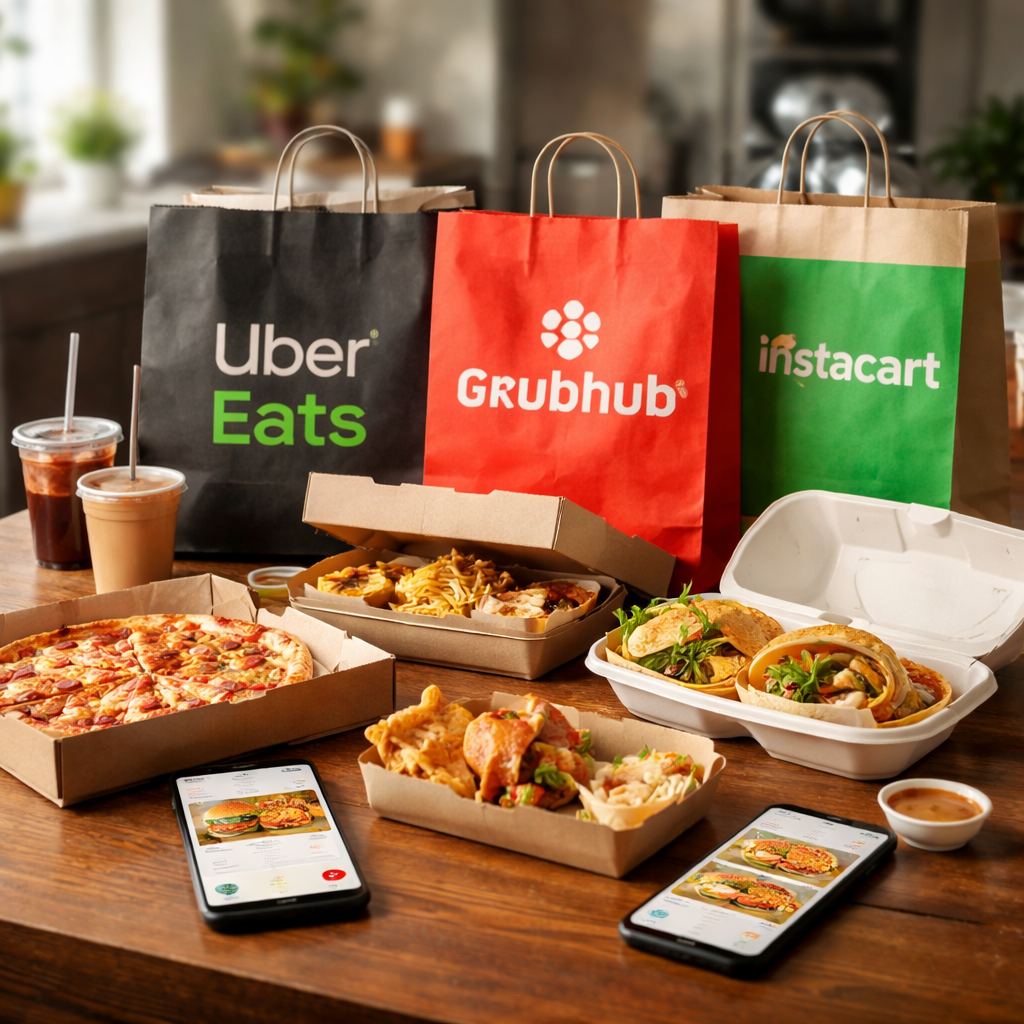
Most people who look for an alternative to DoorDash aren’t unhappy with food delivery itself — they’re unhappy with fees, limited restaurant selection, or slow support when something goes wrong. The good news is that the food delivery market has grown significantly, and today there are several strong platforms worth knowing about before placing your next order.
Why people start looking beyond DoorDash
DoorDash holds a large share of the U.S. food delivery market, but that dominance doesn’t mean it’s the right fit for everyone. Delivery fees, service charges, and subscription costs can add up quickly. In some cities, restaurant coverage feels repetitive, and estimated delivery times don’t always reflect reality. On top of that, customer service experiences vary widely depending on your location and the specific issue.
None of this makes DoorDash a bad product — it’s just not a universal solution. Depending on where you live, what you’re ordering, and how often you use delivery services, a different platform might offer better value, more variety, or a smoother overall experience.
The main competitors worth your attention
Here’s a closer look at the most widely used food delivery apps that genuinely compete with DoorDash across different categories — pricing, restaurant variety, speed, and special features.
| Platform | Best for | Subscription option | Availability |
|---|---|---|---|
| Uber Eats | Wide restaurant selection, grocery delivery | Uber One | U.S. and international |
| Grubhub | Loyalty perks, campus delivery | Grubhub+ | Mostly U.S. |
| Instacart | Grocery and household items | Instacart+ | U.S. and Canada |
| Postmates | Late-night and convenience orders | Merged with Uber Eats | Select U.S. cities |
| Caviar | Upscale and local restaurant focus | None standalone | Select U.S. cities |
Uber Eats
For most users switching away from DoorDash, Uber Eats is the natural first stop. The platform has a massive restaurant network, consistent app performance, and real-time tracking that’s generally reliable. If you already use Uber for rides, the Uber One membership bundles both services at a combined discount, which can make the math work in your favor if you order frequently.
Uber Eats also integrates grocery delivery through partnerships with retailers like Kroger and Albertsons, which is useful if you want a single app for both food and household essentials.
Grubhub
Grubhub has been in the delivery space longer than most of its competitors. Its loyalty program rewards regular users with perks like free food and exclusive offers. The platform also has strong penetration on college campuses and in dense urban areas. One drawback to keep in mind: Grubhub’s restaurant coverage can be thinner in suburban and rural areas compared to DoorDash or Uber Eats.
Instacart
Instacart isn’t technically a restaurant delivery app, but it deserves a mention because many people use DoorDash for grocery runs and convenience items. Instacart partners with hundreds of retailers — from Costco and Aldi to local supermarkets — and offers same-day delivery in most urban and suburban areas. If your main use case is stocking your fridge rather than ordering dinner, Instacart is a more focused and often more affordable choice.
The best delivery app isn’t the most popular one — it’s the one that covers your favorite restaurants at a price that doesn’t feel like a punishment for not cooking.
Factors that should actually drive your decision
Choosing between delivery platforms isn’t really about brand loyalty. It comes down to a few practical variables that most comparison articles gloss over.
- Your location matters more than anything. Some platforms have strong driver networks in major cities but almost no coverage in mid-sized towns. Always check what’s actually available in your area before committing to a subscription.
- Subscription math only works if you order regularly. If you order delivery more than two or three times per week, a membership like Uber One or Grubhub+ typically pays for itself. If you order occasionally, paying per order without a subscription is smarter.
- Restaurant exclusives are real. Certain restaurants partner exclusively with one platform. If there’s a specific place you order from consistently, check which app they’re listed on first.
- Minimum order thresholds affect actual costs. Many platforms waive delivery fees only if you hit a minimum order amount. Factor that into your per-order calculation, not just the stated delivery fee.
- Pickup options can cut costs significantly. Most delivery apps also support order-ahead for pickup, which eliminates delivery and service fees entirely. If you’re heading out anyway, this option is often overlooked.
A note on regional and local delivery apps
National platforms get most of the attention, but regional delivery services often outperform them in specific cities. Apps like Bite Squad (active in parts of the Midwest and South), ChowNow (which focuses on independent restaurants), and local courier services affiliated with specific restaurant groups can offer lower fees and faster delivery times because they operate on a smaller, more manageable scale.
ChowNow is worth a separate mention because it operates differently from other platforms. Instead of charging customers extra fees, it charges restaurants a flat subscription, which means the final price you see is often closer to what you’d pay at the restaurant itself. If supporting local businesses matters to you, this model aligns better with that value.
Tipping and hidden fees — what to actually watch for
One frustration shared across almost every delivery platform is fee transparency. Delivery fee, service fee, small order fee, expanded range fee — the labels change, but the result is the same: a $15 meal becomes a $26 order by checkout. Before assuming a DoorDash alternative will be cheaper, run a test order on two or three platforms for the same restaurant (if it’s available on multiple) and compare the final totals, not just the listed delivery fee.
Tips are another variable. While tipping is optional in terms of app mechanics, delivery drivers rely on them as a core part of their income. The platform you choose doesn’t change this reality — but some apps, like Uber Eats, allow you to adjust the tip after delivery, which gives you flexibility if something goes wrong with your order.
What actually makes the switch worth it
Switching platforms isn’t always about finding something dramatically better. Sometimes it’s about finding something that fits your actual habits more closely. A person who orders from local spots three times a week has different needs than someone who uses delivery once a month during busy work periods.
Try running two apps in parallel for a few weeks without committing to a subscription on either. Compare real delivery times, actual final costs, and how issues get resolved when they come up. That real-world test will tell you more than any feature comparison chart. Most apps offer first-order promotions or free trial periods for their membership tiers, which makes this kind of side-by-side comparison essentially free.
The delivery app market is competitive enough that platforms regularly update their pricing, coverage, and partnership deals. What’s true about fees or restaurant availability today may shift over time, so staying flexible and checking your options periodically is genuinely worth the effort.