
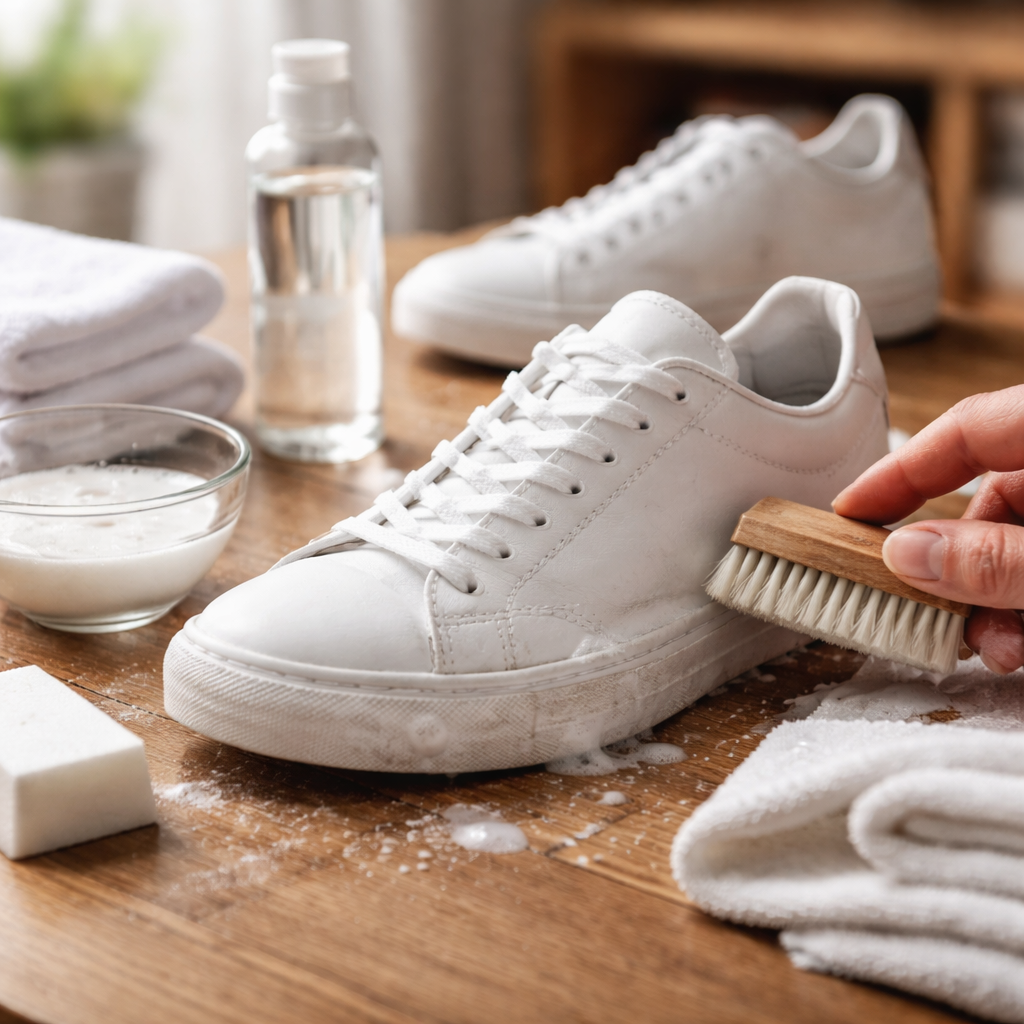
Most people have ruined a pair of white sneakers by scrubbing them too hard or using the wrong cleaner — and then wondered why they look worse than before. Knowing how to clean white sneakers properly isn’t just about removing dirt; it’s about understanding what your shoes are made of and matching your method to the material.
Why white sneakers get dirty faster than you think
White surfaces don’t actually attract more dirt than dark ones — they just show it instantly. The real problem is that most people wait too long before cleaning, which allows stains to bond with the material fibers. Mud, sweat, grass, and oil all behave differently on fabric, leather, and rubber, so a one-size-fits-all approach rarely works well.
Another overlooked factor is oxidation. Over time, white rubber soles turn yellow not from dirt but from a chemical reaction with UV light and oxygen. This means some discoloration requires a different strategy entirely — not just cleaning, but restoration.
What you actually need before you start
Before reaching for any product, check the care label inside your sneakers. Many people skip this and end up damaging the upper or causing the glue to loosen. Here’s a straightforward list of supplies that cover most cleaning scenarios:
- Soft-bristle brush or an old toothbrush
- Mild dish soap or a dedicated sneaker cleaner
- Baking soda and white vinegar (for canvas and fabric styles)
- Magic eraser sponge (for rubber midsoles)
- Microfiber cloths or paper towels
- Warm — not hot — water
Avoid bleach unless you’re working with a heavily stained canvas shoe and you dilute it heavily — even then, it can weaken fabric over time and cause yellowing if not rinsed completely.
Cleaning by material: the approach that actually works
The biggest mistake in sneaker care is treating every pair the same. Leather, canvas, mesh, and suede all require different handling. Here’s a practical breakdown:
| Material | Recommended Method | What to Avoid |
|---|---|---|
| Canvas | Baking soda paste, gentle scrub, air dry | Machine washing on high heat |
| Leather | Damp cloth with mild soap, then leather conditioner | Soaking, harsh chemicals |
| Mesh/Knit | Soft brush, light soapy water, press — don’t rub | Stiff brushes, excessive moisture |
| Rubber sole | Magic eraser or baking soda + toothbrush | Abrasive pads that scratch the surface |
| Suede | Dry suede brush, suede eraser | Water, liquid cleaners |
The baking soda method — simple but effective
For canvas and fabric sneakers, a paste made from baking soda and a small amount of dish soap is one of the most reliable home remedies available. Mix one tablespoon of baking soda with half a tablespoon of dish soap and a tablespoon of warm water. Apply with a toothbrush using small circular motions, then let it sit for about 10 minutes before wiping clean with a damp cloth.
Don’t rinse sneakers under running water unless the care label explicitly allows it. Too much moisture inside the shoe can cause the insole to swell, the adhesive to fail, and mold to develop if drying takes longer than expected.
After cleaning, stuff the inside with dry paper towels to help the shoe hold its shape and absorb internal moisture. Always air dry away from direct sunlight — heat can warp the structure and cause white materials to yellow.
Can you put white sneakers in the washing machine?
Yes — but with clear conditions. Canvas sneakers without leather panels or special embellishments can usually handle a gentle cold-water cycle inside a mesh laundry bag. Remove the laces and insoles beforehand and wash them separately. Use a small amount of liquid detergent rather than powder, which can leave residue in the fabric.
Leather and mesh sneakers should not go in the machine. The mechanical action and prolonged moisture exposure can crack leather, cause mesh to lose structure, and separate glued components. For these materials, hand cleaning is the only safe route.
Keeping laces white without replacing them
Laces are often the most visibly dirty part of a white sneaker, yet they’re also the easiest to refresh. Soak them in a bowl of warm water with a teaspoon of baking soda or a drop of white vinegar for 30 minutes. Then scrub lightly with a brush and rinse. For deeply stained laces, an oxygen-based stain remover works well without damaging the fibers.
Preventing yellowing on rubber soles
If your white rubber soles have already taken on a yellowish tint, a paste of baking soda and hydrogen peroxide applied with a toothbrush can help reverse mild oxidation. Leave it on in indirect sunlight for a couple of hours — the UV exposure actually activates the whitening process — then wipe clean. This method works particularly well on midsoles of athletic sneakers.
To slow down future yellowing, store sneakers away from windows and fluorescent lighting when not in use. Silica gel packets placed inside the shoes help control moisture, which accelerates material breakdown over time.
Making cleanliness last longer than a single wear
The most effective approach to white sneaker care is preventive rather than reactive. A light coat of water and stain repellent spray applied to clean, dry shoes creates an invisible barrier that makes future cleaning far easier. Reapply every few weeks depending on how frequently you wear them.
Wipe down sneakers after each wear — even a quick pass with a slightly damp cloth before dirt has time to dry makes a real difference over weeks and months. Small habits compound into noticeably cleaner shoes without requiring a deep-cleaning session every week. That’s the practical reality of owning white sneakers: a little consistent effort beats one intense scrubbing session every month.