
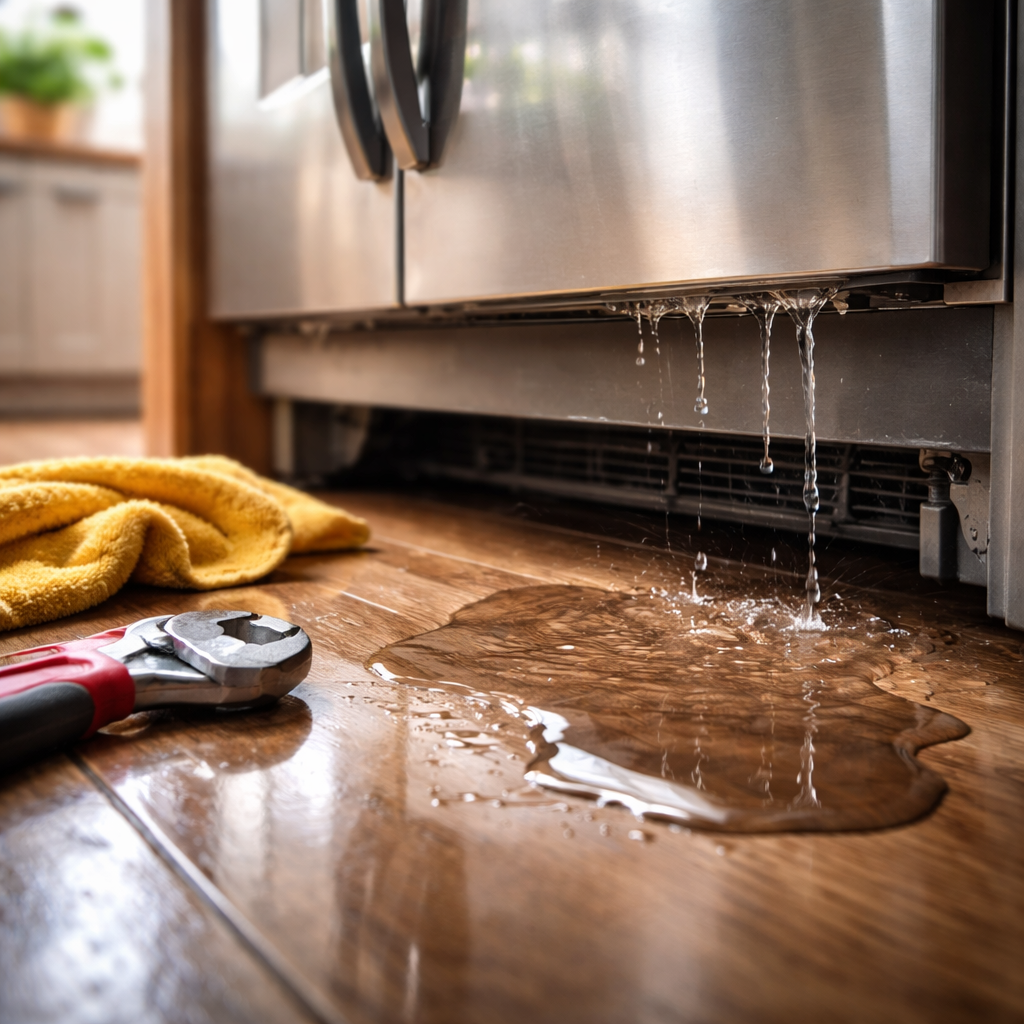
A puddle under your fridge or water dripping from the door seal is not something to ignore — and if you’ve been wondering how to fix a leaking refrigerator without calling a technician right away, you’re in the right place. Most refrigerator leaks are surprisingly manageable once you understand where the water is actually coming from.
Why refrigerators leak: the most common culprits
Before grabbing any tools, it helps to think like a diagnostician. Water doesn’t just appear — it travels. A leak at the front of your fridge might originate from a blocked drain at the back. This is one of the most frequent reasons homeowners end up frustrated when a quick fix doesn’t seem to hold.
Here are the main sources of refrigerator water leaks:
- Clogged or frozen defrost drain
- Damaged or misaligned door gasket (seal)
- Faulty water inlet valve or supply line
- Blocked or cracked drain pan
- Ice maker malfunctions
- Refrigerator not sitting level
Each of these has a distinct fix, and identifying the source correctly saves you both time and money. Let’s work through them one by one.
Unclogging the defrost drain
The defrost drain is responsible for channeling water produced during the automatic defrost cycle into the drain pan beneath the fridge. When it becomes blocked — usually by food debris or ice buildup — water has nowhere to go and pools inside the freezer compartment or leaks onto your floor.
If you notice water pooling inside the freezer or on the first shelf of your refrigerator section, a blocked defrost drain is almost always the reason.
To clear it, first locate the drain hole — typically found at the back wall of the freezer compartment. Use a turkey baster or a small funnel to pour a mixture of warm water and a small amount of baking soda into the drain. This helps dislodge both organic buildup and ice. For stubborn blockages, a flexible drain snake or a pipe cleaner can help clear the passage manually.
Once the drain flows freely, dry out the area and monitor it over the next 24 hours to confirm the issue is resolved.
Checking and replacing the door gasket
A worn or warped door seal allows warm, humid air to enter the fridge constantly. This causes excess condensation, which eventually makes its way to the floor. You can test your gasket with a simple paper test: close the door on a sheet of paper and try to pull it out. If it slides out easily, the seal isn’t doing its job.
| Gasket condition | What it means | Action needed |
|---|---|---|
| Pliable, no gaps, paper test fails | Seal is in good shape | No action needed |
| Slightly stiff but no visible cracks | Early wear | Clean with warm soapy water, apply thin layer of petroleum jelly |
| Cracked, torn, or deformed | Seal is failing | Replace the gasket entirely |
Replacement gaskets are widely available by fridge model number and are usually straightforward to install — most simply press into a channel around the door frame or are held in place by screws beneath a retaining strip.
Water supply line and inlet valve issues
If your refrigerator has an ice maker or a water dispenser, there’s a water supply line running to it — and this line is a common source of leaks. Inspect the connection at the back of the fridge and trace the line to the wall valve. Look for moisture, mineral deposits, or visible cracking in the tubing.
Plastic supply lines are particularly prone to developing small cracks over time due to pressure fluctuations. Replacing plastic tubing with braided stainless steel is a durable, long-term solution that many appliance technicians recommend.
The water inlet valve itself — the component that controls water flow into the fridge — can also fail. A leaking inlet valve usually results in water dripping at the back of the unit near the floor. Testing it requires a multimeter to check for electrical continuity; if it fails the test or shows visible corrosion, replacement is the only reliable fix.
The drain pan: often overlooked, easily fixed
Beneath almost every refrigerator sits a drain pan — a shallow tray that collects water from the defrost cycle and allows it to evaporate naturally. Under normal conditions, you’ll never notice it’s there. But if the pan cracks, overflows, or gets knocked out of position, it becomes a source of leaks that can be mistaken for something far more serious.
Pull out the fridge and locate the pan (usually accessed from the front or back at the base). If it’s cracked, a replacement pan is inexpensive. If it’s overflowing, the underlying cause is either excessive defrost water — pointing back to a drain issue — or a warm environment causing faster-than-normal evaporation to fail.
Level the fridge — it matters more than you think
An unlevel refrigerator disrupts the drainage design built into the appliance. Water that should flow toward the drain pan instead pools in unintended areas. Most fridges are designed to tilt very slightly backward — just enough to encourage proper drainage and help the doors swing shut on their own.
Use a bubble level on the floor of the fridge compartment. The bubble should sit just slightly toward the back — not perfectly centered.
Adjust the front leveling legs (found beneath the appliance) until the fridge sits at the correct angle. This small adjustment can resolve persistent leaking without any parts replacement at all.
When the leak points to something bigger
Most refrigerator leaks fall into the categories above, but occasionally the problem runs deeper — a failing compressor can affect internal temperatures and cause abnormal condensation, or a refrigerant leak (which presents as poor cooling rather than visible water) may require a certified technician. If you’ve worked through every possible DIY fix and the leak continues, or if the fridge simply isn’t keeping food cold alongside the leak, it’s time to bring in a professional.
That said, the vast majority of people who take the time to trace the water source carefully find a straightforward solution. A clean drain, a new door seal, or a replaced supply line covers nearly nine out of ten leaking fridge complaints — and none of those repairs require specialized training or expensive tools.