
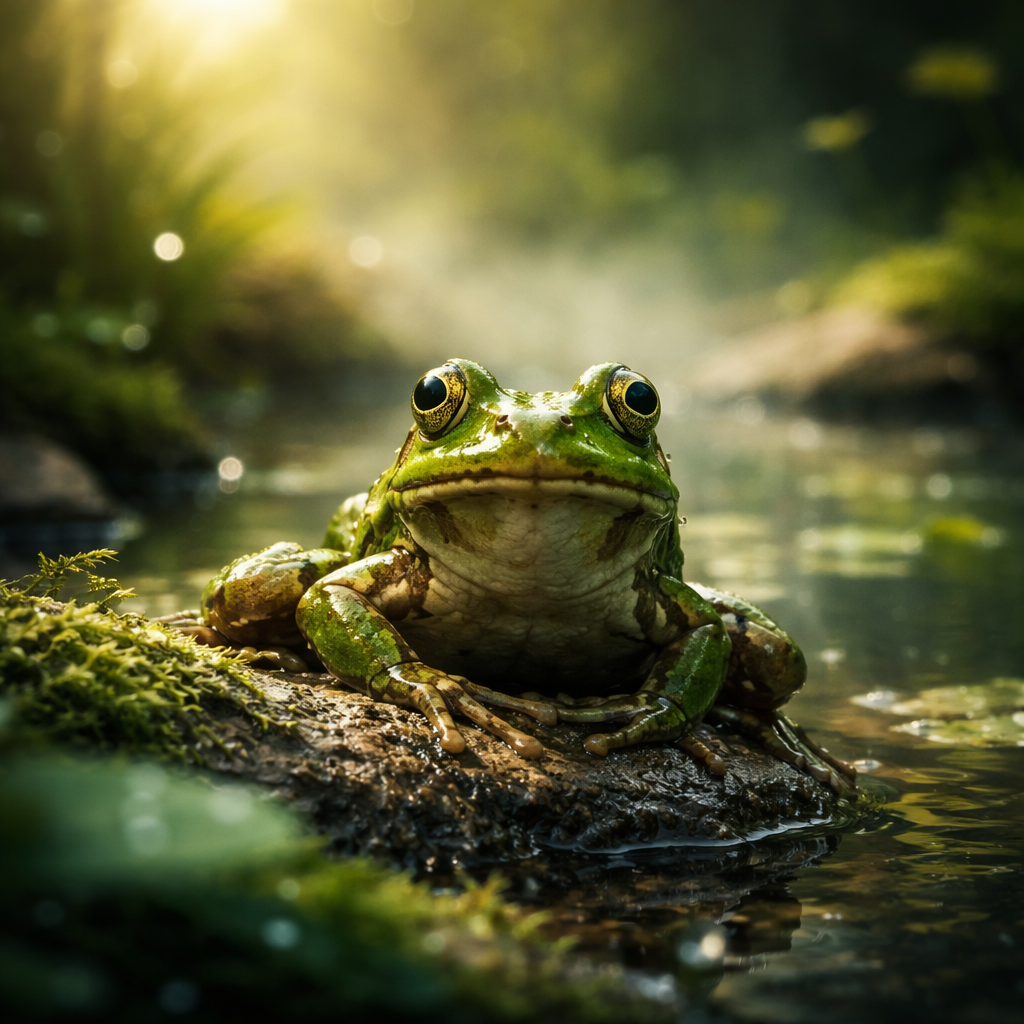
Many people wake up puzzled after a vivid dream involving frogs, and if you’ve ever wondered what does dreaming about frogs mean, you’re not alone — this is one of the more surprisingly common dream themes that cuts across cultures and age groups. Unlike nightmares about falling or being chased, frog dreams tend to sit in an ambiguous space: they can feel slightly unsettling or oddly peaceful, and that emotional contrast is actually a key part of interpreting them.
Why frogs appear in dreams more often than you’d think
Frogs are creatures of two worlds — water and land — and this duality is precisely why they carry such layered symbolic weight in dreams. Dream researchers and psychologists who study symbolic imagery often point out that animals appearing in dreams tend to reflect qualities the dreamer is either processing or yearning for. Frogs, specifically, are associated with transformation, adaptability, and cycles of renewal.
This isn’t arbitrary. A frog’s life cycle — from egg to tadpole to adult — is one of the most visually dramatic metamorphoses in the natural world. When this imagery surfaces in dreams, it often mirrors a transitional phase the dreamer is navigating in waking life: a career shift, a relationship change, or a period of personal growth that hasn’t quite settled yet.
What the specific details of your frog dream actually reveal
The general symbol of a frog is just the starting point. What gives the dream its real meaning is the context — the color, the behavior, the setting, and how you felt during the dream. These details shift the interpretation significantly.
| Dream scenario | Common symbolic interpretation |
|---|---|
| A frog jumping toward you | An opportunity or change is approaching; readiness is being tested |
| A frog in clean, clear water | Emotional clarity, healing, or a fresh emotional start |
| A dead frog | Fear of missed transformation or stagnation in personal growth |
| A large or unusually colored frog | Amplified emotions or a significant life event being processed |
| Many frogs around you | Feeling overwhelmed by choices or responsibilities |
| Holding a frog calmly | Comfort with change; acceptance of a transition |
It’s worth noting that the emotional tone of the dream often matters more than the visual details. Feeling afraid of a frog in a dream points to resistance toward something in your life, while feeling at ease suggests inner acceptance — even if the waking situation feels complicated.
Cultural and psychological layers behind frog dream symbolism
Across different traditions, frogs have carried remarkably consistent meanings. In ancient Egyptian culture, the frog goddess Heqet was a symbol of fertility and rebirth. In many Native American traditions, frogs are connected to rain, cleansing, and the arrival of abundance. Celtic symbolism associates them with healing and the transitional nature of water.
In Jungian psychology, animals in dreams are often seen as representations of instinctual forces — parts of the self that operate below conscious awareness. A frog, living between two elements, can symbolize the threshold between the unconscious and conscious mind.
From a psychological standpoint, Carl Jung’s framework of dream analysis suggests that recurring animal symbols carry what he called “archetypal” energy — meaning they tap into shared human experience rather than purely personal memory. This is one reason why people from vastly different backgrounds often describe similar emotional responses to frog dreams.
When frog dreams might be pointing to something specific in your life
Dream interpretation isn’t a formula, but there are patterns worth paying attention to. If frog dreams are recurring, they’re rarely random. Here are some real-life contexts in which people commonly report these dreams:
- During major life transitions such as moving, changing jobs, or ending a long-term relationship
- In periods of emotional healing after grief, burnout, or prolonged stress
- When facing a decision that requires a leap of faith with uncertain outcomes
- During pregnancy or major shifts in family structure, linking to the frog’s fertility symbolism
- When feeling emotionally “stuck” and subconsciously seeking signs of movement
None of these mean the dream is a prediction or warning. Rather, it’s your mind using a familiar symbolic language to process what’s already happening beneath the surface.
A practical approach to understanding your own frog dream
If you want to move beyond general symbolism and get something genuinely useful from a frog dream, the most effective approach is reflective journaling done immediately after waking. Research on dream recall consistently shows that the clearest memories fade within the first 10 minutes of waking, so speed matters here.
Practical tip: How to journal a dream effectively
- Write down every visual detail you remember, no matter how strange
- Record your emotional state during the dream — not what you think it meant, but what you felt
- Note what’s currently happening in your life that involves change, uncertainty, or growth
- Look for overlaps between the two — that’s usually where the meaning lives
This method works because it grounds the symbolic in the personal. A frog dream for someone going through a divorce carries different weight than the same dream for someone excitedly preparing for a new chapter. The symbol is a starting point; your life provides the context.
What frog dreams tend to leave behind
People who explore their frog dreams often describe a similar outcome: a quiet sense that they already knew what the dream was pointing to. That’s not mystical — it’s how symbolic thinking works. The dreaming mind doesn’t introduce new information so much as it repackages what you’ve been avoiding or haven’t had the space to process.
Whether you lean toward a psychological interpretation or find meaning in cultural symbolism, the frog in your dream is worth sitting with for a moment. It almost always shows up at a time when something is shifting — and that shift, even when uncomfortable, tends to be moving in the right direction.