
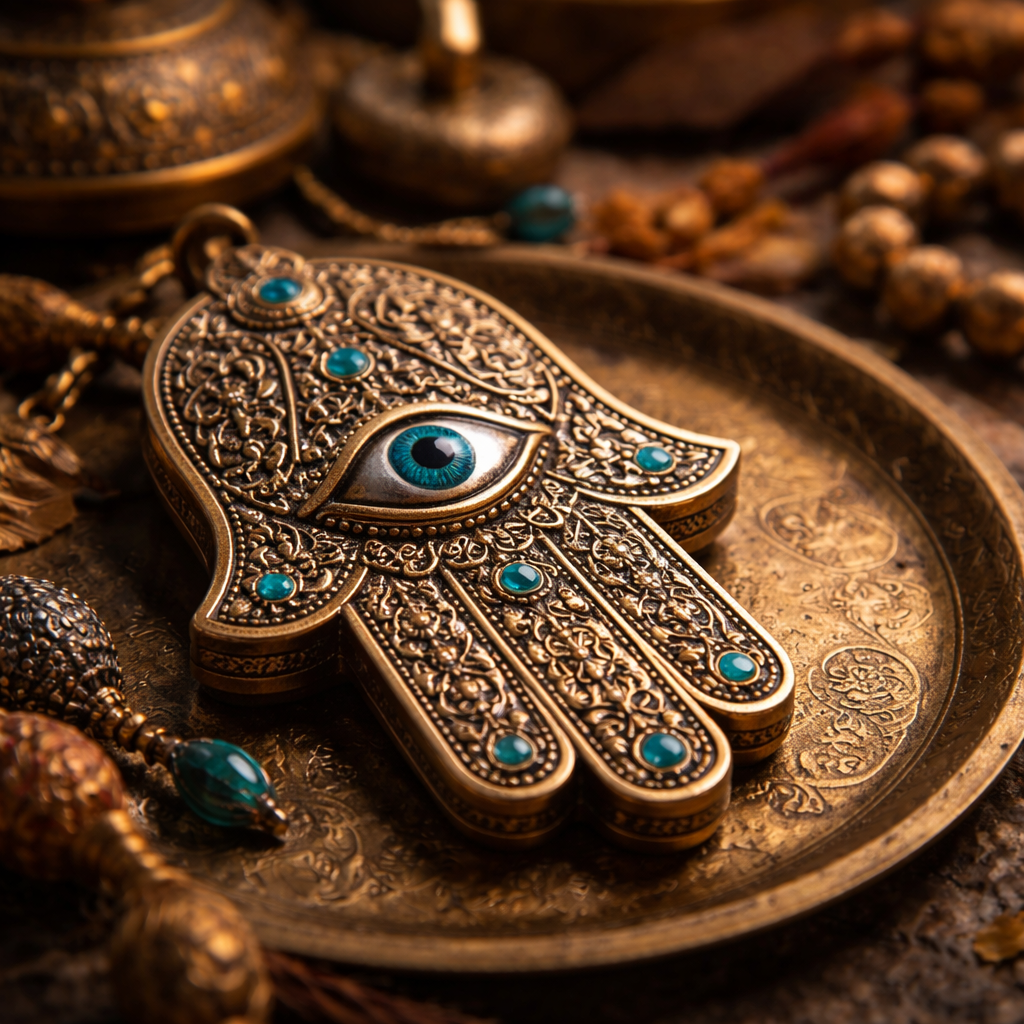
Few symbols have traveled across as many cultures, religions, and centuries as the hamsa — and understanding the meaning of hamsa hand protection reveals why this five-fingered amulet still resonates so deeply with people today. It is not simply a decorative motif. It carries a layered history that bridges Jewish, Islamic, and ancient Middle Eastern traditions in a way that few other symbols manage to do.
Where the hamsa actually comes from
The word “hamsa” comes from the Arabic and Hebrew word for five — referring directly to the five fingers of the hand. Archaeological evidence traces hand-shaped amulets to ancient Mesopotamia and Carthage, where they were used to ward off the evil eye and protect the home. The symbol later became embedded in both Islamic and Jewish traditions, each adding their own layer of meaning without losing the original protective intent.
In Jewish culture, the hamsa is often called the Hand of Miriam, referencing the sister of Moses and Aaron. In Islamic tradition, it is known as the Hand of Fatima, named after Fatima Zahra, the daughter of the Prophet Muhammad. Despite the different names and cultural contexts, both traditions center the symbol on feminine strength, divine protection, and the shielding of the bearer from negative energy.
What the five fingers represent
The number five is not arbitrary. Different traditions assign specific meanings to the five fingers, and while interpretations vary, there are common threads worth noting.
- In Kabbalistic teaching, the five fingers correspond to the five books of the Torah.
- In Islamic symbolism, they are linked to the Five Pillars of Islam.
- In a broader spiritual context, they are often associated with the five senses — a reminder to use awareness as a form of protection.
- Some traditions connect each finger to a different element or divine attribute, emphasizing balance and wholeness.
The way the hand is oriented also carries meaning. A hamsa with fingers pointing downward is said to attract good luck and abundance. A hamsa with fingers pointing upward acts as a barrier against harm — an open palm facing outward, as if saying “stop” to negative forces.
The evil eye connection
The hamsa and the evil eye are almost always discussed together, and for good reason. The evil eye — known as “ayin hara” in Hebrew and “nazar” in Turkish and Arabic traditions — is the belief that envy or malicious intent can cause real harm to a person, even unintentionally. The hamsa is one of the most recognized evil eye protection symbols across cultures.
“The hand held up against misfortune is one of the oldest human gestures — the hamsa simply formalized that instinct into a lasting symbol.”
It is common to see a hamsa amulet featuring an eye in the center of the palm — this design combines two protective symbols into one. The eye within the hand creates a kind of double shield: the hand deflects harm, while the eye sees and recognizes the threat before it reaches the wearer.
How the hamsa is used across different traditions
One of the most interesting aspects of this symbol is how consistently it appears across genuinely distinct belief systems. The table below gives a quick overview of how different traditions interpret and use the hamsa.
| Tradition | Name for the Symbol | Primary Association |
|---|---|---|
| Judaism | Hand of Miriam (Hamesh Hand) | Divine protection, Torah, feminine power |
| Islam | Hand of Fatima (Khamsa) | Patience, faith, protection from envy |
| Christianity (North Africa) | Hand of Mary | Protection and blessings for the home |
| Berber culture | Khamsa | Fertility, luck, warding off evil |
What stands out here is that none of these traditions borrowed the symbol from one another in a straightforward way — rather, each encountered a pre-existing cultural object and gave it meaning through their own spiritual framework. That kind of organic cross-cultural resonance is rare and speaks to something genuinely universal in the symbol’s appeal.
Wearing a hamsa: what to keep in mind
If you are drawn to wearing a hamsa or placing one in your home, there are a few things worth knowing — not as rigid rules, but as context that makes the symbol more meaningful.
- If worn as jewelry, the direction of the hand changes its symbolic intention — fingers down for attracting good fortune, fingers up for protection.
- A hamsa with an eye motif is specifically designed to counteract the evil eye and is especially popular in Mediterranean and Middle Eastern cultures.
- Placement in the home — typically above a doorway — is a traditional practice aimed at protecting everyone who lives inside.
- The symbol is considered respectful to wear across cultural lines, as it predates and transcends any single religious identity.
Hamsa jewelry — necklaces, bracelets, and earrings — has become widely popular far beyond the cultures where it originated. Many people wear it simply because they find it beautiful, while others are drawn to its spiritual significance. Both reasons are entirely valid, and the symbol does not require religious affiliation to carry personal meaning.
Why this symbol still feels relevant
The hamsa persists not because it is trendy, but because the human need it represents — protection, luck, the hope that something unseen is looking out for us — never really goes away. Whether someone wears it as a spiritual talisman, a cultural connection to their heritage, or simply as a piece of art they find beautiful, the symbol holds space for all of those intentions at once.
There is something quietly powerful about an object that has survived thousands of years across radically different cultures and still communicates the same essential idea: a hand raised not in aggression, but in care. That kind of longevity does not happen by accident. It happens because the symbol speaks to something real in human experience — the desire to feel protected, connected, and seen.