
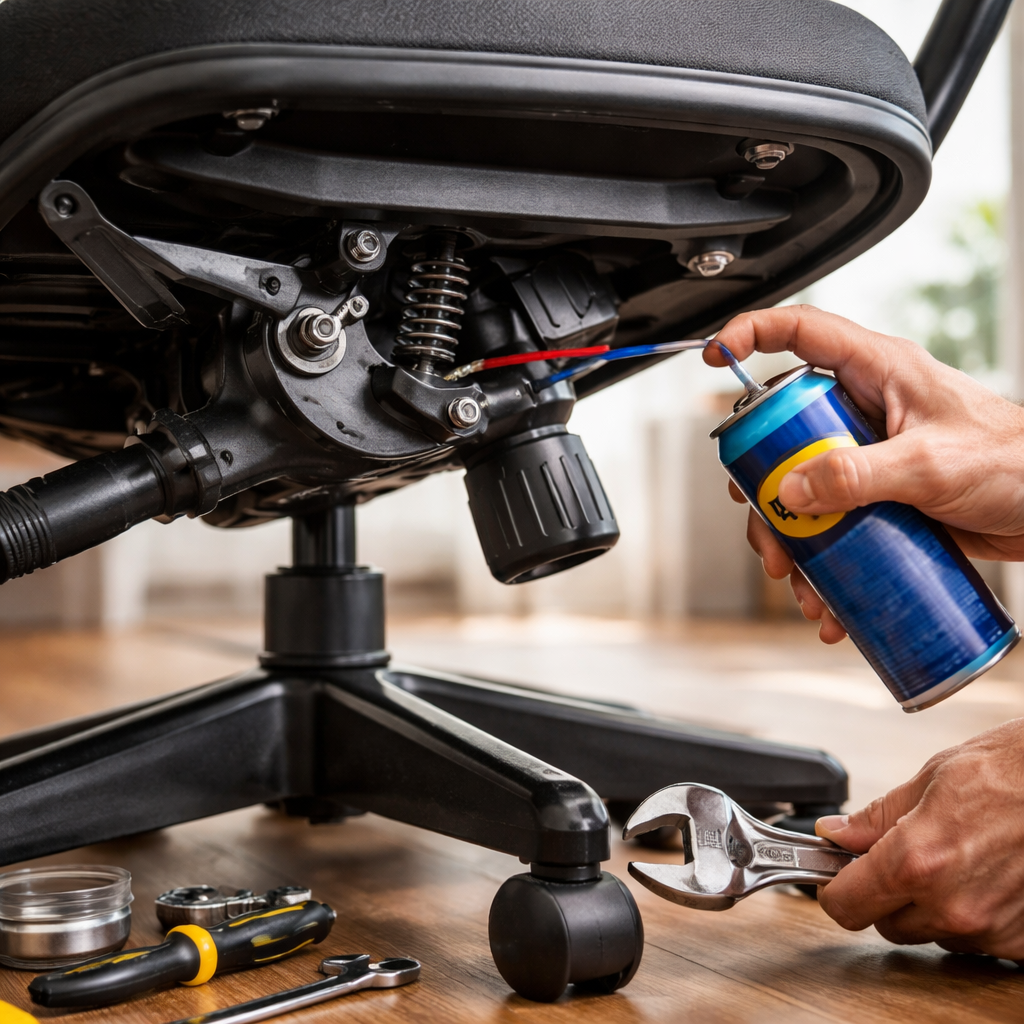
That rhythmic squeaking sound coming from your chair every time you shift your weight is more than just annoying — it’s actually a solvable problem that most people ignore for months. Knowing how to fix a squeaky office chair can save you from unnecessary frustration during work calls, late-night sessions, or any moment that demands focus and silence.
Why office chairs start squeaking in the first place
Before grabbing a wrench or a can of lubricant, it helps to understand what’s actually causing the noise. Office chairs are mechanical systems with multiple moving parts, and the squeak can originate from several different sources. Identifying the right one saves you time and prevents unnecessary disassembly.
The most common culprits include dry metal joints, loose bolts and screws, worn-out casters, tension springs under the seat, and the gas lift cylinder. Each of these produces a slightly different type of sound — some squeak only under pressure, others creak during rotation, and some click with every movement.
Tools and materials you’ll actually need
The good news is that fixing a squeaky chair rarely requires specialized equipment. Most repairs can be completed with items you likely already have at home or can find at any hardware store.
- WD-40 or a dedicated silicone-based lubricant
- Machine oil or petroleum jelly (for metal-on-metal contact points)
- A flathead and Phillips screwdriver
- An adjustable wrench or Allen key set
- A rubber mallet (for caster removal)
- Clean cloth or paper towels
One thing worth noting: WD-40 works well for loosening and displacing moisture, but it’s not a long-term lubricant. For joints that need ongoing lubrication, a silicone spray or white lithium grease will last significantly longer.
Step-by-step: tracing and fixing the squeak
The most efficient approach is a systematic one. Rather than spraying lubricant on everything at once, isolate the source first. Sit in the chair and move around — lean forward, lean back, rotate left and right, and bounce slightly. Pay attention to which movement triggers the sound.
Tighten all bolts and screws
Flip the chair upside down and inspect the underside of the seat. Check every bolt connection — particularly where the seat plate meets the gas cylinder mechanism and where the armrests attach. Over time, normal use causes these to loosen. Tightening them takes about five minutes and often eliminates the noise entirely.
Lubricate the backrest tension spring
The tension spring controls how the backrest reclines. It’s located underneath the seat in the tilt mechanism housing. Apply lubricant directly to the spring coils and the surrounding metal contact points. This is one of the most overlooked areas, yet it’s responsible for a large percentage of office chair squeaks.
Address the gas lift cylinder
If the squeak happens when you adjust the chair height or when you sit down heavily, the gas cylinder is likely involved. Apply a small amount of oil or silicone lubricant to the point where the cylinder meets the base. Avoid getting lubricant inside the cylinder mechanism itself — just focus on the external contact area.
Check and replace worn casters
Casters collect hair, dust, and debris over time, which creates friction and noise. Pull them out from the chair base — most snap out with a firm pull or light mallet tap — clean them thoroughly, and reinsert. If the plastic housing is cracked or the wheel itself is worn, replacing the casters is inexpensive and straightforward. Universal replacement casters are widely available online.
If you’ve tightened everything and lubricated every visible joint but the squeak persists, the issue is often in the seat plate itself — the metal bracket that connects the seat cushion to the mechanism below. A thin layer of petroleum jelly applied to this contact point frequently solves stubborn cases.
A quick diagnostic table
Sometimes the hardest part is just knowing where to look. Here’s a simple reference to match the type of squeak with the most likely source:
| When does it squeak? | Most likely source | Suggested fix |
|---|---|---|
| When leaning back | Tension spring or backrest joint | Lubricate spring and tilt mechanism |
| When sitting down | Gas cylinder or seat plate | Oil the cylinder base, tighten seat bolts |
| When rolling | Casters | Clean or replace casters |
| When rotating | Swivel mechanism or base joint | Apply silicone spray to swivel area |
| Constant squeaking | Multiple loose bolts | Full tightening check of all hardware |
When lubrication alone isn’t enough
There are situations where no amount of lubricant will solve the problem. If the chair’s internal mechanism is broken, if the seat plate is bent, or if the tilt lock is damaged, you’re dealing with a structural issue rather than a friction issue. In these cases, replacement parts are often available from the manufacturer or through third-party suppliers — searching by chair model number usually brings up compatible components.
It’s also worth considering the chair’s age and overall condition. A chair that has been in daily use for many years may have multiple worn components, and fixing one source of noise can reveal another underneath. At some point, investing in a quality replacement chair becomes more practical than ongoing repairs.
A few things worth keeping in mind
- Avoid over-lubricating — excess oil attracts dust and can make components stickier over time
- Recheck bolts every few months as a preventive measure, especially on chairs used heavily
- When using sprays near fabric or foam cushions, protect the upholstery with a cloth
- Some chair mechanisms require the seat to be removed to access the spring — check whether yours has a snap-on or bolt-on seat before starting
Getting back to quiet, comfortable work
Most squeaky office chairs can be fixed in under thirty minutes with patience and the right lubricant. The key is not to guess — trace the sound systematically, address the specific source, and verify the result before reassembling everything. A well-maintained chair not only stays quieter but tends to last considerably longer, which makes the small time investment genuinely worthwhile.
Once you’ve gone through the process once, you’ll find it much easier to catch early signs of wear before they turn into that persistent, distracting squeak in the middle of an important meeting.