
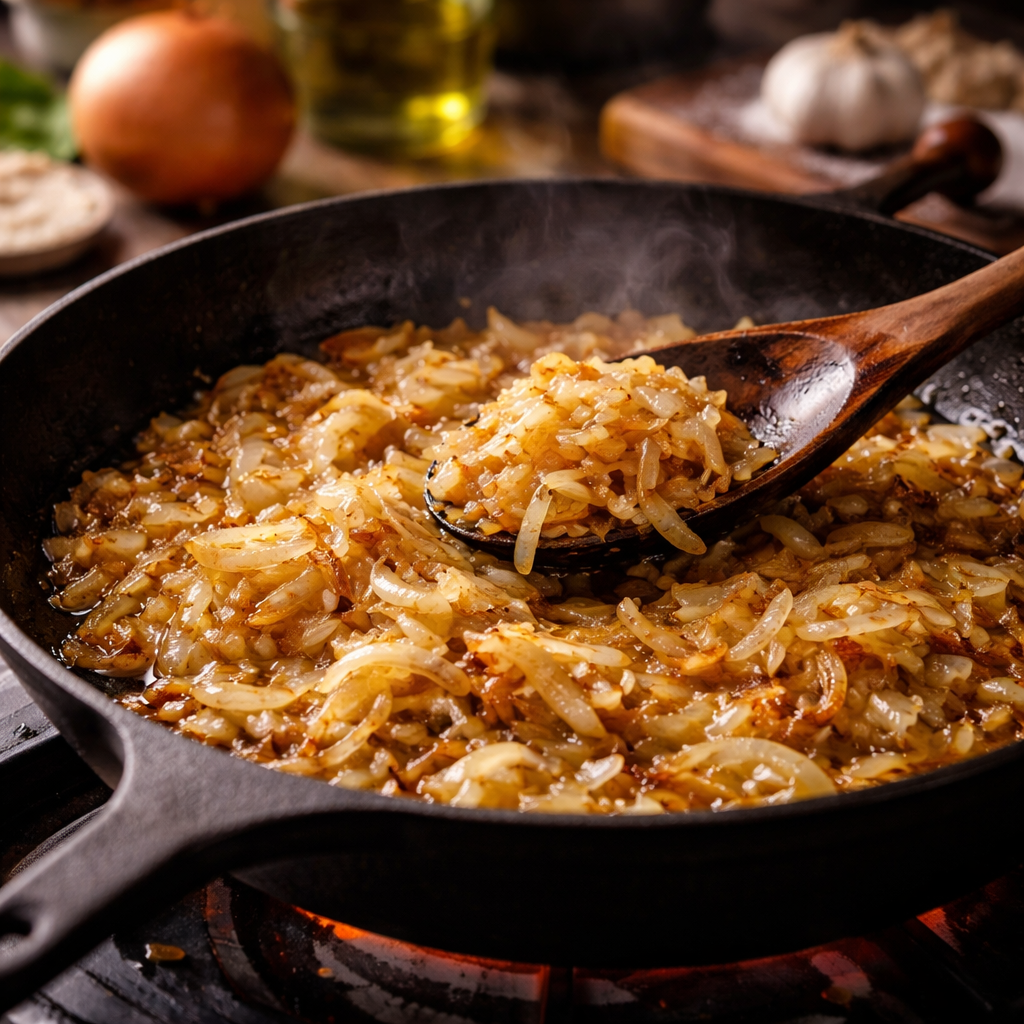
Most home cooks have been there: you start sautéing onions, get distracted, and come back to find them soft, translucent, and deeply fragrant. The question “is it safe to eat softened onions” comes up more often than you’d think — and the answer depends on a few key details that are worth understanding before you serve that dish.
What actually happens when onions soften
When onions are exposed to heat, their cellular structure breaks down. The sharp, pungent compounds — primarily sulfur-based — begin to dissipate, and natural sugars start to caramelize. This is why softened onions taste noticeably sweeter and milder than raw ones. From a purely chemical standpoint, cooking transforms onions significantly, but that transformation is not only harmless — it’s often intentional.
The key distinction here is between onions that have been softened through cooking versus onions that have become mushy due to age, improper storage, or spoilage. These two scenarios look superficially similar but have very different implications for safety and flavor.
Cooked soft onions: perfectly safe and widely used
Softened onions that result from proper cooking — sautéing, steaming, roasting, or slow-cooking — are completely safe to eat. In fact, they are a cornerstone of countless cuisines worldwide. French onion soup, Indian masala bases, and Italian soffritto all rely on onions cooked until tender and translucent as a flavor foundation.
There is also a nutritional angle worth mentioning. While raw onions do retain some heat-sensitive compounds like certain antioxidants, cooking makes other beneficial elements more bioavailable. Quercetin, a flavonoid found in onions, is more easily absorbed by the body when onions are cooked. So the idea that softened onions are somehow less nutritious than raw ones is an oversimplification.
Cooking onions does not make them unsafe — it changes their texture, flavor, and some nutritional properties, but the result is a food that is just as wholesome as its raw counterpart.
When soft onions are a red flag
The conversation shifts when softness is a sign of deterioration rather than cooking. Onions that have gone bad often display a combination of warning signs that go well beyond texture. Here is what to watch for:
- Slimy or wet surface, even without cooking
- Dark or black spots that penetrate into the flesh, not just the outer skin
- An unusually strong, sour, or fermented odor
- Mushy texture throughout the entire bulb, not just the outermost layer
- Visible mold growth, typically appearing as dark or fuzzy patches
A single soft spot does not automatically mean the whole onion is lost. If the affected area is small and confined to the outer layers, you can cut it away generously and use the rest. However, if the softness and discoloration run deep or the smell is off, it is safer to discard the onion entirely. Spoiled onions can harbor bacteria and mold that survive even partial cooking.
The storage factor: why onions soften before you cook them
Understanding why an uncooked onion softens in storage helps you prevent the problem. Onions are naturally high in water content, and when stored incorrectly — in humid environments, sealed plastic bags, or near moisture-producing produce like potatoes — they absorb excess moisture and begin to break down.
| Storage condition | Effect on onions |
|---|---|
| Cool, dry, well-ventilated area | Firm texture maintained for several weeks |
| Sealed plastic bag in fridge | Moisture buildup, softening, accelerated spoilage |
| Near potatoes or high-moisture vegetables | Faster deterioration due to ethylene gas and humidity |
| Refrigerator (cut onions, wrapped) | Safe for up to 10 days if stored in an airtight container |
Whole, unpeeled onions keep best in mesh bags or open baskets placed in a dark, dry pantry or cellar. Once cut, they should be refrigerated and used within a few days. These simple habits make a real difference in preventing premature softening.
A practical tip for salvaging onions on the edge
If your onions are slightly soft but show no signs of mold or foul smell, cooking them is actually the ideal solution. Softened onions caramelize faster, which makes them excellent for soups, stews, and slow-cooked sauces where texture matters less than depth of flavor.
An onion that is slightly past its prime in texture can still deliver excellent flavor when cooked low and slow. Don’t toss it — transform it.
What you want to avoid is using borderline onions in raw preparations — salads, salsas, or garnishes — where texture is central to the dish and there is no heat to neutralize any early-stage bacterial activity.
What your senses are actually telling you
Food safety often comes down to trusting your senses while knowing their limits. With onions specifically, smell is the most reliable indicator. A fresh onion, even a very pungent one, has a clean, sharp aroma. A spoiled onion smells sour, musty, or fermented in a way that is distinctly unpleasant — not just strong.
Touch and sight provide supporting evidence. Slight surface softness without any off-smell is usually harmless, especially in older onions that have simply lost some moisture. But if pressing the onion reveals it is completely hollow or the flesh collapses, that is a sign of advanced decay.
The bottom line is that context matters more than texture alone. A soft onion is not automatically dangerous. Whether it reached that state through heat or through time — and what else is going on with its smell, color, and structure — determines whether it belongs in your pan or your compost bin.