
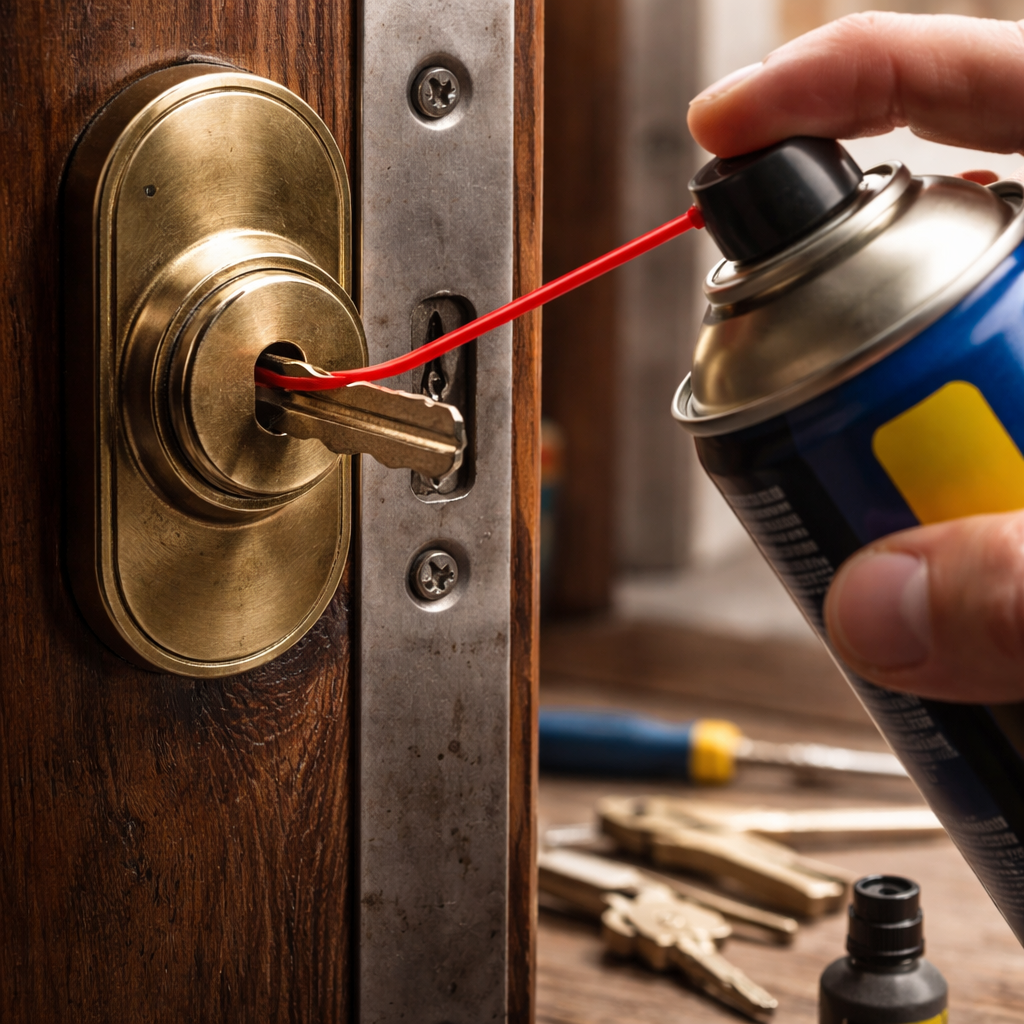
A door that suddenly resists turning, grinds, or refuses to open smoothly is one of those small household problems that quietly erode your patience every single day. If you want to know how to fix a sticking door lock, the answer usually lies in one of just a few root causes — and most of them are genuinely fixable without calling a locksmith.
Why door locks stick in the first place
Before reaching for any tools, it helps to understand what is actually going wrong inside the mechanism. Door locks are precision components, and even minor changes in their environment or condition can throw them off. The most common culprits fall into a few clear categories.
- Lack of lubrication — dry metal parts create friction that gradually worsens over time
- Accumulated dirt and debris inside the keyway or cylinder
- A misaligned door or door frame, often caused by seasonal wood expansion
- A worn or bent key that no longer fits the cylinder cleanly
- Internal component wear in older lock mechanisms
Identifying the specific cause saves you time and prevents you from applying the wrong fix — which can sometimes make things worse.
Start with lubrication — it solves more than you think
Dry locks are arguably the number one reason people struggle with stiff or sticky door hardware. Over time, the internal pins and springs inside the cylinder lose their coating of protective lubricant, and the resulting friction makes every turn of the key feel like a small battle.
Graphite powder and PTFE-based sprays are generally preferred over oil-based lubricants for lock cylinders. Oil attracts dust and can cause build-up that makes the problem worse in the long run.
To lubricate a lock properly, insert the spray nozzle into the keyway and apply a small amount directly into the cylinder. Then insert your key and work it in and out several times to distribute the lubricant across the internal pins. This alone resolves the issue in a surprisingly large number of cases.
Cleaning out the keyway and cylinder
If lubrication does not bring immediate improvement, the next step is to address dirt. Keyways accumulate dust, pocket lint, and even small particles of metal shaved from a worn key. Over time this debris packs into the cylinder and physically obstructs the lock pins from moving freely.
A can of compressed air is your best starting point here. Direct short bursts into the keyway to dislodge loose debris. Follow this with a graphite application and test the key again. For more stubborn build-up, a locksmith-grade contact cleaner spray can dissolve residue without damaging internal components.
What to do when the door itself is the problem
Sometimes the lock mechanism itself is perfectly fine, but the door or frame around it has shifted. Wood expands and contracts with changes in humidity and temperature, and even a few millimetres of movement can cause the latch bolt to bind against the strike plate, making the lock feel stiff or completely jammed.
Here is how to diagnose this quickly:
- Open the door and try operating the lock freely — if it works smoothly, the problem is alignment
- Look for scratch marks or shiny wear patterns on the strike plate, which reveal exactly where the latch is catching
- Check the gap around the door frame — an uneven gap often signals the door has shifted in its frame
Minor alignment issues can often be resolved by filing the strike plate opening slightly wider, giving the latch bolt more room to seat properly. More significant shifts may require adjusting the hinges — tightening loose screws or replacing them with longer screws that grip further into the door frame studs.
Checking and replacing a worn key
A frequently overlooked cause of a sticking lock is the key itself. Keys wear down with use, and the small ridges that engage the lock pins gradually lose their precise shape. A worn key may still enter the cylinder but fails to lift all the pins to the correct height, causing the cylinder to bind mid-turn.
| Sign | Likely cause | Recommended action |
|---|---|---|
| Key turns partially then stops | Worn key or dirty cylinder | Try a spare key or clean the cylinder |
| Key is hard to insert | Debris in keyway or swollen door | Clean keyway, check alignment |
| Lock smooth without key, stiff with it | Worn or bent key | Cut a new key from the original |
| Lock stiff regardless of key | Dry or corroded cylinder | Lubricate or replace cylinder |
If you have a spare key and it works noticeably better, that confirms the primary key is the problem. Have a new copy cut from the original factory key if possible, not from the worn copy — duplicating a worn key only preserves its imperfections.
When to consider replacing the lock cylinder
There are situations where cleaning and lubrication simply are not enough. Internal components — particularly the small springs that push the lock pins — can fatigue and lose tension over years of use. When this happens, the cylinder develops an inconsistent, unpredictable feel that no amount of lubricant will fix reliably.
Replacing a cylinder is a straightforward job for most standard euro-profile locks found in residential doors. The process typically involves removing a single screw from the door edge, sliding the old cylinder out, and inserting a new one of matching size. The key measurement here is the total length of the cylinder and the distance from its centre to each end — getting these numbers right ensures the new cylinder fits without modification.
If your lock is more than ten to fifteen years old and has never been serviced, replacement often makes more practical sense than repeated repairs — and it gives you the opportunity to upgrade to a higher security rating at the same time.
Keeping your lock working well long-term
The most effective thing you can do after fixing a sticking lock is to establish a simple maintenance habit. Locks that receive periodic attention rarely develop serious problems. A light application of graphite or PTFE lubricant once or twice a year is usually all it takes to keep a cylinder moving smoothly through all seasons.
Pay attention to how the lock feels during everyday use. A subtle change in resistance or a new grating sensation when turning the key are early warnings worth acting on immediately — catching the problem early keeps a minor maintenance task from becoming an emergency lockout situation at the worst possible time.
Exterior locks deserve a little extra attention in climates with harsh winters or high humidity. Moisture can work into the cylinder and cause corrosion on the internal pins, which leads to the same stiff, grinding feel as a dry lock — but requires a different approach to fix. A weatherproof lock cover or a keyway cover flap can make a significant difference in how long exterior hardware stays in reliable condition.