
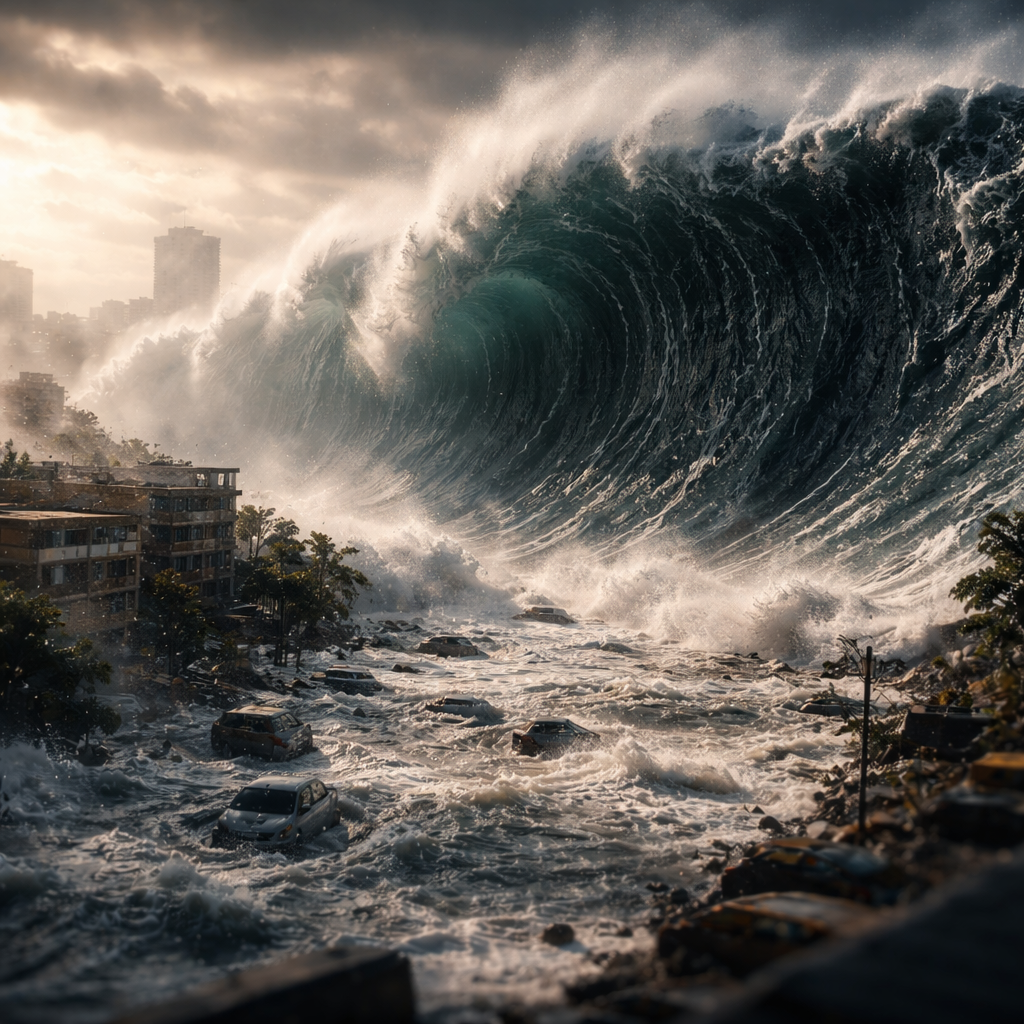
Most people wake up from a tsunami dream with their heart racing — and then spend the rest of the morning wondering what it actually meant. If you’ve ever asked yourself what does dreaming about a tsunami mean, you’re far from alone. These dreams are among the most emotionally intense that people report, and their meaning tends to go much deeper than simple fear of water or natural disasters.
Why tsunami dreams feel so different from other nightmares
Not all unsettling dreams carry the same emotional weight. A tsunami dream is distinct because it combines several powerful elements at once: an unstoppable force, the feeling of being small and helpless, and often a split-second moment where you either run, freeze, or watch the wave approach in slow motion. That combination tends to leave a strong impression on the waking mind.
From a psychological standpoint, water in dreams is widely associated with the emotional and unconscious layers of the mind. When water becomes a massive, uncontrollable wave, many dream analysts and therapists interpret this as a reflection of something equally overwhelming in waking life — an emotion that has been building, a situation that feels out of control, or a fear about being swept away by change.
Common emotional themes behind tsunami dreams
While dreams are deeply personal and there’s no single universal meaning, certain emotional patterns appear consistently across accounts of tsunami dreams. These include:
- A sense of being overwhelmed by responsibilities, emotions, or life changes that feel too big to handle
- Anxiety about a situation that is building and hasn’t yet reached its peak
- Fear of loss — whether of a relationship, stability, identity, or a phase of life
- Suppressed emotions that haven’t been processed or expressed
- A feeling of powerlessness in the face of external forces
Interestingly, people going through major transitions — starting a new job, ending a relationship, relocating, or facing health challenges — often report an increase in wave-related dreams. The subconscious appears to reach for powerful natural imagery when the scale of change feels hard to conceptualize in ordinary terms.
What your position in the dream might reveal
The details of how you experience the tsunami in the dream can shift its meaning significantly. Dream researchers and therapists often pay attention to the dreamer’s role within the scenario itself.
| Dream scenario | Possible interpretation |
|---|---|
| Watching the wave from a distance | Awareness of an approaching challenge; anticipatory anxiety |
| Running away from the wave | Active avoidance of a difficult situation or emotion |
| Being caught or swept away | Feeling overwhelmed or out of control in waking life |
| Surviving the wave | Inner resilience; processing of a difficult experience |
| Watching others get swept away | Helplessness around someone else’s struggles; guilt or grief |
These are not fixed rules, but rather starting points for reflection. The most useful approach is to pair the dream image with what’s actually happening in your life at the time.
The psychological lens: what experts actually say
Carl Jung, whose work on dream symbolism remains influential in modern psychology, viewed large bodies of water as representations of the unconscious mind. A rising or crashing wave, in that framework, can symbolize unconscious material — repressed feelings, unresolved conflicts, or parts of the self that have been ignored — forcing its way into conscious awareness.
“The dream is a little hidden door in the innermost and most secret recesses of the soul.” — Carl Jung
Contemporary therapists working with stress and trauma often note that recurring disaster dreams — including tsunamis — can be a sign that the nervous system is processing accumulated stress. This doesn’t mean something catastrophic is about to happen; it means the mind is working through tension that hasn’t found another outlet.
When the same dream keeps coming back
A one-time tsunami dream after watching a documentary or reading about natural disasters is unlikely to carry deep significance. But when the same dream — or variations of it — returns repeatedly, that’s worth paying closer attention to.
Recurring tsunami dreams are often linked to ongoing stress rather than a one-time trigger. They tend to appear during periods of chronic pressure, prolonged uncertainty, or unresolved emotional situations. In some cases, they continue until the underlying issue is addressed — whether through direct action, honest conversation, or working through feelings with a therapist or trusted person.
Cultural and symbolic perspectives across traditions
Dream interpretation has a long history across many cultures, and tsunami or flood imagery appears in symbolic traditions worldwide. In several spiritual frameworks, water represents purification, transformation, and the boundary between the known and the unknown. A massive wave, then, can be seen not only as a threat but as a force of renewal — something that clears away what no longer serves.
In some traditions, surviving a flood or wave in a dream is considered a positive omen — a sign of inner strength, or a signal that a difficult period is being processed and integrated. This doesn’t erase the fear felt during the dream, but it does offer a different frame for understanding it.
How to work with the dream rather than dismiss it
Whether or not you believe dreams carry symbolic meaning, they can serve as a useful prompt for self-reflection. Instead of shaking off the image and moving on, try sitting with it briefly in the morning.
- Ask yourself: what in my life right now feels like it’s building to a breaking point?
- Consider whether there’s an emotion — anger, grief, anxiety — that you’ve been pushing aside
- Think about whether there’s a situation where you feel you have little control
- Notice whether the feeling in the dream matches anything you’re experiencing while awake
This kind of gentle inquiry doesn’t require any belief in dream prophecy. It’s simply a way of using a vivid emotional experience as a mirror — one that the mind has already created for you.
The wave has already done its job
Tsunami dreams, as unsettling as they are, rarely signal something dangerous. More often, they reflect a mind that is working hard — processing stress, signaling emotional overload, or nudging you toward something that needs attention. The intensity of the image is proportional to the intensity of what’s being carried beneath the surface.
If these dreams are frequent or deeply distressing, speaking with a mental health professional is always a worthwhile step — not because the dream itself is a problem, but because the underlying stress it may be reflecting deserves proper care. In the meantime, the fact that you’re asking questions about what the dream means is already a meaningful act of self-awareness.