
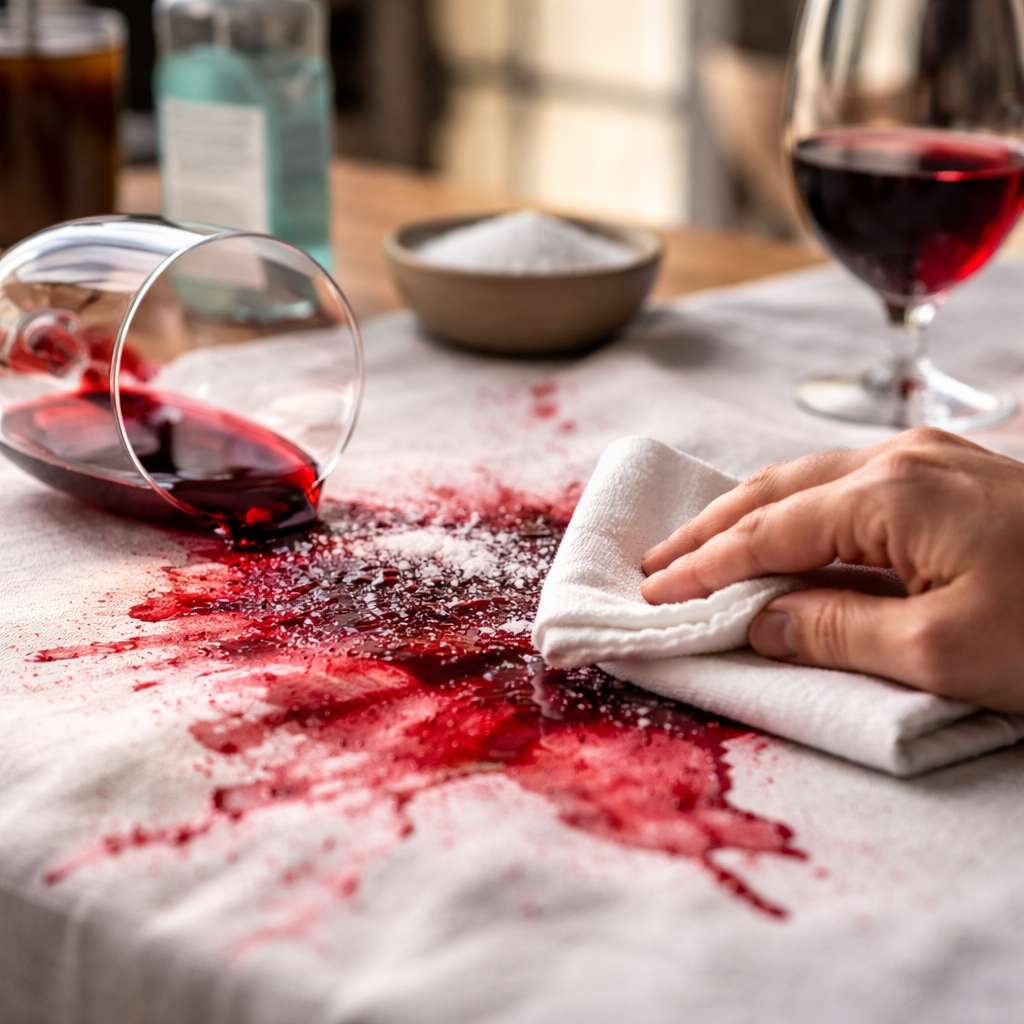
That sinking feeling when a glass tips over and red wine spreads across your favorite tablecloth or shirt — most people’s first instinct is to panic. But knowing how to remove a red wine stain correctly makes the difference between a ruined fabric and one that looks like nothing ever happened. The method you choose in the first few minutes matters far more than any expensive stain remover you might reach for later.
Why red wine stains are stubborn — and what that means for treatment
Red wine contains tannins, natural dyes, and chromogens — pigment-producing compounds that bond quickly with fabric fibers. The moment wine touches a surface, it starts being absorbed. That’s why speed is genuinely your greatest advantage here, not the brand of cleaner you use.
Heat makes things significantly worse. Warm water, a hot dryer, or ironing over a stained area sets the pigment permanently into the fibers. Once that happens, even professional cleaning may not fully reverse the damage. Keep this in mind throughout the entire process.
The first five minutes: what to do immediately
Act fast, but don’t scrub. Scrubbing pushes the stain deeper into the fabric and spreads it outward. Instead, blot firmly with a clean white cloth or paper towel, working from the outside of the stain toward the center to contain it.
- Blot — never rub — as much liquid as possible before doing anything else
- Use cold water only to rinse the back of the fabric, flushing the stain outward
- Avoid colored cloths or paper towels, which can transfer their own dye onto wet fabric
- Do not apply any heat source, including a hair dryer
If you’re out at a restaurant or away from home, ask for salt. Covering a fresh stain with a generous layer of table salt draws moisture out before it sets. Leave it on for a few minutes, then brush off and blot again.
Household solutions that actually work
You don’t need a specialty product for most red wine stains. Several common household items are genuinely effective — the key is knowing which to use on which type of fabric and surface.
| Solution | Best for | How to use |
|---|---|---|
| Dish soap + hydrogen peroxide | White or light-colored cotton, linen | Mix 1 part dish soap with 2 parts hydrogen peroxide, apply, wait 20–30 minutes, rinse cold |
| Club soda | Fresh stains on upholstery and carpet | Pour slowly over the stain, let it fizz, then blot repeatedly |
| White wine or sparkling water | Fresh stains when other options aren’t available | Pour over the stain to dilute the red wine, blot immediately |
| Baking soda paste | Dried stains on washable fabrics | Mix with a little cold water, apply to stain, let dry fully, brush off, then launder |
| Salt | Very fresh stains, especially on tablecloths | Cover generously, leave 3–5 minutes, brush away, then treat further |
A quick note on hydrogen peroxide: it has mild bleaching properties and should only be used on light-colored fabrics. Always test on a hidden area of the fabric first, especially with delicate materials like silk or wool.
Treating dried red wine stains
A stain that’s been sitting for hours or even days is harder to remove, but it’s rarely hopeless. The approach here shifts from speed to patience.
Start by re-wetting the stain with cold water to rehydrate the dried pigment. Then apply a commercial enzyme-based stain remover or a homemade baking soda paste. Enzyme cleaners work by breaking down the organic compounds in the wine, which is why they’re more effective on older stains than simple soap-based products.
Let the treatment sit for at least 30 minutes before rinsing — for stubborn dried stains, leaving it on for a few hours while keeping the area moist often delivers noticeably better results.
After treating, wash the item according to its care label, always in cold water. Check the stain before placing the garment in the dryer. If any trace remains, treat it again — the dryer will lock in whatever residue is left.
Carpet and upholstery: a different approach
Fabric you can’t throw in a washing machine requires more care. The goal is to lift the stain without soaking the padding or base beneath, which can cause mold and odor issues.
- Blot up as much wine as possible immediately, pressing down firmly but gently
- Apply a small amount of cold water mixed with a drop of dish soap, blotting continuously
- Work in small, controlled amounts of liquid — don’t soak the area
- Once the stain lifts, blot with clean cold water to remove any soap residue
- Place a dry towel over the area and weigh it down to absorb remaining moisture
For wool carpets or antique upholstery, it’s worth consulting a professional cleaning service rather than experimenting — some natural fibers and older dyes react unpredictably to common stain-removal products.
What to skip — and why it matters
Not everything you’ll find online is worth trying. A few widely circulated methods can actually make stains worse or damage fabric permanently.
- Boiling water poured directly onto fabric — the heat sets the stain
- Bleach on colored fabrics — removes color, not just the stain
- Vigorous scrubbing at any stage — spreads the stain and damages fiber structure
- Mixing multiple cleaning products without checking compatibility — some combinations (like bleach and hydrogen peroxide) produce harmful reactions
The one habit that makes stain removal easier every time
Keeping a small stain-removal kit in an accessible place — a bottle of club soda, a clean cloth, a packet of salt, and a basic enzyme stain remover — means you’re never scrambling when something spills. The seconds spent searching for supplies are the seconds the stain uses to set.
Red wine stains have a reputation for being impossible, but that reputation is mostly based on treating them slowly, with hot water, or with the wrong products. Cold temperatures, quick action, and the right combination of ingredients solve the problem in the vast majority of cases — no panic required.