
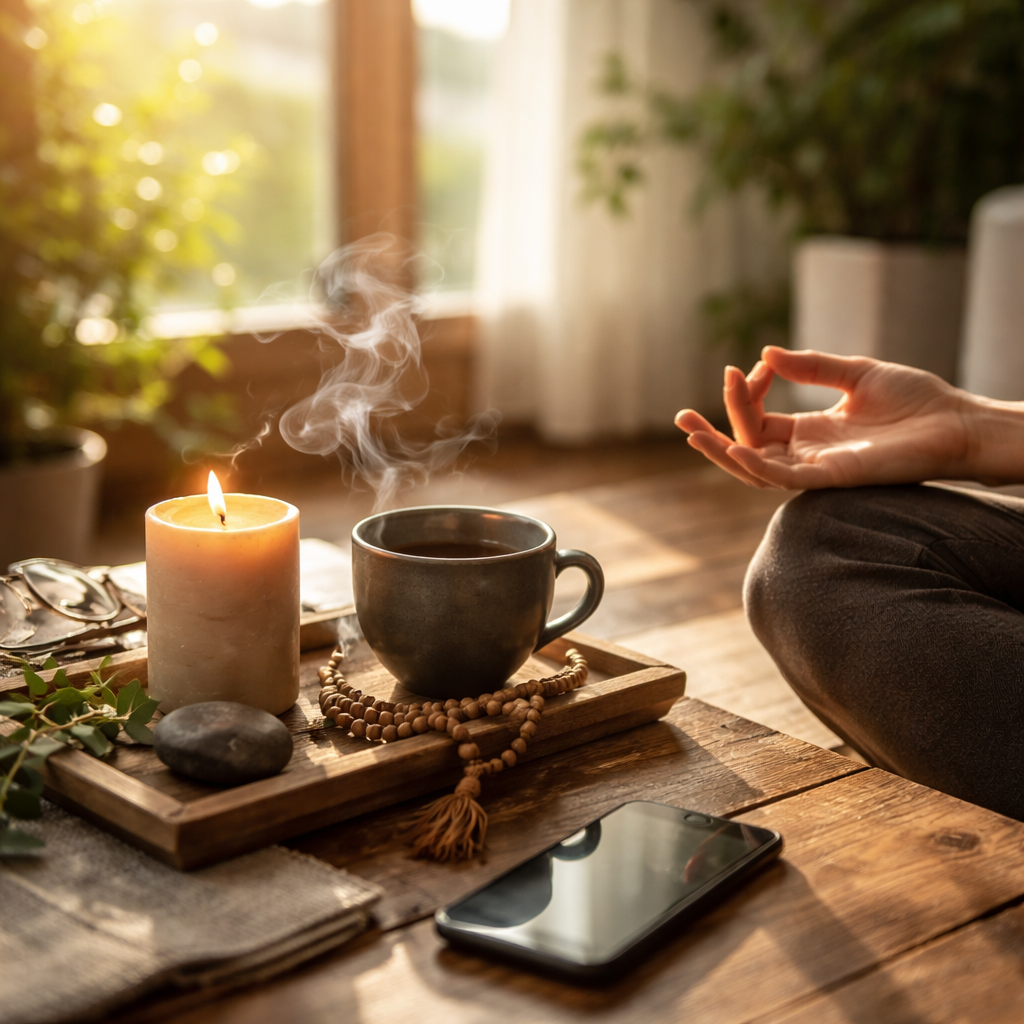
Most people assume that learning how to practice mindfulness daily requires retreats, meditation cushions, or hours of free time — but research consistently shows that even five focused minutes can meaningfully shift your stress response and attention span. The real barrier isn’t time. It’s knowing where to actually start.
Why consistency matters more than duration
Neuroscientists studying mindfulness-based stress reduction (MBSR) have found that the brain responds to regular short practices more effectively than occasional long sessions. Think of it like physical training — a ten-minute walk every day builds more endurance over time than a two-hour hike once a month.
The prefrontal cortex, which governs decision-making and emotional regulation, shows measurable structural changes after sustained mindfulness practice. These changes don’t happen overnight, but they do happen — and they begin with small, repeatable habits woven into your existing routine.
Anchor your practice to something you already do
One of the most practical frameworks in behavioral psychology is habit stacking — attaching a new behavior to an established one. For mindfulness, this approach works exceptionally well because it removes the need to “find time.”
Here are a few natural anchor points that work for most people:
- Morning coffee or tea — sit without your phone for the first three minutes, focusing only on taste, warmth, and smell
- Daily commute — if you travel by public transport, use one leg of the journey for a body scan instead of scrolling
- Lunch break — eat the first five minutes of your meal without any screen or background noise
- Before bed — spend two to three minutes noticing your breathing before reaching for your phone
None of these require a special setting. They require only deliberate attention — which is precisely what mindfulness trains.
Techniques that fit into a real schedule
There is no single correct mindfulness technique. Different approaches suit different people, and experimenting is part of the process. Below is a practical overview of methods that work well in everyday contexts.
| Technique | Time needed | Best for |
|---|---|---|
| Focused breathing | 3–5 minutes | Anxiety, mental reset during the day |
| Body scan | 10–15 minutes | Physical tension, trouble sleeping |
| Mindful walking | Any duration | Restless energy, outdoor time |
| Sensory grounding (5-4-3-2-1) | 2–3 minutes | Acute stress, panic, overwhelm |
| Loving-kindness meditation | 5–10 minutes | Emotional resilience, relationship stress |
The 5-4-3-2-1 grounding technique deserves special mention because it requires zero preparation. You simply name five things you can see, four you can physically feel, three you can hear, two you can smell, and one you can taste. It interrupts anxious thought loops almost immediately by redirecting the brain toward sensory input.
“You don’t have to control your thoughts. You just have to stop letting them control you.” — Dan Millman
Common obstacles — and what actually helps
A lot of people try mindfulness for a few days, hit a wall, and conclude it “doesn’t work for them.” In most cases, what they’re experiencing is completely normal — and predictable.
The mind keeps wandering
This is not a failure. Mind-wandering is what minds do. The practice is in noticing the wandering and gently returning your attention — that act of returning is the actual exercise, not the stillness itself. Every time you bring your focus back, you’re strengthening attentional control.
It feels pointless or boring
Boredom during mindfulness is itself a sensation worth observing. What does restlessness feel like in the body? Where do you notice it? Curiosity about your own experience — rather than judgment of it — is at the heart of present-moment awareness.
Motivation drops after the first week
This is when tracking helps. It doesn’t need to be elaborate — a simple checkbox on a habit tracker or a note in your phone. Seeing a streak builds its own momentum, and on days when you miss, starting again without guilt is part of the practice too.
Apps like Insight Timer, Calm, and Headspace offer guided sessions if you prefer structure, but they’re tools — not requirements. A quiet room and a timer work just as well.
Building a sustainable mindfulness routine
Sustainability comes from flexibility, not rigidity. A mindfulness routine that falls apart whenever life gets busy isn’t a routine — it’s a fair-weather habit. The goal is to have a version of your practice that works even on hard days.
Consider having two modes: a full session (ten to twenty minutes when you have the space) and a minimal session (two to three minutes of focused breathing when you don’t). Both count. Both maintain the continuity that long-term benefits depend on.
Tip: Set a recurring low-key reminder on your phone — not “MEDITATE NOW” but something softer, like “take a breath.” Small cues reduce resistance and make returning to the practice feel easier rather than obligatory.
It also helps to understand that mindfulness isn’t only formal practice. Washing dishes with full attention, listening to someone without mentally composing your reply, or stepping outside and genuinely noticing the air — these are informal mindfulness moments, and they accumulate.
What changes when you stay with it
People who maintain a consistent mindfulness practice over weeks and months typically report a cluster of changes that go beyond feeling calmer. Emotional reactions tend to become less automatic. Sleep quality often improves. The ability to stay focused on a single task — without compulsively checking notifications — noticeably increases.
Relationships frequently benefit too. When you’re less reactive and more genuinely present in conversations, the quality of interactions shifts in ways that are difficult to quantify but easy to feel.
None of this is guaranteed, and individual results vary. But the evidence base for mindfulness — across clinical psychology, cognitive neuroscience, and workplace wellbeing research — is substantial enough that major health institutions worldwide now recommend it as a complementary approach to managing stress, anxiety, and chronic pain.
The most important thing isn’t which technique you choose or which app you use. It’s whether you show up for it regularly — imperfectly, inconsistently at first, and then gradually with more ease. That’s how any real skill develops, and mindfulness is no different.