
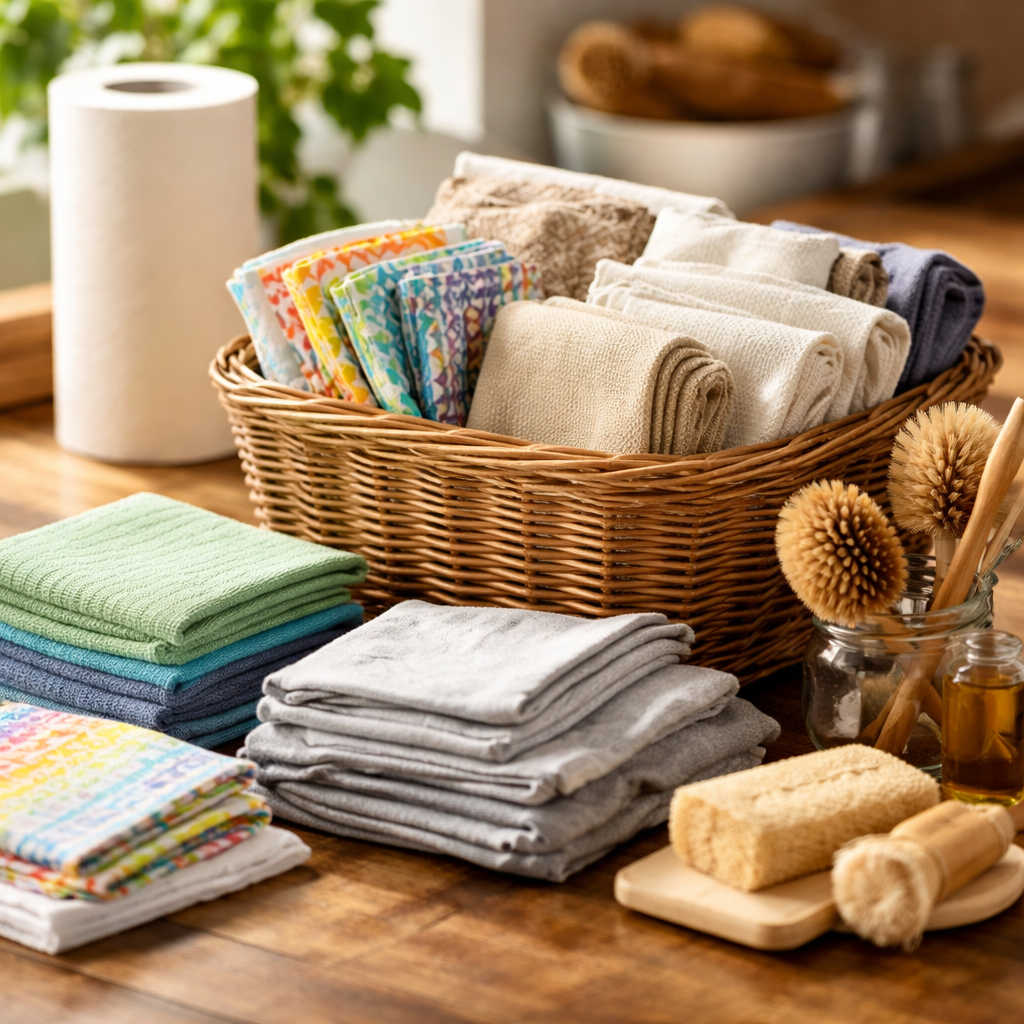
Most households go through multiple rolls of paper towels every week without giving it much thought — but the moment you start looking for a reliable alternative to paper towels, you realize just how many genuinely better options have been sitting right under your nose. Some of them are cheaper, some are more absorbent, and quite a few are better for the environment in ways that actually add up over time.
Why people are rethinking single-use paper products
Paper towels are convenient, no question about it. But convenience comes at a cost — not just financially, but in terms of waste. A single roll barely lasts a busy kitchen through the week, and unlike many household products, used paper towels almost never get recycled. They end up in landfills, where even their biodegradation is slower than most people assume due to compacted, low-oxygen conditions.
Beyond the environmental side of things, there’s a practical reason to reconsider: reusable alternatives tend to outperform paper towels on absorption, durability, and overall effectiveness at cleaning surfaces. Once you switch, the paper roll on the counter starts to look more like a habit than a necessity.
Reusable cloth options worth knowing about
Cloth-based alternatives are the most widespread replacement and for good reason. They vary significantly in material and use case, so it helps to know what you’re actually choosing between.
- Swedish dishcloths — made from a blend of cellulose and cotton, these are highly absorbent, dry quickly, and can replace dozens of paper rolls. They’re also compostable at the end of their life.
- Microfiber cloths — excellent for surfaces that need to be left streak-free, like glass or stainless steel. They trap dust and bacteria without needing chemical sprays.
- Unpaper towels — cloth squares, usually made from flannel or birdseye cotton, that come on a roll just like the paper version. Many people find the transition easiest this way.
- Old cotton t-shirts or cut-up towels — a genuinely zero-cost option that works well for spills, wiping surfaces, or cleaning up messes. Not glamorous, but highly effective.
- Linen kitchen towels — naturally antimicrobial, lint-free, and long-lasting. Especially good for drying dishes or hands.
“The best sustainable swap is the one you’ll actually use consistently — not the one that looks best on a shelf.”
Matching the right alternative to the right task
One thing that catches people off guard is that no single replacement does everything paper towels do. The smarter approach is to think by task rather than trying to find one universal solution.
| Task | Best alternative |
|---|---|
| Wiping spills on counters | Swedish dishcloth or microfiber cloth |
| Drying hands | Linen hand towel or small cotton cloth |
| Cleaning glass and mirrors | Microfiber cloth (dry or slightly damp) |
| Absorbing grease from cooked food | Wire rack over a tray — no towel needed |
| Scrubbing surfaces | Reusable sponge cloth or natural loofah pad |
| Straining or wrapping food | Beeswax wraps or muslin cloth |
That last one surprises a lot of people — draining fried food on a wire rack instead of paper actually gives better results, since the food doesn’t sit in its own grease. It’s one of those switches where the alternative isn’t just greener, it’s functionally superior.
A note on the “but what about hygiene” concern
This is the most common hesitation, and it’s worth addressing directly. The assumption is that reusable cloths harbor bacteria in a way paper doesn’t. That’s partially true — but only if you’re not washing them regularly. A cloth rinsed after use and washed at 60°C or higher is hygienically safe for kitchen use.
Having a simple rotation system helps enormously. Keep several cloths in use at once, toss them in the laundry every few days, and designate certain cloths for certain tasks — one for hands, one for counters, one for the stove area. That kind of simple system eliminates almost all of the cross-contamination concerns people worry about.
Getting started without feeling overwhelmed
Switching all at once isn’t necessary and often backfires. A gradual approach tends to stick better.
- Buy a pack of Swedish dishcloths or cut up a few old cotton t-shirts this week.
- Keep them in the same spot as your paper towel roll — visibility matters for building habits.
- Don’t throw out remaining paper towels. Use them for tasks you genuinely don’t want to use cloth for yet (like cleaning up after pets or handling raw meat).
- Track how long your current paper roll lasts — you’ll likely notice it stretching much further once you have cloth alternatives in rotation.
Most people who switch gradually find that within a month or two, they’ve essentially stopped reaching for the paper roll out of reflex. The cloth options just become the default, and the paper towel becomes a backup for genuinely specific situations.
What actually makes the switch last
Habit change research consistently points to the same thing: the new behavior needs to be at least as easy as the old one, not harder. That means setting up your kitchen so the reusable cloths are accessible, clean, and ready to grab — not stuffed in a drawer you have to search through. A small basket on the counter works well for this.
It also helps to not frame this as sacrifice. The reusable options often clean better, last longer, and cost less per use over time. A set of quality microfiber cloths used for a year costs a fraction of what a household spends on paper towels in the same period. That’s not a compromise — that’s just a better deal that also happens to generate less waste.
The shift away from disposable products doesn’t need to be dramatic to be meaningful. Even replacing half of your paper towel use with cloth alternatives makes a measurable difference over the course of a year — in what you spend, in what you throw away, and in how you think about single-use products generally.