
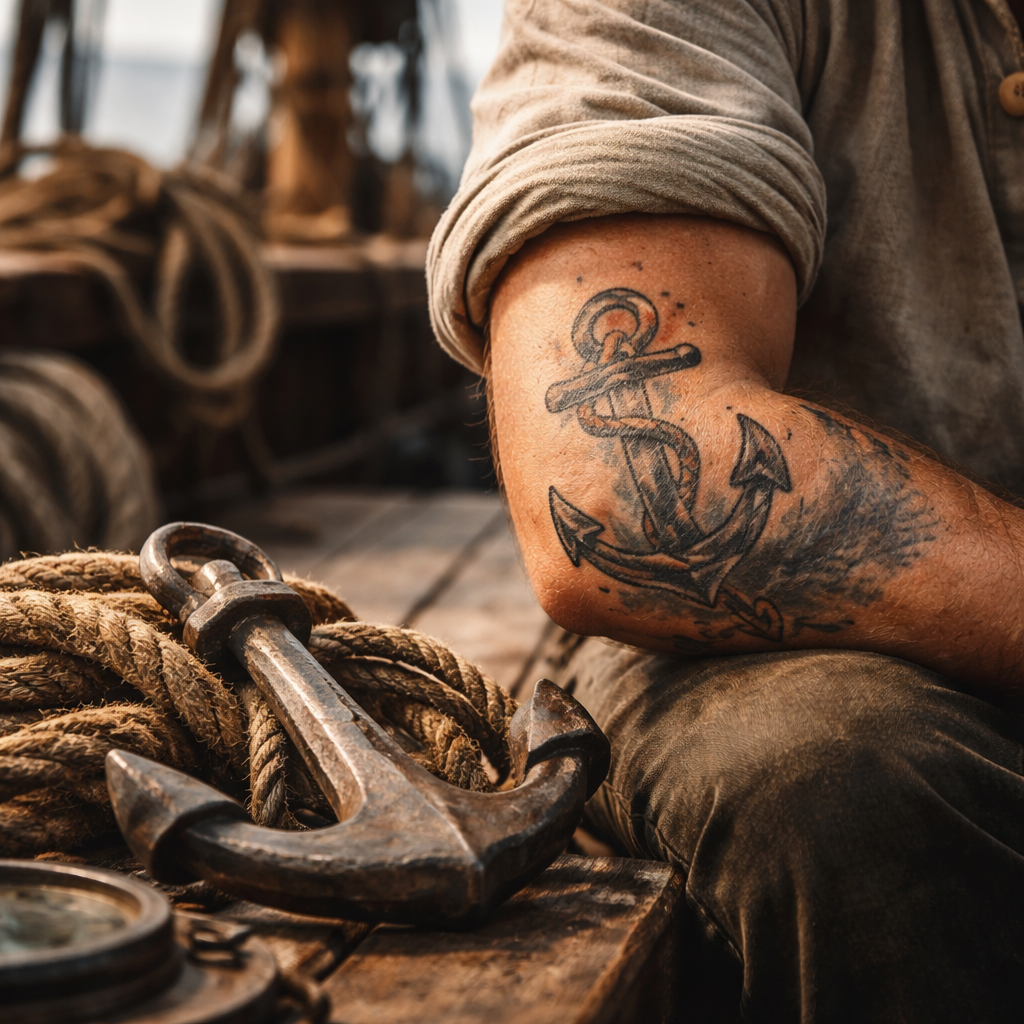
Few tattoo symbols have held such consistent meaning across generations of seafarers as the anchor — and understanding the meaning of anchor tattoos for sailors reveals a story that goes far deeper than simple maritime decoration. Long before tattoo culture became mainstream, sailors were using permanent ink to mark their experiences, beliefs, and milestones at sea. The anchor was never chosen arbitrarily.
Why sailors chose the anchor above all other symbols
The anchor’s role on a ship is both physical and philosophical — it holds the vessel in place when the sea turns unpredictable, preventing drift and grounding the ship in uncertain conditions. For sailors who spent months or years away from land, this function translated into something deeply personal. The anchor represented stability, hope, and the certainty of return. In a life built around constant movement and real danger, the idea of being “anchored” to something — home, family, faith — carried enormous emotional weight.
This is why the symbol spread so rapidly among naval crews during the age of sail. It wasn’t a trend. It was a genuine expression of what sailors valued most when facing open water.
What the anchor tattoo traditionally meant in sailor culture
Traditional sailor tattoos — often called “old school” or “sailor jerry” style — each had specific, earned meanings. The anchor was no different. Here is what it commonly represented across different seafaring traditions:
- Crossing the Atlantic Ocean — a sailor who had successfully completed a transatlantic voyage would tattoo an anchor to mark this achievement.
- Service in the navy — anchor tattoos were closely associated with military naval service, particularly in British and American fleets.
- Hope and steadiness — the anchor was a Christian symbol of hope long before it became a maritime tattoo, rooted in the biblical verse from Hebrews 6:19: “We have this hope as an anchor for the soul, firm and secure.”
- Connection to home — many sailors tattooed an anchor alongside a name, a swallow, or a rope to symbolize their longing for and loyalty to those waiting on shore.
- Rank and experience — among sailors, certain tattoos marked years of service or specific voyages; the anchor often indicated a seasoned mariner rather than a novice.
“A sailor without a tattoo is like a ship without a figurehead.” — old naval saying, origin disputed but widely attributed to seafaring tradition.
The symbolism built into the design itself
Anchor tattoos rarely appeared alone. The way they were designed and combined with other elements shifted their meaning significantly. A rope wrapped around the anchor, for instance, pointed to a boatswain’s mate — a specific naval rank responsible for the ship’s deck and anchor operations. This level of detail mattered in seafaring communities where symbols functioned almost like badges of identity.
Common design combinations and what they historically signified:
| Design element combined with anchor | Traditional meaning |
|---|---|
| Rope or chain | Naval rank (boatswain), connection to the sea |
| Swallow birds | Safe return home, 5,000 nautical miles sailed |
| Heart | Loyalty to a loved one waiting ashore |
| Ship’s wheel | Control over one’s destiny, mastery of the sea |
| Name or banner | Dedication to a person, place, or value |
| Star or compass | Navigation, finding one’s way, guidance |
Reading an old sailor’s tattoos was almost like reading a resume — each mark told you where they had been, what they had survived, and who they were loyal to.
Navy versus merchant sailors — did the meaning differ?
It did, subtly. In naval (military) contexts, the anchor carried strong associations with discipline, hierarchy, and national service. The anchor is still used today as the symbol of the United States Navy’s chief petty officer rank, and it featured prominently in the Royal Navy’s insignia for centuries.
For merchant sailors — those working commercial shipping routes rather than military ones — the anchor leaned more toward personal meaning: endurance through long voyages, safe harbor, and the hope of finishing a contract and returning home. The symbolism overlapped, but the emotional context behind the ink was often different.
When the anchor tattoo crossed into everyday culture
Over time, as naval service became less universal and tattoos moved from fringe to mainstream, the anchor began appearing on people who had never set foot on a ship. This shift didn’t erase its original meaning — it expanded it. The core symbolism remained intact: strength under pressure, groundedness, loyalty, and the idea of having something steady to hold onto when life becomes turbulent.
Today, someone choosing an anchor tattoo may be honoring a naval ancestor, marking a period in their own life when they felt adrift and found stability, or simply connecting to the rich visual tradition that sailor tattoos represent. All of these are legitimate readings of the symbol.
The anchor as a living symbol, not a relic
What makes the anchor tattoo remarkable is how well it has aged. Symbols that were purely fashionable tend to fade in relevance. The anchor hasn’t, precisely because its meaning is tied to something universal — the human need for stability, for connection, and for the hope that the storm will pass and you will find your way back to safe ground.
For sailors, both historical and contemporary, it was never just a decorative choice. It was a declaration about who you were and what you held onto when the sea gave you no guarantees. That honesty is exactly why the anchor continues to resonate long after the age of sail has ended.