
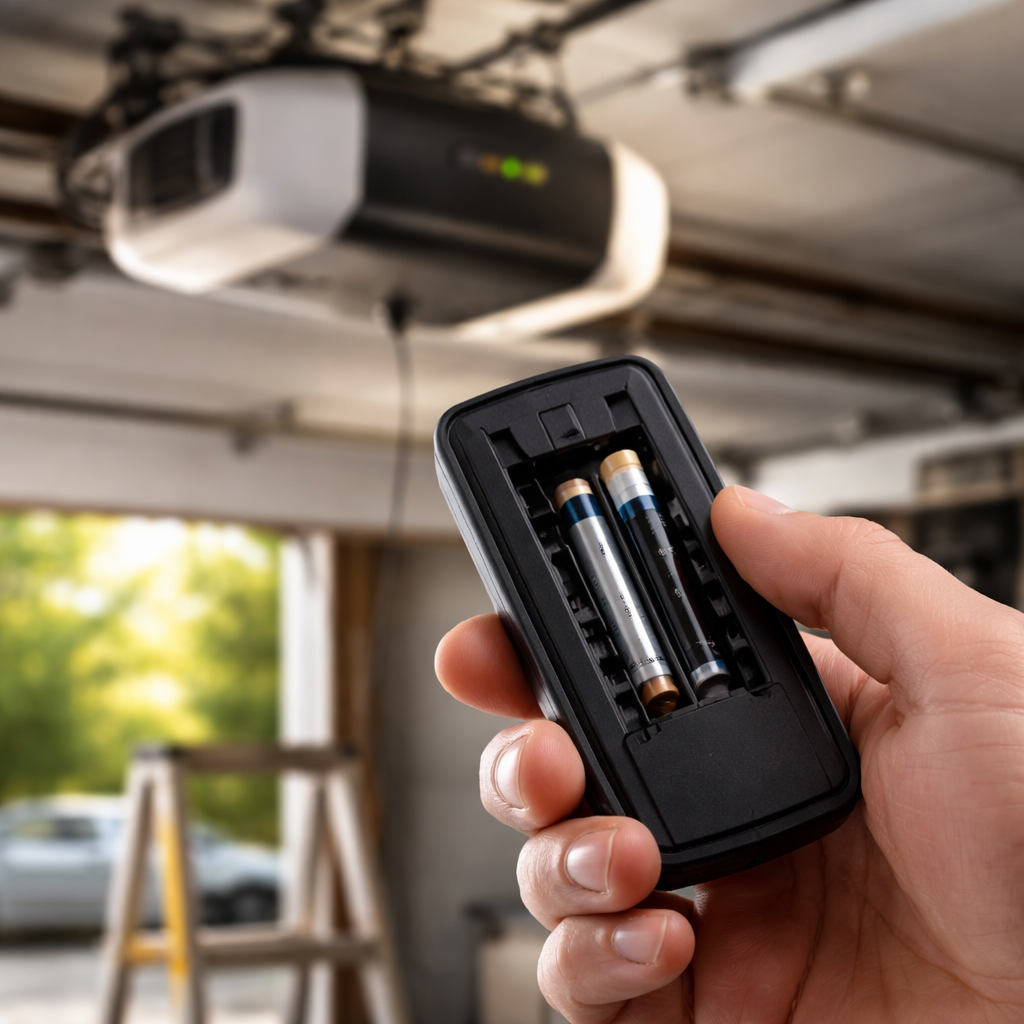
Picture this: you pull into your driveway after a long day, press the button on your remote, and nothing happens. If your garage door opener not working is the reason you’re reading this right now, you’re not alone — and in most cases, the fix is simpler than you’d expect. Before calling a technician, there are several things worth checking yourself.
Start with the obvious: power and remote
It sounds almost too simple, but a surprising number of service calls come down to a dead battery in the remote or a tripped circuit breaker. Start by replacing the batteries in your remote transmitter — even if it feels like they should still have juice, weak batteries can cause inconsistent or zero response from the opener unit.
Next, check whether the opener unit itself has power. Look for any indicator lights on the motor head. If nothing is lit up, head to your electrical panel and see if the breaker connected to the garage has tripped. Reset it and try again.
- Replace remote batteries (AA or AAA, depending on model)
- Check the outlet the opener is plugged into using another device
- Inspect the circuit breaker and reset if needed
- Try the wall-mounted button inside the garage — if that works, the issue is with the remote itself
Safety sensors: the most overlooked cause
Modern garage door openers are equipped with photo-eye safety sensors located near the bottom of the door tracks on both sides. These sensors send an invisible beam across the door opening, and if that beam is interrupted or misaligned, the opener won’t close the door — a built-in safety feature that can feel very much like a malfunction.
Check whether the small indicator lights on both sensors are solid (not blinking). A blinking or unlit sensor almost always signals a problem with alignment or obstruction.
If the door goes up but refuses to come down, misaligned safety sensors are the number one suspect. Look for the blinking LED — that’s your diagnostic tool right there.
Wipe the sensor lenses with a soft cloth to remove dust or cobwebs. Then gently adjust the sensor brackets so both units face each other directly. Once aligned properly, the lights should stop blinking and return to a steady glow.
The door itself might be the problem
Sometimes the opener motor runs but the door doesn’t move — and that’s usually a mechanical issue with the door rather than the opener electronics. Disconnect the opener by pulling the red emergency release cord, then try lifting the door manually. If it feels extremely heavy, stiff, or unbalanced, the springs may need adjustment or replacement.
Garage door springs are under significant tension and should only be serviced by a professional. However, you can safely check the tracks for visible obstructions, bent sections, or loose hardware. Tighten any loose bolts along the track brackets and clear out any debris.
| Symptom | Likely Cause | DIY Friendly? |
|---|---|---|
| Remote doesn’t respond | Dead batteries or signal interference | Yes |
| Motor runs, door doesn’t move | Broken spring or disconnected trolley | Partially |
| Door reverses immediately after closing | Sensor misalignment or close-limit setting | Yes |
| Loud grinding noise | Worn gear and sprocket kit | No — call a pro |
| Wall button works, remote doesn’t | Remote needs reprogramming or battery swap | Yes |
Reprogramming and limit settings
If the door reverses before fully closing or stops short of fully opening, the travel limits on the opener unit are likely off. These are adjustable settings — usually small screws or digital controls on the motor head labeled “Up Limit” and “Down Limit.” Adjusting them incrementally can solve the issue without any replacement parts.
Another common scenario is a remote that has lost its programming. This can happen after a power surge or simply over time. Most openers have a “Learn” button on the back or side of the motor unit. Press and hold it until the indicator light blinks, then press your remote button within 30 seconds to reprogram it. Always check your specific model’s manual for the exact sequence.
When it’s time to stop troubleshooting
Most of the issues above are genuinely fixable without professional help — a bit of patience, a screwdriver, and some fresh batteries go a long way. But there are situations where DIY ends and expert help begins.
- Broken torsion or extension springs (high tension — serious injury risk)
- Burnt-out motor or logic board inside the opener unit
- Severely bent or damaged tracks
- The door has come off the tracks completely
In these cases, a licensed garage door technician is the right call. The cost of a professional repair is almost always less than the cost of an injury or a worsened problem caused by incorrect DIY work on high-tension components.
Getting your opener back in shape for the long run
Once you’ve resolved the immediate issue, it’s worth spending ten minutes on basic maintenance to prevent the next one. Lubricate the chain or screw drive with a product designed for garage doors — not WD-40, which evaporates quickly and attracts dust. Apply a small amount of lubricant to the rollers, hinges, and springs (but not the tracks themselves).
Test the balance of the door every few months by disconnecting the opener and manually lifting the door halfway. If it stays in place, the springs are balanced. If it rises or falls on its own, the spring tension needs professional adjustment.
Keeping the sensor lenses clean, checking the hardware for loose bolts, and running a quick balance test twice a year will extend the life of your opener significantly — and make sure that the next time you pull into the driveway, the door does exactly what it’s supposed to.