
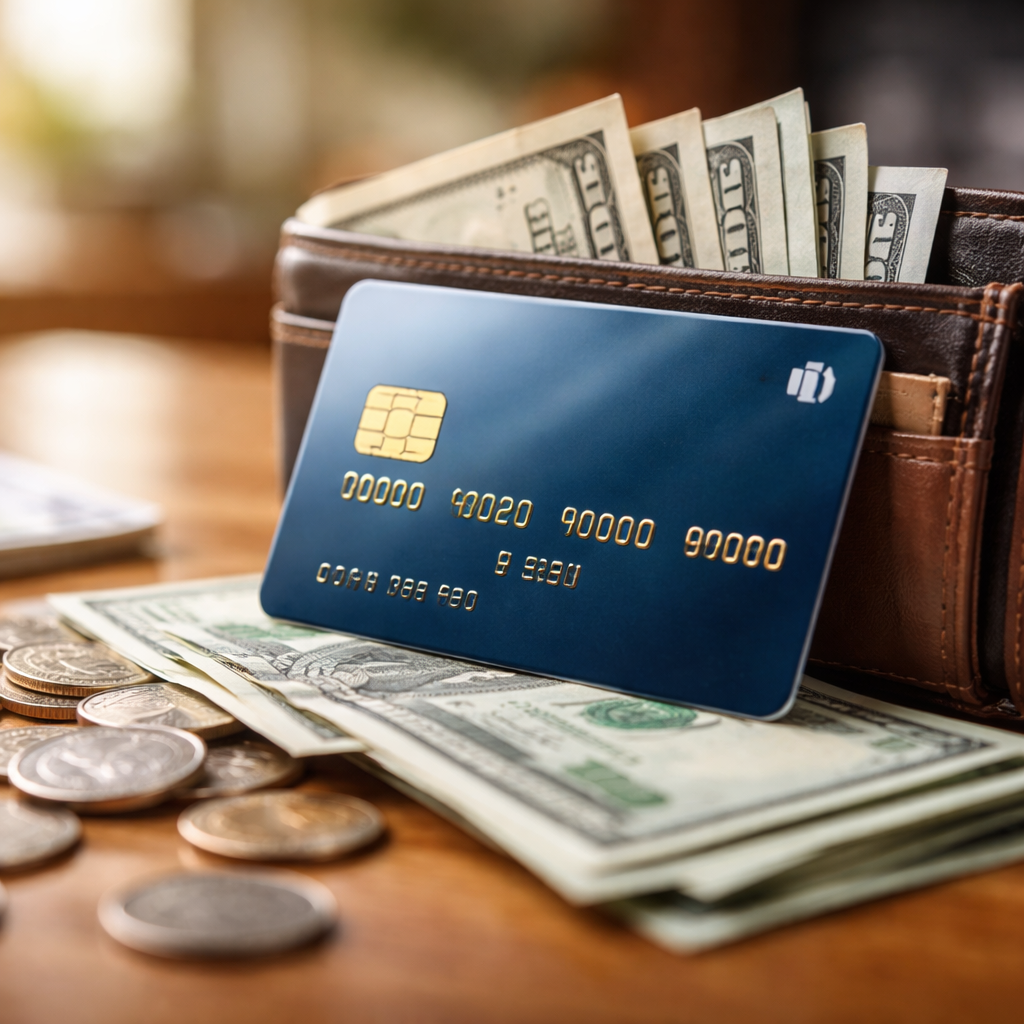
Most people never think twice about reaching for their wallet — but the choice between plastic and paper matters more than it seems. The advantages of credit cards over cash go far beyond simple convenience, touching on financial security, spending habits, and even the rewards you quietly accumulate with every purchase. If you’ve ever wondered whether keeping a credit card in your wallet actually makes sense, the answer almost always comes with a convincing list of reasons.
Your money is protected — cash simply isn’t
Lose a wallet full of cash and that money is gone. No dispute process, no recovery, no customer support line to call. With a credit card, the story is entirely different. Most major card issuers offer zero-liability policies, meaning you’re not responsible for unauthorized transactions if your card is lost or stolen. You report it, the bank investigates, and in the vast majority of cases, the charge is reversed.
This protection extends to online shopping as well. If a merchant fails to deliver a product or charges you incorrectly, you have the right to initiate a chargeback — a formal dispute that gives you legal recourse that simply doesn’t exist when you hand over cash at a register.
Consumer protection through credit card networks isn’t a perk — it’s a financial safety net that cash can never replicate.
Rewards, cashback, and travel miles: getting paid to spend
One of the most tangible differences between credit cards and cash is the rewards ecosystem. Every time you pay with cash, you receive nothing back. A well-chosen credit card, on the other hand, can return anywhere from 1% to 5% of your spending in the form of cashback, travel miles, or loyalty points.
Consider this: someone who spends $1,500 per month on everyday purchases — groceries, fuel, subscriptions — and uses a 2% cashback card earns $360 per year in pure returns. That’s money spent on things you were going to buy anyway.
| Payment Method | Cashback / Rewards | Purchase Protection | Spending Record |
|---|---|---|---|
| Cash | None | None | Manual only |
| Debit Card | Rarely | Limited | Basic statements |
| Credit Card | Yes (1–5%+) | Strong | Detailed & automatic |
Building credit history: the invisible asset
Cash transactions leave no financial footprint. That sounds private, but it also means you’re missing an opportunity to build something genuinely valuable — your credit score. Responsible credit card use, meaning regular purchases paid off in full each month, gradually strengthens your credit profile.
A solid credit history affects far more than your ability to borrow money. It influences rental applications, insurance premiums in some countries, and even background checks by certain employers. Using a credit card thoughtfully is one of the most accessible ways to build this financial credibility over time.
Tracking and managing your finances becomes effortless
Think about the last time you tried to recall exactly where your cash went during a busy week. It’s nearly impossible. Credit card statements, on the other hand, create a precise, searchable record of every transaction — merchant name, amount, date, and category.
Most card issuers now offer apps with automatic spending categorization, monthly summaries, and even budget alerts. This level of visibility makes it significantly easier to identify where money is leaking, plan for large expenses, and prepare for tax season if you’re self-employed or track deductible business costs.
- Automatic expense categorization (dining, travel, groceries, etc.)
- Instant push notifications for every transaction
- Monthly and annual spending summaries
- Easy export for personal budgeting tools or tax records
- Alerts for unusual or potentially fraudulent activity
Traveling and shopping internationally: where cash becomes a liability
Carrying significant amounts of foreign cash while traveling is both risky and inefficient. Exchange rates at airport kiosks or local bureaus are rarely favorable, and you’re exposed to theft with no recovery option. A credit card with no foreign transaction fees gives you competitive exchange rates automatically, fraud protection abroad, and often includes travel insurance perks like trip cancellation coverage or rental car protection.
For online shopping across international retailers, credit cards also provide a layer of security that cash-based alternatives cannot. If a package never arrives or the product is misrepresented, your card issuer can pursue the dispute on your behalf.
Emergency situations: when liquidity matters most
Life doesn’t always give advance notice. A car breakdown, a sudden medical expense, or an unexpected flight home — these situations rarely happen when you’ve got the right amount of cash on hand. A credit card acts as an immediate financial buffer that can bridge the gap between an emergency and your next paycheck without requiring you to scramble for an ATM or borrow from someone.
This isn’t a reason to treat credit cards as a substitute for an emergency fund — financial advisors consistently recommend maintaining liquid savings for exactly this purpose. But as a complement to savings, a credit card provides flexible access to funds precisely when timing matters.
Smart habits make the difference
None of the benefits above arrive automatically — they depend on how you use the tool. A credit card in the hands of someone paying only minimum balances becomes an expensive way to borrow money, with interest rates eating away at any rewards earned. The advantages are real and substantial, but they’re fully accessible only when the card is paid in full, consistently and on time.
What separates people who genuinely benefit from credit cards from those who don’t isn’t income level or financial sophistication — it’s simply the habit of treating the card as a payment method rather than a borrowing mechanism. With that mindset in place, every swipe works in your favor: building credit, earning rewards, protecting purchases, and keeping your financial life organized with far less effort than cash ever could.