
Most people underestimate just how much a cramped wardrobe affects their daily mood — until they’ve experienced the relief of actually knowing where everything is. If you’re trying to figure out how to organize a small closet without spending a fortune or tearing your space apart, the good news is that smart organization is more about method than money.
Start by taking everything out — seriously, everything
It sounds obvious, but most people skip this step and try to reorganize around the clutter. That’s where the process breaks down. Removing every single item from your closet forces you to see what you actually own, what’s worn out, what doesn’t fit, and what somehow ended up there by accident.
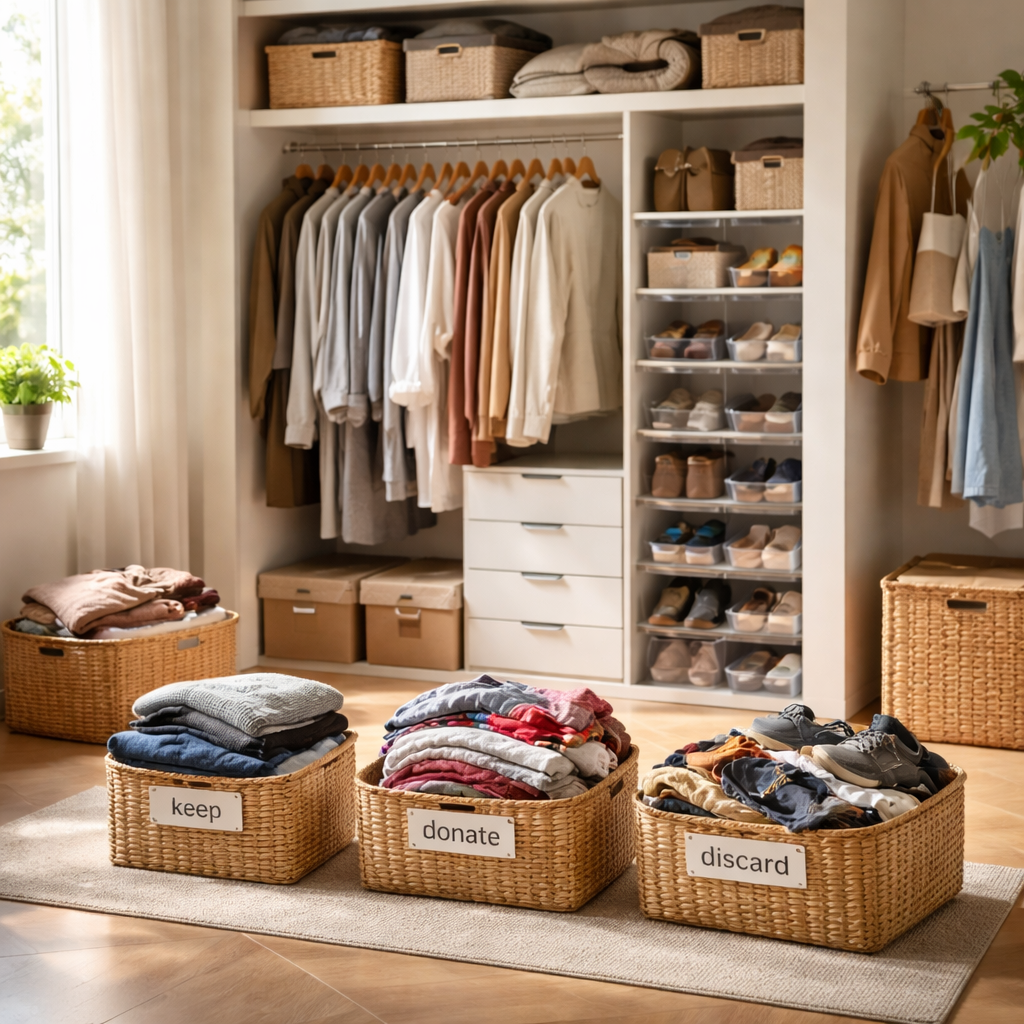
As you sort through items, create three clear categories: keep, donate, and discard. Be honest with yourself. If you haven’t touched something in over a year and feel nothing when you look at it — it’s probably not worth the shelf space.
A well-organized small closet isn’t about fitting more in — it’s about keeping less of what you don’t need and making the rest easy to reach.
Think vertically, not just horizontally
One of the most common mistakes with small closet storage is ignoring vertical space. The area above your hanging rod and the floor below it are both prime real estate. Wall-mounted shelving, stackable bins, and over-the-door organizers can dramatically increase your storage capacity without requiring any structural changes.
Here’s a simple way to think about zones in a compact wardrobe:
- Upper shelves — seasonal items, spare bedding, or things you rarely access
- Eye-level area — everyday clothing, frequently used accessories
- Hanging rod — dresses, shirts, jackets arranged by category or color
- Floor level — shoes, baskets, or a small dresser if space allows
- Door back — hooks, pocket organizers, or a mirror with hidden storage
This zoning approach means you’ll spend less time searching and more time actually getting dressed in the morning.
Closet organization tips that actually make a difference
Not all organization advice translates into real-life improvements. These are the ones that consistently work, regardless of closet shape or size:
| Problem | Practical Solution |
|---|---|
| Shirts falling off hangers | Switch to velvet slim hangers — they save space and grip fabric |
| Shoes piling up on the floor | Use a clear shoe rack or stackable transparent boxes |
| Shelves too deep to see items | Add pull-out bins or small baskets as dividers |
| Scarves and belts tangled together | Hang them on a single hook rail or dedicated rod hooks |
| No space for folded clothes | Try the KonMari vertical folding method to fit twice as much |
Small adjustments like switching hanger types or adding a single shelf riser can free up surprising amounts of space. You don’t need to renovate — you need to be intentional.
Maximizing closet space in a bedroom without built-ins
Not every apartment or home comes with custom cabinetry, and that’s completely fine. Freestanding wardrobe systems, portable clothing racks paired with curtain dividers, and modular cube organizers can all replicate the function of built-in storage at a fraction of the cost.
If your closet has just one hanging rod and a single shelf, consider doubling the hanging space with a rod extender — a simple add-on that hooks onto your existing rod and creates a second level below it, perfect for shirts, jackets, or folded pants.
Keeping it organized once you’ve set it up
The hardest part isn’t the initial reorganization — it’s maintaining it. A small closet gets chaotic fast when there’s no system to return things to. The key is reducing friction: make it just as easy to put something back correctly as it is to toss it somewhere random.
A few habits that actually stick:
- Do a quick five-minute reset each week rather than waiting for things to spiral
- Follow the “one in, one out” rule — when something new comes in, something old leaves
- Reassess your storage setup with the seasons, since your clothing needs genuinely change
- Keep a small donation bag inside or near the closet so decluttering becomes ongoing, not a once-a-year event
Building a routine around your closet turns maintenance from a chore into something that takes almost no effort at all.
The closet you have is already enough to work with
It’s tempting to believe that a bigger closet would solve everything, but in most cases the problem isn’t size — it’s the absence of a clear system. People with large walk-in wardrobes often struggle just as much as those working with a single narrow reach-in. What makes the difference is how thoughtfully the space is used.
Start small if you need to. Pick one section — just the shoe area, or just the top shelf — and get that right first. Momentum builds quickly, and before long the whole space starts to feel manageable. Organization isn’t a one-time project; it’s an ongoing relationship with your belongings and the space they live in.