
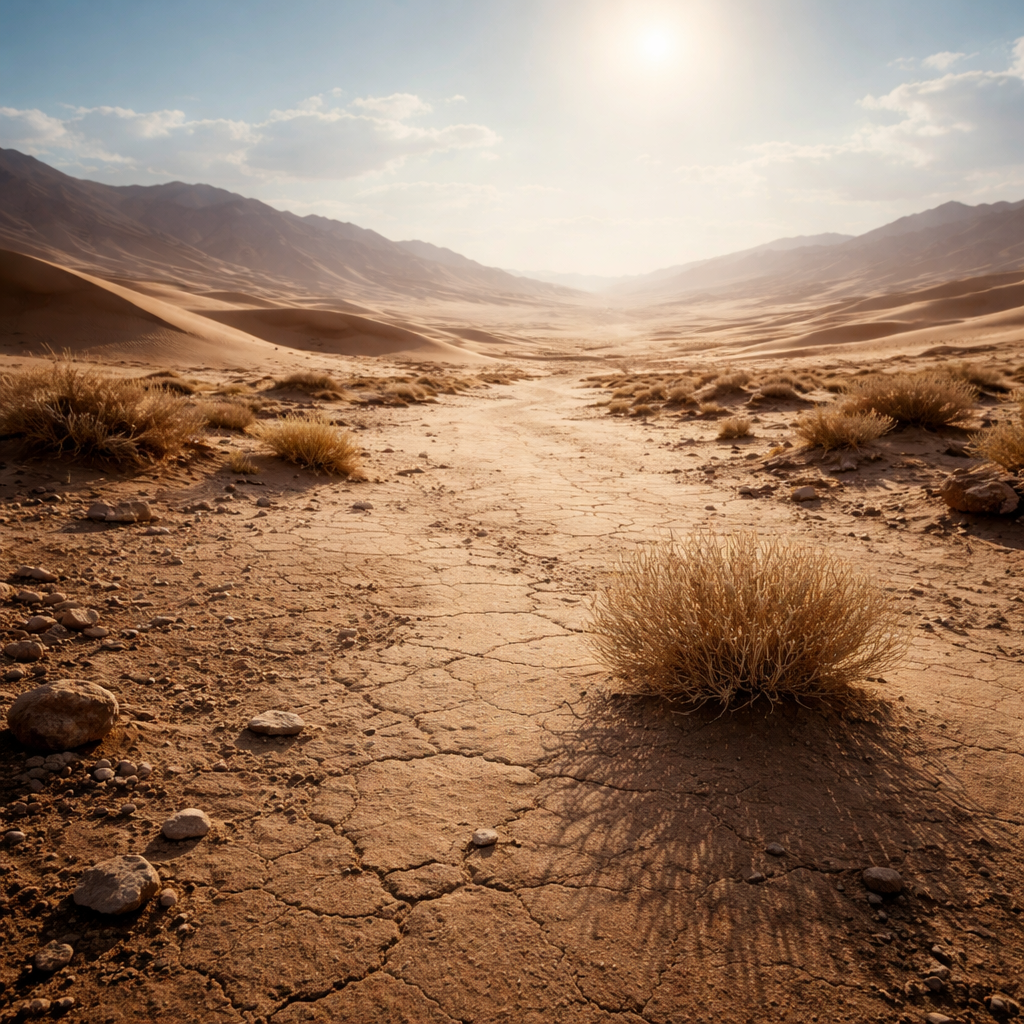
Few dream images feel as vast and disorienting as an empty, sun-scorched landscape stretching to the horizon — and if you’ve ever wondered what does dreaming about a desert mean, you’re far from alone. This type of dream tends to leave a lasting impression, the kind that follows you into the morning with a quiet sense of weight.
Why the desert shows up in your sleep at all
Dreams don’t generate random imagery. The brain pulls from emotional memory, sensory experience, and psychological states — and the desert, as an archetypal landscape, carries a very specific emotional charge. It represents extremes: extreme quiet, extreme exposure, extreme thirst. When this setting appears in a dream, it’s rarely coincidental.
Psychologists and dream researchers who study symbolic imagery point out that barren landscapes often surface during periods of emotional depletion or transition. The desert doesn’t mean something is wrong with you — but it’s worth pausing to understand what your mind might be processing.
The most common interpretations — and what separates them
Not every desert dream carries the same message. The emotional tone of the dream, what you were doing in it, and how the landscape felt all shift the meaning significantly. Here’s how different scenarios tend to break down:
| Dream scenario | Common psychological association |
|---|---|
| Wandering alone with no destination | Feeling lost in waking life, lack of direction or purpose |
| Searching for water desperately | Emotional or creative drought, unmet need for connection |
| Standing still and feeling calm | Desire for solitude, mental rest, or withdrawal from stress |
| Finding an oasis unexpectedly | Hope after hardship, resilience, unexpected emotional relief |
| Desert at night with stars | Spiritual seeking, introspection, a sense of being guided |
| Being chased in a desert | Anxiety, avoidance of an unresolved situation |
As you can see, the landscape itself is just the container. What you experience within it tells the real story.
Loneliness vs. solitude — a distinction that matters here
One of the most misread desert dreams involves feelings of isolation. People often wake from these dreams assuming they signal loneliness — but there’s a meaningful difference between loneliness and chosen solitude, and that difference shows up in how the dream felt emotionally.
If the emptiness in the dream felt threatening or suffocating, it likely reflects a real sense of disconnection. But if it felt open and quiet, your mind may be signaling a genuine need for space.
This is why journaling the emotional texture of a dream — not just its visuals — is one of the most useful habits for understanding recurring dream themes.
What the thirst element specifically points to
Among all desert dream variations, the ones involving thirst or searching for water are particularly telling. Water in dream symbolism consistently represents emotion, nourishment, and connection. When you’re desperately seeking it in an arid landscape, the subconscious is often reflecting a state of emotional starvation — not physical, but relational or creative.
This pattern tends to appear in people going through burnout, long periods of social withdrawal, or creative blocks. The desert isn’t punishing you in the dream — it’s showing you an internal state you might not have consciously acknowledged yet.
Cultural and spiritual layers of desert symbolism
It’s worth noting that desert imagery carries deep roots across religious and cultural traditions — and these collective associations often seep into personal dream symbolism, even unconsciously.
- In many spiritual traditions, the desert represents a place of testing, purification, or awakening — a threshold between who you were and who you’re becoming.
- In Jungian psychology, vast empty landscapes are often linked to the unconscious itself — an unmapped inner territory waiting to be explored.
- Historically, desert journeys in mythology symbolize transformation through hardship rather than destruction.
If your dream carried a spiritual or mystical quality — a sense of being on the edge of something meaningful — these frameworks might resonate more than strictly psychological ones. Neither is more “correct.” They simply speak to different dimensions of the same experience.
How to actually use this kind of dream information
Understanding dream symbolism is only useful if it connects back to something actionable in your waking life. Here are a few grounded ways to work with what a desert dream might be telling you:
- Identify what area of your life currently feels dry, stalled, or depleted — that’s often where the dream is pointing.
- Ask yourself whether you’ve been craving more solitude or, conversely, more genuine human connection.
- Notice if the dream is recurring. Repeated imagery typically signals an unresolved emotional theme rather than a one-time processing event.
- Consider whether you’re in a transition period — changing careers, relationships, or living situations — as desert dreams are particularly common during liminal phases of life.
Dreams rarely hand you a solution. What they offer instead is a kind of honest mirror — and the desert, with its stark and uncluttered landscape, is one of the clearest mirrors the dreaming mind produces.
When the landscape shifts — and what that tells you
Pay attention to whether your desert dream ends the same way it begins. A dream that starts in barren emptiness and gradually shifts toward green, water, or light is telling quite a different story than one that stays relentlessly dry throughout. The former often reflects a subconscious belief in change or recovery — even when conscious thinking feels stuck. The latter may be asking for more direct attention to what’s being neglected.
Either way, the desert dream isn’t a sentence. It’s a conversation your mind is trying to have with you — and the fact that you’re asking what it means is already a meaningful first step in that dialogue.