
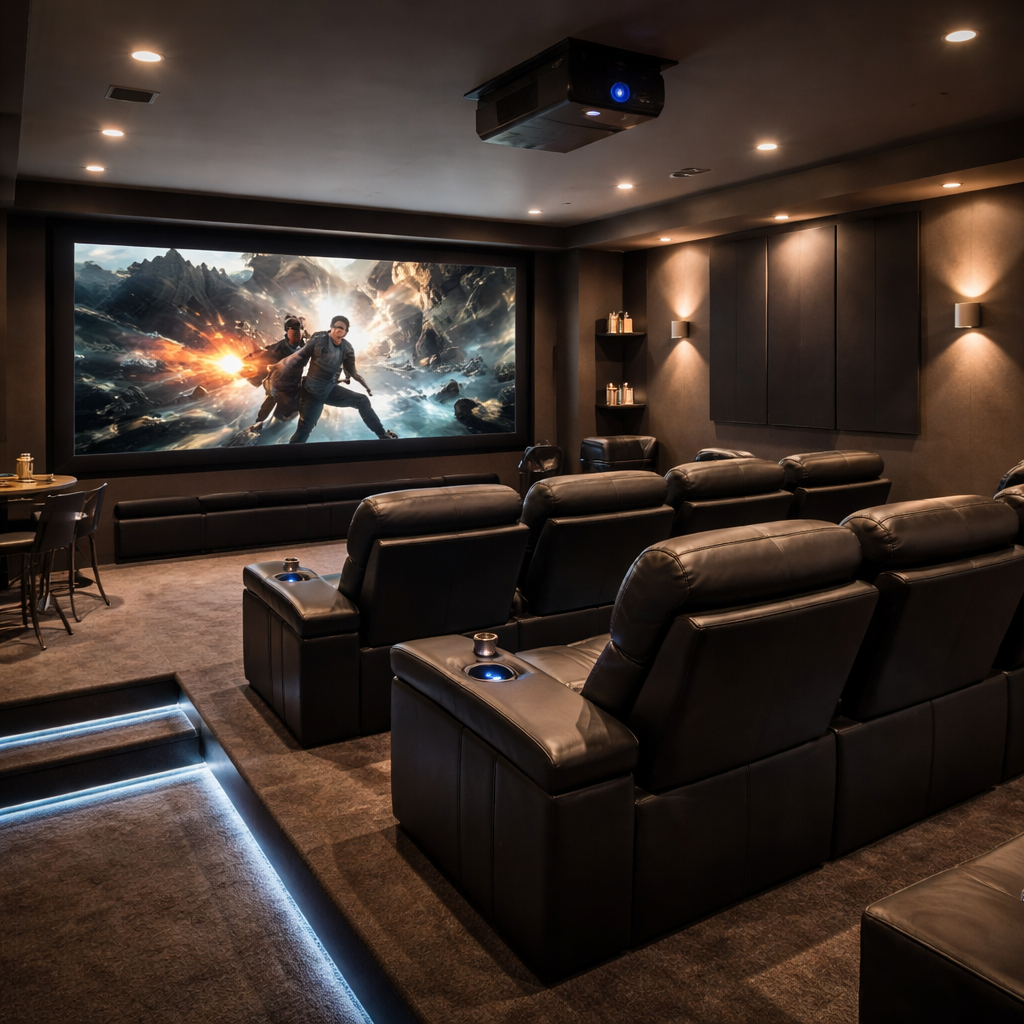
Converting an unused basement into a dedicated screening space is one of the smartest home upgrades you can make — and ideas for a basement home theater range from surprisingly budget-friendly setups to full cinematic builds with acoustic panels, tiered seating, and 4K laser projection. The basement is naturally suited for this purpose: it blocks outside light, insulates sound from the rest of the house, and gives you total design freedom without compromising your living areas above.
Why the basement works better than any other room
Before diving into design choices, it’s worth understanding what makes a basement inherently better for a home theater than, say, a spare bedroom or living room. The lack of windows eliminates glare — one of the most common and frustrating problems with daytime viewing. The surrounding soil provides natural thermal and acoustic insulation. And since the space is already separated from main living areas, you can run audio at real volume without disturbing the rest of the household.
That said, basements come with their own challenges: low ceilings, limited ventilation, potential moisture issues, and sometimes awkward structural columns. Addressing these early in your planning process will save you significant headaches — and money — later.
Screen vs. projector: the decision that shapes everything
One of the first choices you’ll face is whether to go with a large flat-panel TV or a projector-and-screen setup. Each has real trade-offs that depend on your room dimensions, lighting control, and budget.
| Option | Best for | Key consideration |
|---|---|---|
| Large flat-panel TV (85″–100″+) | Rooms with some ambient light, smaller spaces | Higher brightness, simpler setup, no screen required |
| Short-throw projector | Tight basements with limited throw distance | Can project 100″+ image from just a few feet away |
| Standard projector + fixed screen | Longer rooms, full cinematic experience | Requires complete light control for best picture quality |
| UST (ultra-short-throw) laser projector | Those wanting the biggest image with minimal setup | Excellent brightness, works closer to ambient light |
For most basement setups, a projector paired with a fixed-frame screen tends to deliver the most immersive experience — especially when the room length allows a throw distance of at least 10–12 feet. If your basement is compact or L-shaped, a large QLED or OLED television is often the more practical and visually impressive choice.
Audio: where most people underinvest
Picture quality gets all the attention, but sound design is what actually makes a home theater feel like a real cinema. A decent 5.1 surround sound system — with a center channel, front left and right speakers, rear surrounds, and a subwoofer — creates a level of immersion that no soundbar can replicate.
A subwoofer placed in a corner of the basement will naturally amplify bass response due to room acoustics — it’s a simple trick that makes a measurable difference without spending more money.
If you want to go further, a 7.1 or Dolby Atmos configuration adds overhead or height channels that create a three-dimensional soundscape. This is where basement theaters genuinely outperform anything you can build in a regular room — the concrete walls and ceiling give you a solid structure for mounting speakers at precise angles.
Acoustic treatment is equally important. Without it, sound bounces off hard surfaces and creates an echoey, muddy listening experience. Strategically placed acoustic panels, thick rugs, upholstered furniture, and heavy curtains all help tame reflections and improve clarity significantly.
Seating arrangements that actually work in basements
Seating is where personal taste and practicality intersect. The classic choice is tiered seating — a raised platform at the back of the room with a second row of recliners positioned higher than the front. This ensures clear sightlines for everyone regardless of where they sit. Building a simple platform with plywood and lumber is a manageable DIY project that makes an enormous difference.
If your ceiling height doesn’t allow for a raised platform (typically you need at least 8 feet for a single-step riser), a single-row layout with wide, deeply cushioned recliners arranged in a gentle arc works well. Popular options include:
- Dedicated home theater recliners with cup holders and USB charging ports
- Modular sectional sofas with chaise configurations
- Bean bag or floor seating for a more casual, multipurpose room
- Mixed arrangements — a sofa at the back, individual recliners up front
Whatever you choose, position your primary seating at a distance roughly 1.5 to 2.5 times the screen’s diagonal measurement. So for a 120-inch projected image, ideal viewing distance lands between 15 and 25 feet — a range most basements can comfortably accommodate.
Lighting design: more nuanced than you’d expect
Total darkness is not actually the goal for a well-designed home theater. Watching in a completely dark room causes eye strain over long viewing sessions. Bias lighting — a soft, low-level glow placed behind the screen or along the walls — reduces contrast fatigue and makes the overall image appear sharper to the eye.
LED strip lighting installed along stair edges, behind the screen wall, and along the floor perimeter serves both aesthetic and practical functions. Pair it with a smart dimmer or a scene controller, and you can shift from full ambient lighting to a dim cinematic mode with a single tap.
The ideal bias lighting color temperature behind your screen is around 6500K (daylight white) — it matches the white point of most displays and reduces perceived eye strain during extended viewing.
Small details that separate a good setup from a great one
Once the major components are in place, a handful of smaller decisions determine whether the space feels truly finished or just functional.
- Cable management: in-wall cable routing or cord covers keep the space looking clean and reduce trip hazards
- Dedicated electrical circuits: home theater equipment draws significant power; a separate circuit prevents interference and protects your gear
- Ventilation: projectors and AV receivers generate heat; proper airflow prevents overheating and extends equipment life
- A mini fridge or beverage station tucked into a corner eliminates the need to leave the room mid-film
- Blackout curtains or panels over any windows, even small egress windows, are essential for daytime viewing
Making the space work beyond movie nights
A basement home theater doesn’t have to be a single-purpose room. With the right layout, the same space can host gaming sessions, sports viewing parties, or music listening nights. A large-screen display paired with a quality audio system serves all of these equally well. Some homeowners integrate a small gaming corner with a separate monitor and comfortable chair at the side of the room, keeping it out of the main viewing sightlines but available when needed.
The basement also lends itself well to a media room hybrid — combining a bar-height counter along one wall, compact seating near it for social gatherings, and the main theater seating facing the screen. This dual-zone approach means the space is usable in more situations without any single element compromising the other.
Whatever direction you take, the most successful basement theater builds share one trait: they were designed around how the people using them actually live, not around how a showroom display looks. Start with what you watch most, how many people typically join you, and what your basement’s dimensions realistically allow — then build outward from there.