
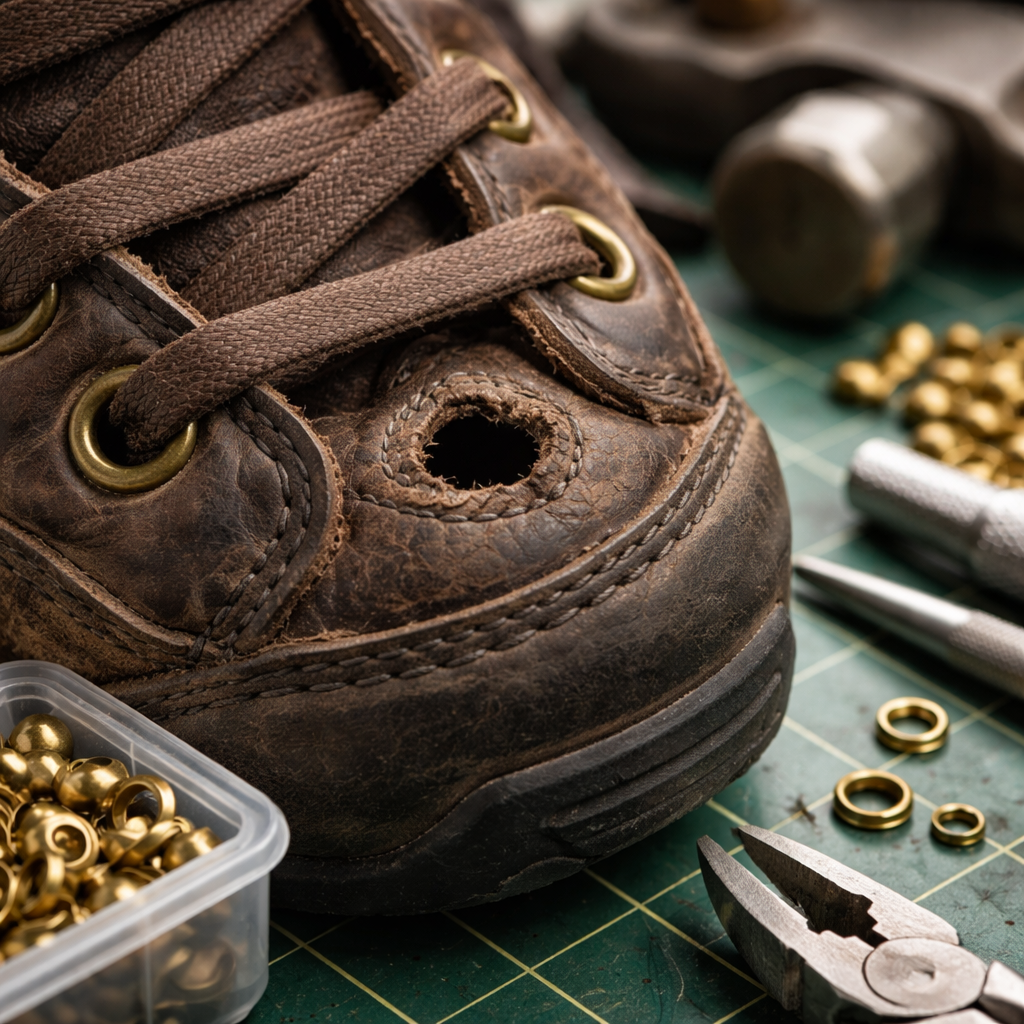
A single worn-out metal ring around a shoelace hole can turn a perfectly good pair of shoes into a frustrating daily struggle — and knowing how to fix a broken shoelace eyelet properly means you won’t have to retire your favorite footwear prematurely. Whether the eyelet has cracked, popped out, or simply disintegrated from regular wear, the repair process is more straightforward than most people assume.
What actually causes eyelets to break
Eyelets take more mechanical stress than they appear to. Every time you lace up and pull tight, that small metal or plastic ring absorbs tension, friction, and bending force simultaneously. Over time — especially on athletic shoes or boots worn daily — the material fatigues and either cracks around the rim or separates from the upper entirely.
There are a few common culprits worth knowing about:
- Thin, low-quality metal stampings that corrode from moisture and sweat
- Aggressive lacing techniques that concentrate force on a single eyelet
- Repeated flexing of the shoe toe box area, which is where most failures occur
- Shoes dried too close to a heat source, which weakens the surrounding leather or fabric
Understanding the cause helps you choose the right fix — and avoid repeating the same problem after the repair.
Tools and materials you’ll actually need
Before you start, gather everything in one place. There is nothing more annoying than stopping midway through a repair to hunt for a tool. The good news is that eyelet repair kits are widely available at hardware stores, shoe repair shops, and online retailers at minimal cost.
| Item | Purpose | Notes |
|---|---|---|
| Eyelet repair kit | Provides replacement eyelets and setting tools | Match the eyelet diameter to your shoe |
| Hole punch or awl | Creates or clears the hole in the material | A leather punch works best on thick uppers |
| Hammer or mallet | Sets the eyelet firmly in place | Use a rubber mallet on delicate materials |
| Small pliers | Removes broken eyelet remnants | Needle-nose pliers offer better control |
| Cutting mat or block | Protects your work surface | Any firm, flat surface works as a substitute |
Step-by-step: replacing a broken eyelet at home
The repair itself breaks down into four distinct stages. Take your time with each one — rushing the setting stage in particular leads to uneven eyelets that fail again quickly.
Remove the broken eyelet first. Use needle-nose pliers to grip the damaged ring and work it loose with small back-and-forth movements. If the eyelet has already fallen out and left a frayed hole, use small scissors to trim any loose threads before moving on.
Clean and prepare the hole. If the existing hole is the right size for your replacement eyelet, you may be able to skip this step. But if the material has bunched or torn around the edges, use your hole punch to create a clean, round opening. The replacement eyelet should slide in with light hand pressure — not too loose, not so tight that you have to force it.
Set the new eyelet. Place the front side of the eyelet through the hole from the outside of the shoe. Flip the shoe over so the back of the eyelet faces up. Position the eyelet setter from your kit over the barrel, then strike it firmly and evenly with your hammer. Most kits require two or three solid strikes to roll the metal edge down and lock the eyelet in place. Check that the flange sits flat against the material on both sides.
Test before lacing. Tug on the newly set eyelet from multiple angles. It should feel completely solid with no rocking or rotation. If it moves at all, give it one or two additional hammer strikes and test again.
A properly set eyelet should feel like it was always part of the shoe. If you can spin it with your fingertip, it hasn’t been seated correctly — don’t skip the extra strike.
When a DIY fix isn’t the right call
Not every broken eyelet situation calls for a home repair. There are scenarios where a professional cobbler is genuinely the better option, and recognizing them saves you time and the risk of damaging expensive footwear.
- Multiple eyelets have failed across the same shoe, suggesting the upper material itself is deteriorating
- The shoe is made from exotic leather or has a complex multilayer construction that requires specialized tools
- The eyelet damage is close to the toe cap or a structural seam where incorrect setting could compromise the shoe’s integrity
- You’re working with dress shoes or boots where cosmetic appearance matters as much as function
Most shoe repair shops can replace an eyelet quickly and inexpensively, often while you wait. For high-end footwear, that small professional fee is almost always worth it.
No-tool alternatives for temporary fixes
Sometimes you need a solution right now — before work, before a trip, before the shop opens. In those moments, a few practical workarounds can keep your shoes functional without a proper repair kit.
One simple approach is to skip the damaged eyelet entirely and lace around it. This reduces pressure on that spot and prevents the hole from tearing further. It also changes the lacing pattern slightly, which can sometimes even improve comfort depending on the shoe fit.
Another option for shoes with a fabric or canvas upper is a small binding clip or a hand-sewn reinforcement using heavy thread. While this won’t look perfect, it holds the hole shape together and prevents fraying until you can make a permanent repair.
Choosing the right replacement eyelet
Not all eyelets are interchangeable. Getting the wrong size is the most common mistake people make when ordering replacement parts, and it results in either a loose fit that pops out again or a barrel that won’t pass through the material cleanly.
Measure the inner diameter of an intact eyelet on the same shoe before purchasing. Standard sizes for athletic shoes typically range from 4mm to 6mm, while boots and heavier footwear often use 6mm to 10mm eyelets. Also check whether the original eyelets are two-part (a separate eyelet and washer) or single-piece, as this affects both the tool you need and the finished appearance.
Material matters too. Brass eyelets offer excellent corrosion resistance and a clean finish. Nickel-plated steel is durable and affordable. For shoes exposed to heavy moisture — hiking boots, rain shoes — brass or stainless options will outlast standard steel significantly.
Keep your eyelets lasting longer from now on
Once you’ve made the repair, a few straightforward habits will extend the life of every eyelet on the shoe. Avoid yanking laces sharply upward when tightening — pull at an angle that follows the natural direction of the lacing channel. Let shoes dry at room temperature rather than forcing the process with a dryer or radiator, since heat causes the upper material around the eyelet to contract and stress the metal edge. Applying a small amount of leather conditioner around the eyelet area periodically keeps the surrounding material flexible and less prone to cracking.
Small repairs like this are genuinely satisfying to get right. A shoe that would have ended up discarded comes back into full rotation, and you walk away with a practical skill that applies every time this problem comes up — which, for anyone with a decent collection of quality footwear, is more often than you’d expect.