
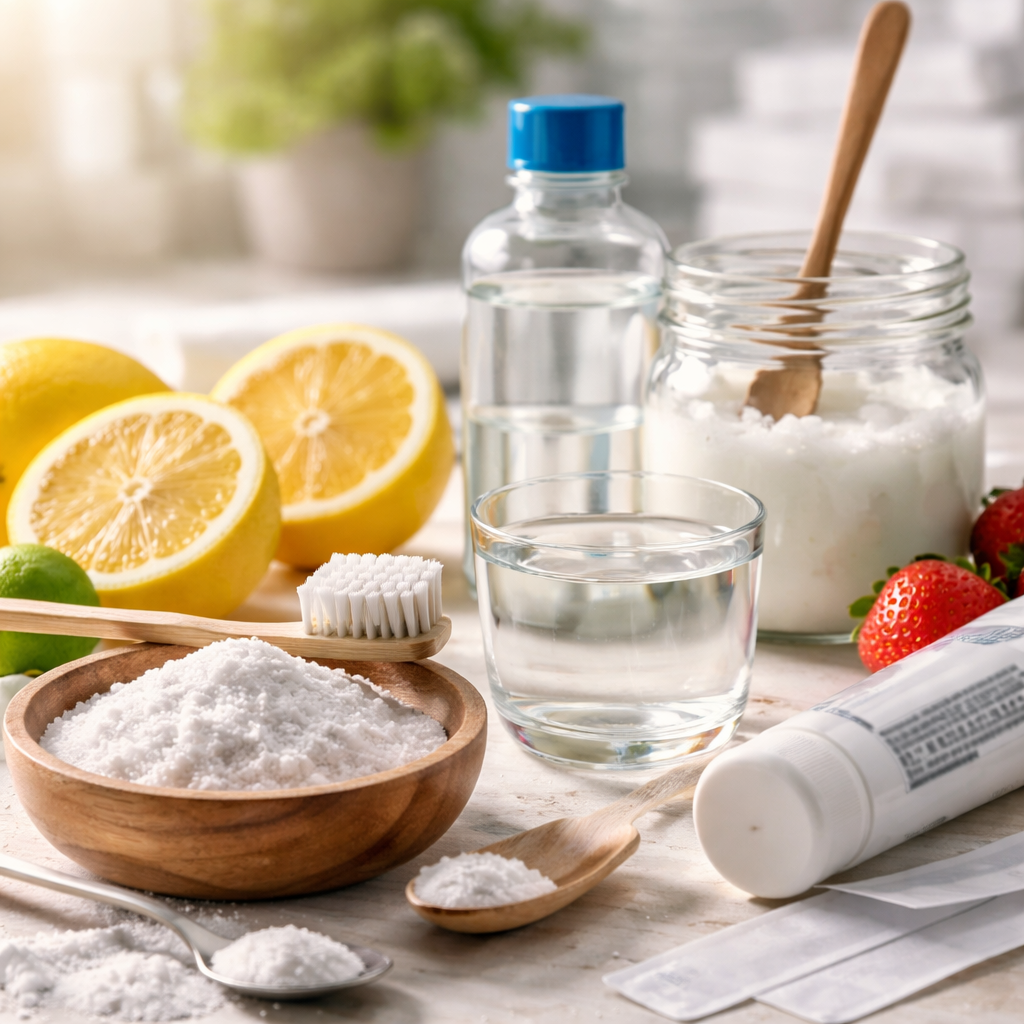
Most people reach for whitening strips or book a dental appointment without realizing that effective results are often sitting in their bathroom cabinet or kitchen pantry. Knowing how to whiten teeth at home doesn’t require expensive kits — it requires understanding which methods actually work, which ones can damage enamel, and how to build a simple routine that delivers visible results over time.
What actually causes teeth to look yellow
Before jumping into solutions, it helps to understand the problem. Tooth discoloration falls into two categories: extrinsic and intrinsic staining. Extrinsic stains sit on the surface of the enamel and are caused by food, drinks, and habits like smoking. Intrinsic discoloration happens deeper, within the dentin layer, and is harder to address without professional intervention.
The most common culprits behind surface staining include coffee, black tea, red wine, dark berries, tomato-based sauces, and tobacco. Even some mouthwashes containing chlorhexidine can contribute to yellowing over time. The good news is that extrinsic stains respond well to home whitening methods when applied consistently and correctly.
Baking soda: the most researched home option
Sodium bicarbonate, commonly known as baking soda, has been studied extensively as a mild abrasive that removes surface stains without significantly damaging enamel when used appropriately. It works by gently scrubbing away discoloration and creating an alkaline environment in the mouth that discourages bacterial growth.
A review published in the Journal of the American Dental Association found that toothpastes containing baking soda were significantly more effective at removing stains than those without it, with a strong safety profile for enamel.
The practical approach is simple: mix a small amount of baking soda with water to form a paste and brush gently for about two minutes, two to three times per week. It shouldn’t replace your regular fluoride toothpaste — think of it as a supplemental treatment rather than a daily staple.
Hydrogen peroxide: effective but concentration matters
Hydrogen peroxide is the active ingredient in most commercial whitening products, including professional treatments. At-home use is generally safe when the concentration stays at or below 3%, which is the standard pharmacy-grade solution widely available without a prescription.
You can use it as a mouth rinse by diluting it with equal parts water and swishing for about 60 seconds before brushing. Some people mix a small amount with baking soda to create a whitening paste, which combines the abrasive and bleaching effects in one step.
- Never use concentrations above 3% at home — higher levels can cause gum irritation and enamel erosion.
- Limit hydrogen peroxide use to a few times per week, not daily.
- If you experience tooth sensitivity or gum discomfort, reduce frequency or stop use entirely.
- People with existing cavities or cracked teeth should consult a dentist before using peroxide-based methods.
Oil pulling: modest benefits, zero risks
Oil pulling is an ancient Ayurvedic practice that involves swishing oil — typically coconut or sesame — around the mouth for 10 to 20 minutes. The evidence for its whitening effects is limited compared to peroxide-based treatments, but it does help reduce oral bacteria and may contribute to a cleaner, fresher appearance of teeth over time.
It’s worth including in a routine not because it dramatically whitens, but because it supports overall oral health with zero risk of enamel damage. Use it in the morning before brushing, spit the oil into a trash bin rather than the sink to avoid clogging pipes, and follow up with your regular brushing routine.
Whitening toothpastes and strips: what to look for
The over-the-counter whitening market is crowded, and not all products deliver the same results. When choosing a whitening toothpaste, look for the American Dental Association (ADA) Seal of Acceptance and check the active ingredients. Products with hydrogen peroxide or carbamide peroxide as listed ingredients will outperform those that rely solely on abrasives.
| Product Type | Active Ingredient | Expected Results | Frequency |
|---|---|---|---|
| Whitening toothpaste | Mild abrasives, low-level peroxide | Gradual surface stain removal | Daily use |
| Whitening strips | Hydrogen or carbamide peroxide | Noticeable lightening in 1–2 weeks | Once daily for 30 min |
| Whitening trays (OTC) | Carbamide peroxide gel | Moderate lightening over 2–4 weeks | Daily, as directed |
| Baking soda paste (DIY) | Sodium bicarbonate | Mild stain removal | 2–3 times per week |
Whitening strips tend to show the most consistent results among at-home options because the peroxide stays in contact with the tooth surface for a set period. The key is patience — skipping days or stopping early will cut results short.
Dietary habits that make a real difference
No whitening method will hold up if you’re working against it with your daily diet. This doesn’t mean eliminating coffee or wine entirely — it means being strategic about how you consume them.
- Drink staining beverages through a straw to reduce contact with the front teeth.
- Rinse your mouth with water immediately after consuming coffee, tea, or red wine.
- Wait at least 30 minutes before brushing after acidic foods or drinks to avoid brushing softened enamel.
- Snack on crunchy vegetables like celery, carrots, and apples — their fibrous texture has a mild mechanical cleaning effect on teeth.
- Stay well hydrated throughout the day, as saliva plays a critical role in neutralizing acids and washing away food particles.
The one habit that undermines every whitening effort
Inconsistency is the single biggest reason home whitening fails. People try a method for a few days, see modest results, and abandon it. Teeth whitening — whether done at home or professionally — is a process, not a one-time event. Surface stains build up over weeks and months, and removing them takes proportional time and regularity.
The most realistic approach is to combine two or three compatible methods into a weekly routine rather than relying on a single product to do all the work. For example: use a whitening toothpaste daily, apply baking soda paste twice a week, and do a peroxide rinse three times a week. This layered approach tends to produce better results than any single method used sporadically.
And perhaps the most underrated piece of advice: visit a dental hygienist for a professional cleaning at least once or twice a year. No home method can fully replace the effect of ultrasonic scaling and polishing, which removes calculus and deep surface staining in ways that DIY options simply cannot replicate. Home care and professional care work best as a team.