
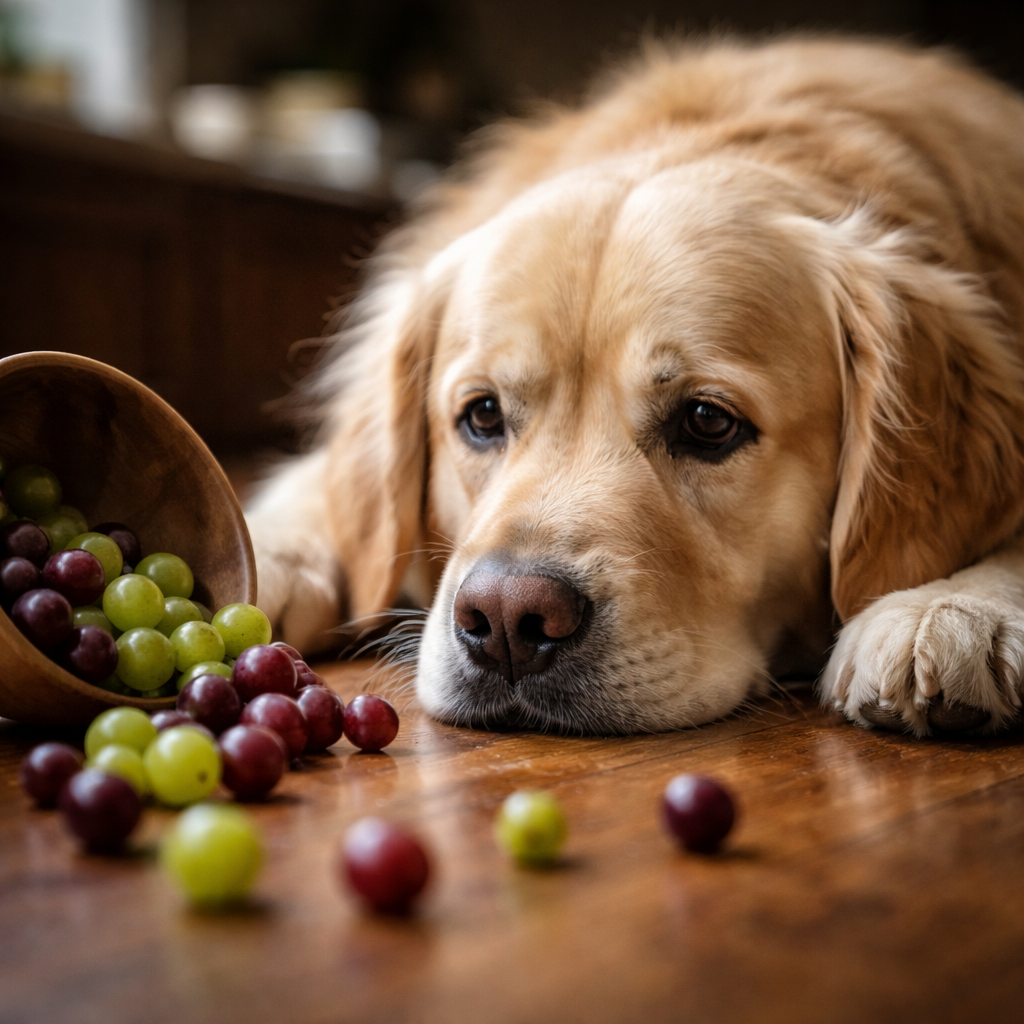
Many dog owners have asked this exact question after tossing a grape across the kitchen floor without thinking twice — is it safe to give dogs grapes? The short answer is no, and the reasons behind it are more serious than most people realize. What seems like a harmless, healthy snack for humans can trigger a life-threatening response in dogs, regardless of breed, size, or age.
What Happens Inside a Dog’s Body After Eating Grapes
Grapes and raisins — their dried counterpart — are known to cause acute kidney injury in dogs. Veterinary toxicologists have documented this connection for decades, yet the exact compound responsible for the toxic reaction has not been definitively identified. Recent research points to tartaric acid, a naturally occurring substance in grapes, as the likely culprit, but studies are still ongoing.
What makes this especially unsettling is the unpredictability of the reaction. Some dogs consume a small number of grapes and develop severe kidney failure, while others appear unaffected by similar amounts. This inconsistency is precisely why veterinarians recommend treating every grape exposure as a potential emergency — there is no reliable way to predict how a specific dog will respond.
Symptoms You Should Never Ignore
Clinical signs of grape toxicity in dogs typically appear within 6 to 12 hours of ingestion. Recognizing them early can be the difference between a full recovery and irreversible organ damage.
- Vomiting and diarrhea, often within a few hours
- Unusual lethargy or weakness
- Loss of appetite
- Abdominal pain or tenderness
- Decreased or complete absence of urination
- Tremors or difficulty walking in severe cases
Reduced urination is a particularly alarming sign because it indicates the kidneys are no longer filtering waste properly. At this stage, without immediate veterinary intervention, the prognosis worsens rapidly.
“There is no established safe dose of grapes for dogs. Even a single grape has caused acute renal failure in some cases.” — American Society for the Prevention of Cruelty to Animals (ASPCA)
All Forms of Grapes Carry the Same Risk
It’s important to understand that grape toxicity is not limited to fresh grapes. Any product that contains grapes or raisins poses an equal — sometimes greater — danger to dogs, since raisins are a more concentrated form of the same fruit.
| Product | Risk Level | Notes |
|---|---|---|
| Fresh grapes | High | Even small quantities can be dangerous |
| Raisins | Very High | More concentrated, toxic in smaller amounts |
| Grape juice | High | Contains grape compounds in liquid form |
| Raisin bread or cookies | High | Often overlooked as a hazard |
| Fruit cake or trail mix | High | Frequently contains hidden raisins |
This is why reading ingredient labels before sharing human food with your dog matters enormously. Raisins hide in baked goods, granola bars, and trail mixes — foods that might look perfectly harmless sitting on your kitchen counter.
What to Do If Your Dog Ate Grapes
If you know or suspect your dog has eaten grapes or raisins, acting quickly is critical. Time is not on your side in these situations.
Contact your veterinarian or an emergency animal poison control center immediately. In many cases, if the ingestion occurred within the past hour or two, a vet may induce vomiting to prevent further absorption of the toxic compounds. This is not something you should attempt at home without professional guidance, as improper methods can cause additional harm.
Depending on how much was consumed and how quickly treatment begins, your vet may recommend hospitalization, IV fluid therapy to support kidney function, and blood tests to monitor renal markers over the following 48 to 72 hours.
Safe and Healthy Fruit Alternatives for Dogs
Wanting to share fruit with your dog is completely natural — it often feels like a bonding moment. Fortunately, there are plenty of dog-friendly options that are both safe and nutritious.
- Blueberries — packed with antioxidants and low in calories
- Watermelon (seedless, no rind) — hydrating and light
- Sliced apple (no seeds or core) — a good source of fiber
- Banana — fine in moderation due to natural sugar content
- Strawberries — rich in vitamin C and enjoyed by most dogs
These fruits offer genuine nutritional value and won’t put your pet’s kidneys at risk. As with any treat, portion size matters — even healthy foods should complement a balanced diet rather than replace it.
The Real Lesson Behind the Grape Warning
Dogs do not process food the same way humans do. What nourishes us can be genuinely harmful to them, and grapes are one of the clearest examples of this biological difference. The danger isn’t overstated — veterinary emergency clinics treat grape toxicity cases regularly, and not all of them end well.
Being informed is the best form of care you can offer your dog. Keeping grapes and raisins out of reach, educating family members and guests, and knowing how to respond in an emergency are all small steps that carry significant weight. Your dog depends entirely on the choices you make in the kitchen and beyond — and now you have the full picture to make the right ones.