
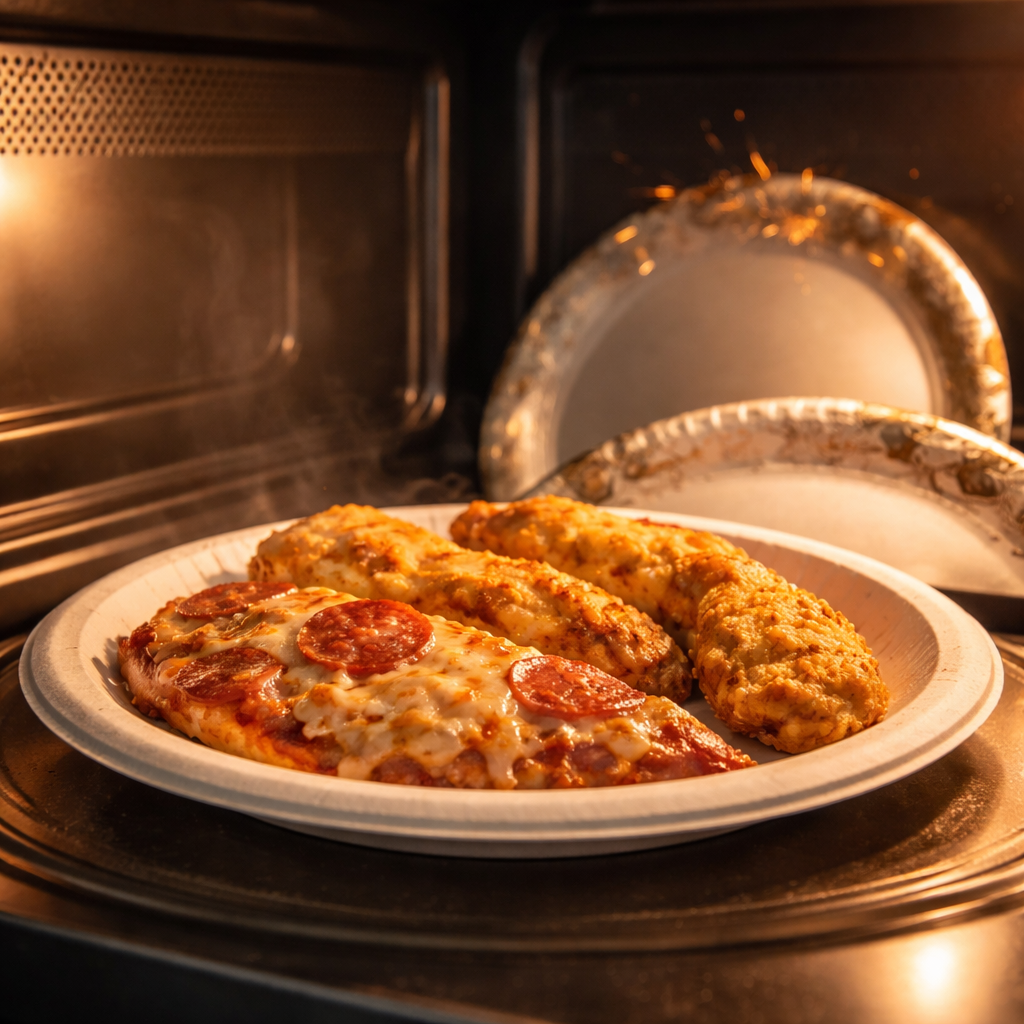
Most people have microwaved a paper plate at least once without giving it a second thought — but is it safe to microwave a paper plate, or is that casual habit hiding a real risk? The answer is more nuanced than a simple yes or no, and it depends heavily on the type of plate you’re using and what’s on it.
Not all paper plates are created equal
This is where most people go wrong. They assume paper is paper. In reality, paper plates on store shelves vary dramatically in their construction. Some are plain pressed paper with no coatings. Others are laminated with thin plastic or wax layers to prevent sogginess. A few are even reinforced with foam-like materials for sturdiness.
Plain, uncoated paper plates are generally considered microwave-safe for short heating sessions. The issue arises with plates that have moisture barriers, decorative prints using metallic inks, or plastic coatings. These can release chemical compounds or, in the case of metallic elements, cause arcing inside the microwave.
A quick way to tell the difference: if the plate feels slightly waxy or has a glossy sheen on the underside, treat it with caution. If it’s matte and feels like plain cardboard, it’s far less likely to cause problems.
What actually happens inside the microwave
Microwaves work by exciting water molecules in food. Paper itself contains very little moisture, so a dry paper plate absorbs minimal microwave energy. That’s actually reassuring — it means the plate isn’t getting dramatically hot on its own.
The danger zones are:
- Plates with wax coatings, which can melt and transfer to food at higher temperatures
- Plates with plastic laminate, which may release low-level chemicals when heated
- Decorative paper plates with metallic gold or silver accents, which can spark and damage your microwave
- Plates that are very thin and may break apart under heat, especially when holding greasy or wet food
For plain, sturdy paper plates with no coatings, short reheating sessions — say, under two minutes — are typically fine. Extended heating, especially of fatty foods, is where things get trickier.
The U.S. Food and Drug Administration (FDA) recommends using only containers labeled as microwave-safe. If a paper plate doesn’t carry that label, proceed with caution and keep heating times brief.
Reading the label — and what to do when there isn’t one
Many major paper plate brands do include microwave-safe labeling, often printed on the packaging rather than the plate itself. This label means the manufacturer has tested the product under typical microwave conditions and confirmed it doesn’t warp, leach harmful substances, or pose a fire risk.
If you’ve tossed the packaging, here’s a practical approach:
| Plate type | Microwave use | Notes |
|---|---|---|
| Plain white uncoated paper plate | Generally safe for short heating | Keep under 2 minutes, avoid fatty foods |
| Wax-coated paper plate | Not recommended | Wax can melt and contaminate food |
| Plastic-laminated paper plate | Avoid | Possible chemical leaching when heated |
| Decorative plate with metallic print | Never microwave | Risk of sparking and fire |
| Plate labeled microwave-safe | Safe as directed | Follow manufacturer guidance on time |
When in doubt, transfer food to a glass or ceramic container. It takes an extra ten seconds and eliminates any uncertainty entirely.
The greasy food problem
Even with a genuinely microwave-safe paper plate, fatty foods deserve special attention. Oils and fats heat up much faster than water-based foods, and they can reach temperatures that exceed what the paper plate is designed to handle. Pizza, bacon, fried chicken — these are all candidates for softening or even scorching the plate beneath them.
A practical workaround: place a sheet of plain paper towel between the food and the plate. It absorbs excess grease and reduces the thermal stress on the plate itself. This small step makes a noticeable difference, especially for foods with visible fat content.
Children, food safety, and the everyday kitchen
For households with kids, disposable plates are a constant presence. The temptation to microwave leftovers directly on a paper plate is real and understandable. Most of the time, with a plain uncoated plate and a brief heating window, this is fine. But developing a habit of checking for the microwave-safe label is worth the small effort, particularly when heating food for young children or for longer durations.
It’s also worth noting that the risk from a single, brief microwave session with a non-labeled plate is generally low — we’re not talking about acute danger in most cases. The concern is more about repeated exposure over time and the cumulative effect of potential leaching, which is a reasonable thing to minimize.
The bottom line on paper plates and your microwave
Plain paper plates with no coatings or metallic prints are a reasonable choice for quick reheating. Coated, laminated, or decoratively printed plates are best kept away from the microwave entirely. When a plate carries a clear microwave-safe label, you can use it with confidence within the recommended time range.
The simplest rule to carry with you: look for the label, avoid anything shiny or metallic, and don’t push past two minutes on high heat. When the food is particularly greasy or the session needs to be long, swap in a glass dish — your meal will heat more evenly anyway, and you’ll have nothing to second-guess.