
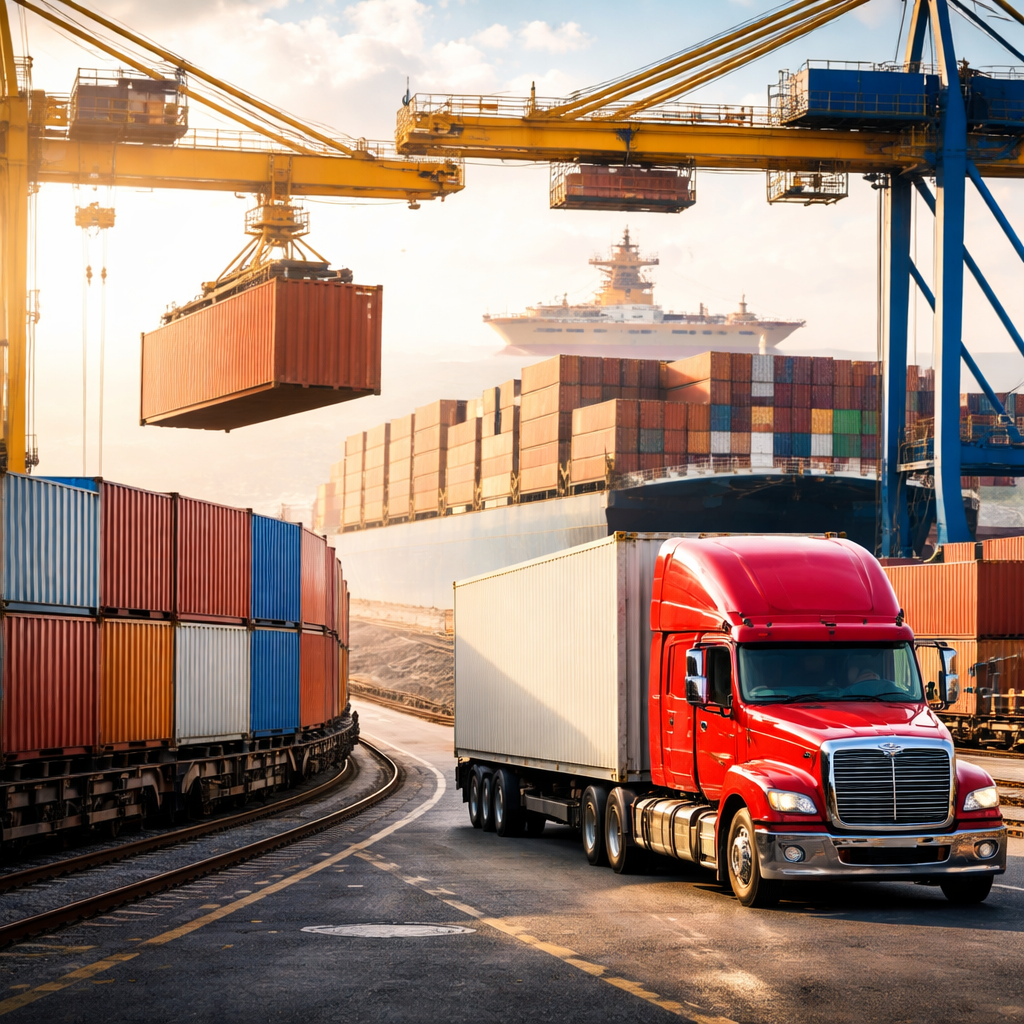
Every time a shipment crosses multiple borders using two or more transport modes without individual cargo handling, the advantages of intermodal transportation become visible almost immediately — in reduced costs, fewer damages, and faster delivery windows that single-mode shipping simply cannot match.
But what exactly makes this logistics model so widely adopted across industries ranging from retail and automotive to pharmaceuticals and agriculture? Let’s dig into the real mechanics behind why shippers, freight forwarders, and supply chain managers keep choosing intermodal solutions over conventional alternatives.
What intermodal transportation actually means in practice
At its core, intermodal freight moves inside a single standardized container that transfers between ships, trains, and trucks without the cargo ever being repacked or manually sorted. This distinction matters enormously. In traditional multimodal shipping, cargo is often unloaded and reloaded at each transition point — which introduces delays, labor costs, and a significantly higher risk of product damage or loss.
Intermodal logistics relies on a tight integration of infrastructure: container terminals, rail yards, inland ports, and road networks. When these elements function in sync, the container becomes the single unit of movement, tracked throughout its entire journey from origin to destination.
Cost efficiency that goes beyond the freight rate
One of the most commonly cited reasons companies shift to intermodal freight solutions is cost reduction. Rail transport, in particular, is dramatically more fuel-efficient per ton-mile compared to long-haul trucking. This translates into real savings — especially on corridors spanning hundreds or thousands of miles.
But the cost benefits don’t stop at fuel. Consider the full picture:
- Lower driver dependency — rail moves freight without requiring a driver for the long-haul leg
- Reduced cargo insurance premiums due to better cargo protection within sealed containers
- Fewer theft incidents compared to open trailer transportation
- Avoidance of road tolls and weight restrictions on certain truck routes
- More predictable transit times, which reduces inventory buffer costs
Companies with high-volume, consistent freight flows often discover that intermodal pricing remains more stable than spot trucking rates, which fluctuate sharply with driver availability and fuel prices.
Environmental performance as a competitive factor
Rail freight produces significantly fewer carbon emissions per ton of cargo moved compared to road-only transport. According to data from the Association of American Railroads, moving freight by rail instead of truck reduces greenhouse gas emissions by approximately 75%. This figure resonates not just with environmental advocates but with procurement teams working under sustainability mandates.
“The shift toward intermodal is not just a logistics decision — it’s increasingly a sustainability strategy embedded in corporate supply chain policy.”
Many businesses now use intermodal freight as a documented part of their ESG (Environmental, Social, and Governance) reporting. Choosing rail-heavy intermodal routes is one of the most measurable ways to reduce a company’s transport-related carbon footprint without compromising delivery capability.
Reliability and capacity when truck availability is tight
Trucking capacity is cyclical and sensitive. Driver shortages, regulatory hours-of-service limits, and seasonal demand spikes can leave shippers scrambling for available trucks — often at premium rates. Rail-based intermodal networks operate on scheduled departures and are far less exposed to these short-term disruptions.
This makes intermodal particularly valuable as a capacity buffer. Shippers who maintain established intermodal lanes rarely find themselves without options during peak seasons or market tightening. It’s essentially a hedge against the volatility of the spot trucking market.
| Factor | Trucking (road only) | Intermodal (rail + road) |
|---|---|---|
| Fuel cost per mile | Higher | Lower (rail leg) |
| Carbon emissions | Higher | Significantly lower |
| Capacity availability | Volatile | More consistent |
| Cargo security | Moderate | High (sealed container) |
| Best use case | Short hauls, just-in-time | Long corridors, high volume |
Security, cargo protection, and liability clarity
Sealed intermodal containers provide a physical barrier that open flatbeds and standard trailers simply do not offer. Once loaded and sealed, the container is not opened until it reaches the final destination — unless there’s a customs inspection. This dramatically reduces exposure to cargo theft, tampering, and weather-related damage.
From a liability standpoint, intermodal documentation has become increasingly standardized. Freight tracking systems now allow real-time visibility across all transport legs, meaning shippers can pinpoint where cargo is at any given moment and identify which carrier had custody if an issue arises.
When intermodal makes the most sense for your freight
Intermodal transportation delivers the clearest value in specific scenarios. Understanding these conditions helps shippers decide when to apply it strategically rather than treating it as a default option.
- Distances over 500 miles — this is where rail economics begin to outperform trucking
- Consistent, recurring freight lanes with predictable volumes
- Non-time-critical shipments where a 1–2 day variance in transit is acceptable
- Freight that fits standard container dimensions (20ft, 40ft, 45ft ISO or domestic containers)
- Companies under pressure to reduce their transport emissions footprint
It’s worth noting that intermodal is not always the best fit. Perishable goods requiring continuous temperature control on short corridors, oversized industrial equipment, or shipments demanding same-day delivery are still better handled through dedicated truck solutions or air freight.
The network effect: why intermodal keeps growing
Infrastructure investment in rail intermodal terminals has expanded steadily across North America, Europe, and Asia. As terminal density increases, the drayage distances at each end of the journey shrink — which makes intermodal competitive on shorter corridors than was previously possible.
Digital freight platforms have also played a role. The ability to book intermodal capacity, track containers in real time, and manage documentation through a single interface has removed much of the operational friction that historically made intermodal feel more complicated than trucking.
The result is a mode of freight transport that scales well: the more volume a shipper moves intermodally, the better the rates, the more refined the service parameters, and the stronger the relationship with the intermodal provider. For businesses building long-term supply chain resilience, that compounding benefit is difficult to ignore.