
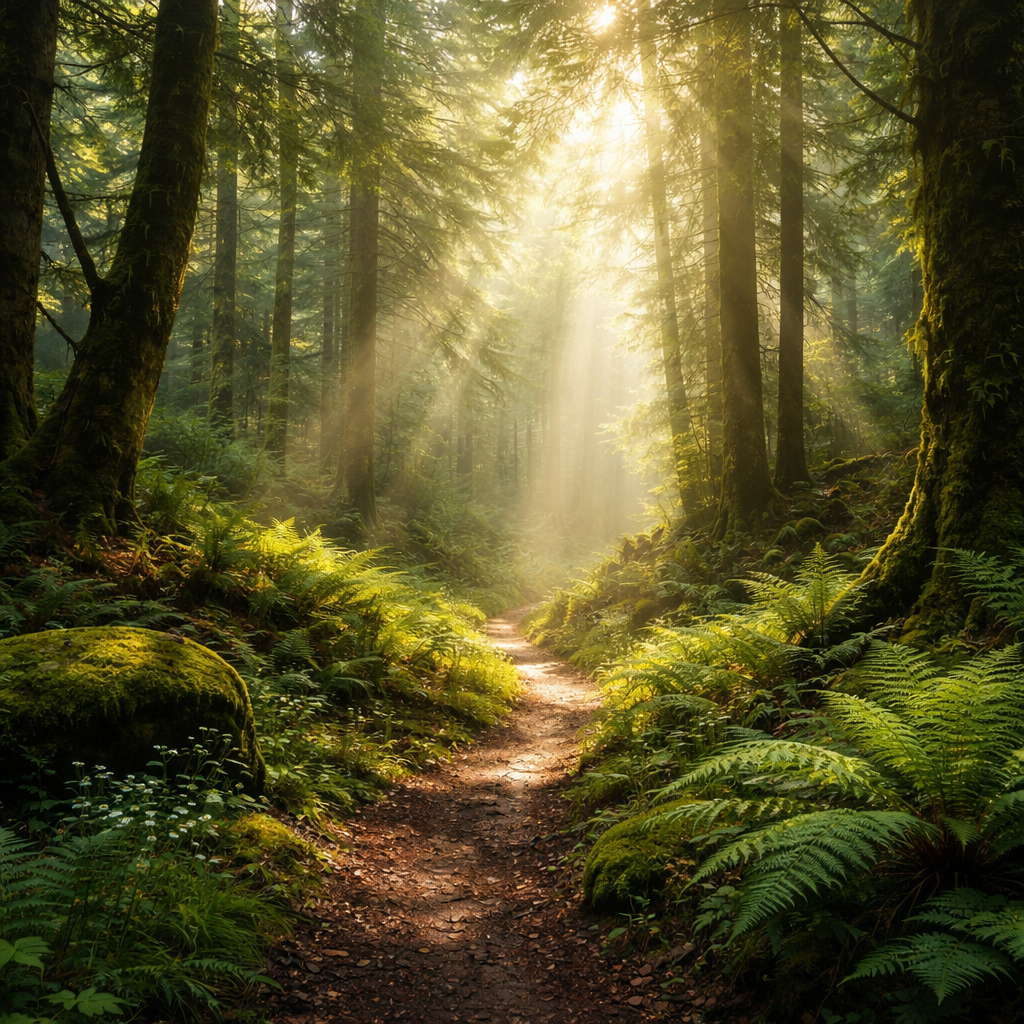
Most people wake up from a forest dream with a lingering feeling they can’t quite shake — calm, lost, curious, or strangely at peace. If you’ve ever wondered what does dreaming about a forest mean, the answer is rarely simple, but it’s almost always worth exploring.
Why forests appear in dreams more often than you might expect
Forests are one of the most recurring natural environments in human dreaming. Across different cultures and psychological traditions, they tend to represent the unconscious mind — that vast, uncharted territory inside us that operates below the surface of daily life. Carl Jung, the Swiss psychiatrist whose work on dream symbolism remains highly relevant, viewed the forest as an archetypal image of the unknown self. It’s the place where instincts live, where suppressed thoughts wander, and where personal transformation often begins.
This doesn’t mean every forest dream is a profound psychological event. Sometimes context matters more than the symbol itself. The emotional tone of the dream — whether you felt free or frightened, guided or lost — shapes the interpretation far more than the trees alone.
What the condition of the forest tells you
One of the most useful ways to interpret a forest dream is to pay attention to what kind of forest appeared. Dream analysts and psychologists who study sleep and imagery consistently note that the environment’s details carry distinct meaning.
| Forest type in the dream | Common psychological association |
|---|---|
| Bright, sunlit forest | Clarity, personal growth, optimism about the future |
| Dark or dense forest | Confusion, hidden fears, feeling overwhelmed in waking life |
| Dead or burnt forest | Grief, exhaustion, a sense of loss or major transition |
| Forest with a clear path | Direction, purpose, confidence in a decision |
| Forest with no way out | Feeling trapped, anxiety, unresolved conflict |
| Ancient or magical forest | Connection to intuition, spiritual seeking, wonder |
These associations aren’t rigid rules — they’re patterns observed across a large body of dream research and therapeutic practice. Your personal relationship with forests in real life also plays a role. Someone who grew up hiking through woods may dream of them in entirely different emotional terms than someone who finds nature isolating.
Being lost in a forest versus finding your way
Perhaps the most common forest dream scenario is being lost. This particular image shows up with remarkable consistency across reported dreams, and it tends to reflect a real sense of disorientation in waking life — not necessarily geographic, but emotional or situational. A career crossroads, a relationship uncertainty, or a period of identity questioning can all surface this way during sleep.
Dreams of being lost in a forest rarely signal danger — they more often signal that a part of you is searching for something it hasn’t named yet.
On the opposite end, dreaming that you find a path, emerge from the trees, or navigate the forest with ease tends to reflect growing confidence or clarity. These dreams often come during or just after a period of difficulty — as if the mind is processing a resolution before the conscious self has fully caught up.
Animals, figures, and other elements inside the forest
Forests in dreams rarely exist in isolation. What inhabits them adds another layer of meaning worth noting.
- Wolves or large predators often symbolize a threat the dreamer feels but hasn’t confronted directly — sometimes an external situation, sometimes an internal conflict.
- Deer or gentle animals tend to represent vulnerability, grace, or a need to slow down.
- A mysterious figure or guide in the forest can reflect the dreamer’s own inner wisdom trying to communicate something important.
- Water — a stream, a lake — inside a forest dream usually deepens the emotional significance and points toward feelings that need processing.
- A house or structure hidden among trees may suggest a part of the self that has been neglected or kept private.
When you wake up and try to recall the dream, these details are the ones worth writing down first, before the memory fades. Dream journaling — even just a few sentences — has been shown in sleep research to improve dream recall and help people identify recurring themes over time.
A practical approach to understanding your forest dream
- Write down the dream immediately after waking — include emotions, not just events.
- Ask yourself: what in my current life feels like an uncharted territory?
- Notice whether the dream forest felt familiar or foreign to you personally.
- Look for recurring themes across multiple dreams, not just a single night.
- Avoid forcing one fixed interpretation — sit with a few possibilities and see which resonates.
Dream interpretation isn’t a science with fixed outcomes. It’s closer to a conversation with yourself. The goal isn’t to decode a hidden message like a code, but to use the imagery as a starting point for honest self-reflection. A forest dream that felt terrifying might be pointing toward something you’ve been avoiding. One that felt peaceful might be offering reassurance your waking mind hasn’t given you yet.
When forest dreams keep coming back
Recurring dreams about forests — especially if the setting or emotional atmosphere is consistent — tend to carry more weight than one-off imagery. Recurring dream themes are generally understood by sleep researchers and therapists as signals that something in your inner or outer world hasn’t been fully addressed. The repetition isn’t random; it’s the mind’s way of returning to unfinished business.
If a dark forest keeps appearing in your sleep over weeks or months, it may be worth taking a closer look at sources of stress, unresolved decisions, or emotional patterns you’ve been managing without really examining. Conversely, if you keep dreaming of walking peacefully through sunlit trees, that can be a genuinely encouraging signal about your current state of mind.
Forests in dreams speak in the language of feeling, not logic. They reflect the parts of your inner life that don’t fit neatly into your daily schedule or to-do list — the questions you carry quietly, the changes you sense are coming, the emotions waiting for a quiet moment to surface. Paying attention to them, even briefly, is one of the more honest things you can do for yourself.