
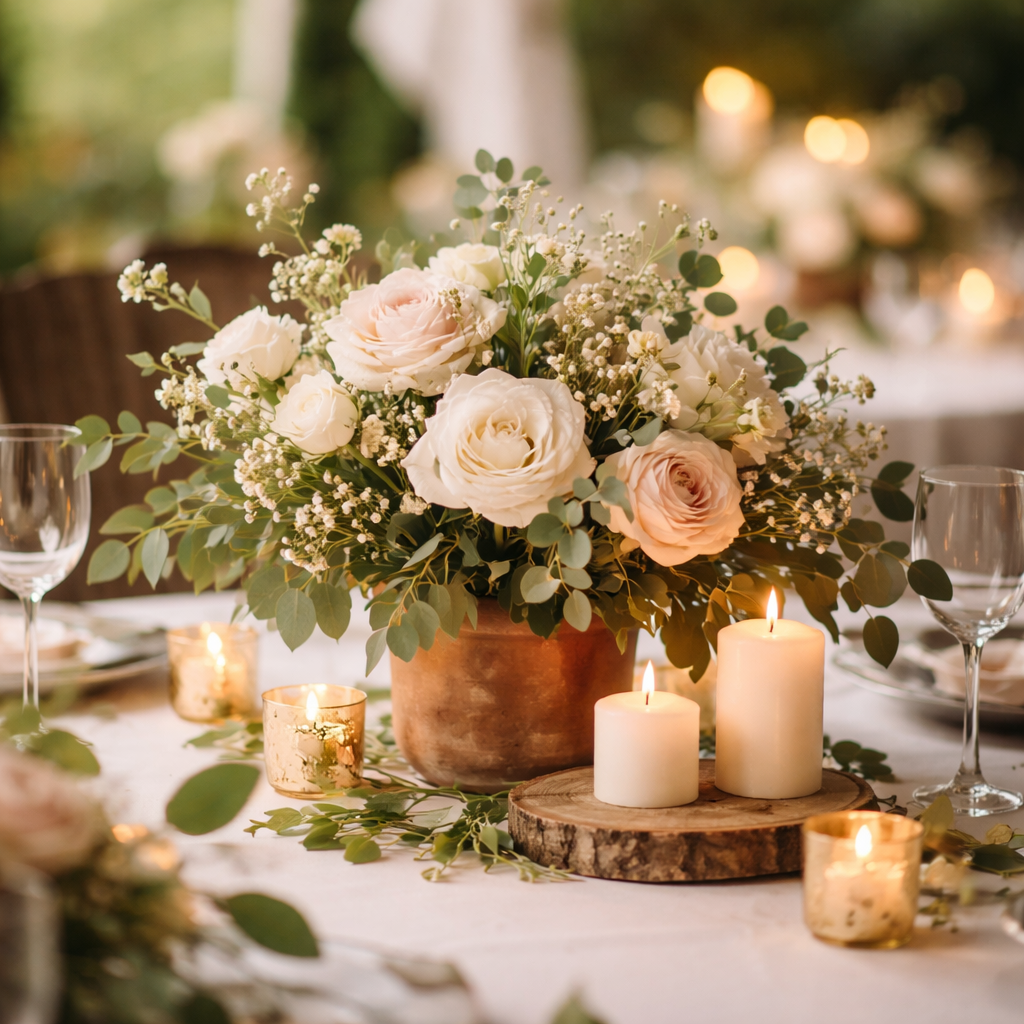
Planning a wedding on a budget doesn’t mean giving up on beauty — and ideas for a DIY wedding centerpiece prove exactly that. A handmade table arrangement can look just as stunning as something ordered from a florist, and in many cases it carries far more personal meaning. The key is knowing where to start and what actually works in practice.
Why DIY centerpieces make sense for modern weddings
Professional floral centerpieces can cost anywhere from $75 to $300 per table, and for a medium-sized wedding that adds up fast. Going the DIY route gives couples full creative control while keeping costs manageable. But saving money is only part of the picture. When guests look at your tables, a centerpiece built with your own hands tells a story — about your style, your relationship, your attention to detail.
That said, DIY doesn’t mean doing everything alone. Involving bridesmaids, family members, or a small crafting group in the process can turn centerpiece prep into one of the most memorable parts of the wedding journey itself.
Floral arrangements without a florist
Fresh flowers remain the most popular choice for wedding tables, and working with them directly is more accessible than most people expect. Grocery stores, farmers markets, and wholesale flower suppliers sell blooms by the bunch at a fraction of boutique prices.
Some combinations that photograph beautifully and hold up well throughout the evening:
- White peonies and eucalyptus in a low terracotta pot for a soft, organic look
- Sunflowers with dried wheat stems and baby’s breath in mason jars for a rustic feel
- Single-variety arrangements — all dahlias or all garden roses — for a clean, modern aesthetic
- Wildflower clusters in mismatched vintage bottles for a bohemian table setting
When working with fresh flowers, timing matters. Most blooms should be cut and arranged no more than 24–48 hours before the event. Keep them in a cool room and hydrated right up until setup.
The most effective DIY floral centerpieces tend to follow one simple rule: choose one hero flower, one texture element, and one greenery type. Anything beyond that risks looking overcrowded rather than abundant.
Non-floral centerpiece ideas that actually impress
Flowers aren’t the only path to a stunning table. Some of the most memorable wedding centerpieces use entirely different materials — and they often cost even less to produce.
| Centerpiece Style | Key Materials | Best For |
|---|---|---|
| Candle lantern cluster | Lanterns, pillar candles, greenery sprigs | Evening receptions, intimate venues |
| Book stack display | Vintage hardcover books, small vase, ribbon | Literary or vintage-themed weddings |
| Fruit and herb arrangement | Lemons, rosemary, figs, moss | Garden parties, outdoor summer weddings |
| Terrarium centerpiece | Glass container, succulents, pebbles, sand | Modern, minimalist or geometric themes |
| Photo display tower | Wooden stand, printed photos, fairy lights | Sentimental or storytelling-style receptions |
Candle-based arrangements deserve special attention. A cluster of three to five pillar candles at varying heights, surrounded by loose greenery or dried flowers, can create an atmosphere that even expensive floral designs struggle to match — particularly after dark.
Practical tips before you start building
Before buying a single stem or crafting supply, there are a few decisions worth making upfront. They’ll save time, money, and last-minute stress.
First, consider the height of your centerpieces in relation to guest comfort. Tall arrangements look dramatic in photos but can block sightlines across the table, making conversation awkward. Low, wide arrangements or single-stem bud vases solve this problem entirely.
Second, think about the venue’s lighting. Pale or white-toned arrangements pop beautifully under warm amber lighting. Bright mixed colors tend to wash out in low light. If your reception is outdoors in natural daylight, vivid color works wonderfully.
Helpful tip: Make one full test centerpiece at home before committing to all your materials. Set it on your dining table, photograph it, and live with it for a day. You’ll quickly notice whether the height, color balance, or vessel size needs adjusting — before you’ve bought supplies for twenty tables.
Third, always account for transport. Beautiful arrangements that fall apart in the car are a common and frustrating problem. Use floral foam or waterproof tape to secure stems, pack vases tightly with padding, and avoid placing anything fragile in a vehicle that will be in direct sunlight.
Seasonal materials that cut costs without cutting quality
One of the smartest moves any DIY couple can make is building their centerpiece concept around what’s naturally available in the season of their wedding. In-season flowers and foliage cost significantly less than out-of-season imports, and they tend to be fresher and longer-lasting.
- Spring weddings pair beautifully with tulips, ranunculus, cherry blossom branches, and lamb’s ear
- Summer ceremonies lend themselves to zinnias, lavender, cosmos, and lemon verbena
- Autumn arrangements shine with marigolds, dried grasses, persimmon branches, and deep burgundy foliage
- Winter tables come alive with pine cones, holly, white amaryllis, and frosted branches
Foraged or garden-grown greenery is worth considering too. Olive branches, fig leaves, rosemary stems, and ivy add texture and fullness to any arrangement at virtually no cost — and they hold up remarkably well throughout a long reception day.
When the tables come together
The real magic of a DIY wedding centerpiece isn’t just in the finished product — it’s in the process of building something that reflects who you are as a couple. Whether you go with minimalist bud vases or full lush arrangements, mismatched vintage bottles or geometric terrariums, what makes a centerpiece work is coherence: a consistent mood, palette, and intention across all your tables.
Don’t overthink perfection. Guests remember the atmosphere of a wedding, not whether every petal was perfectly placed. Give yourself permission to make something a little imperfect and entirely your own — that combination tends to be the most beautiful thing in the room.