
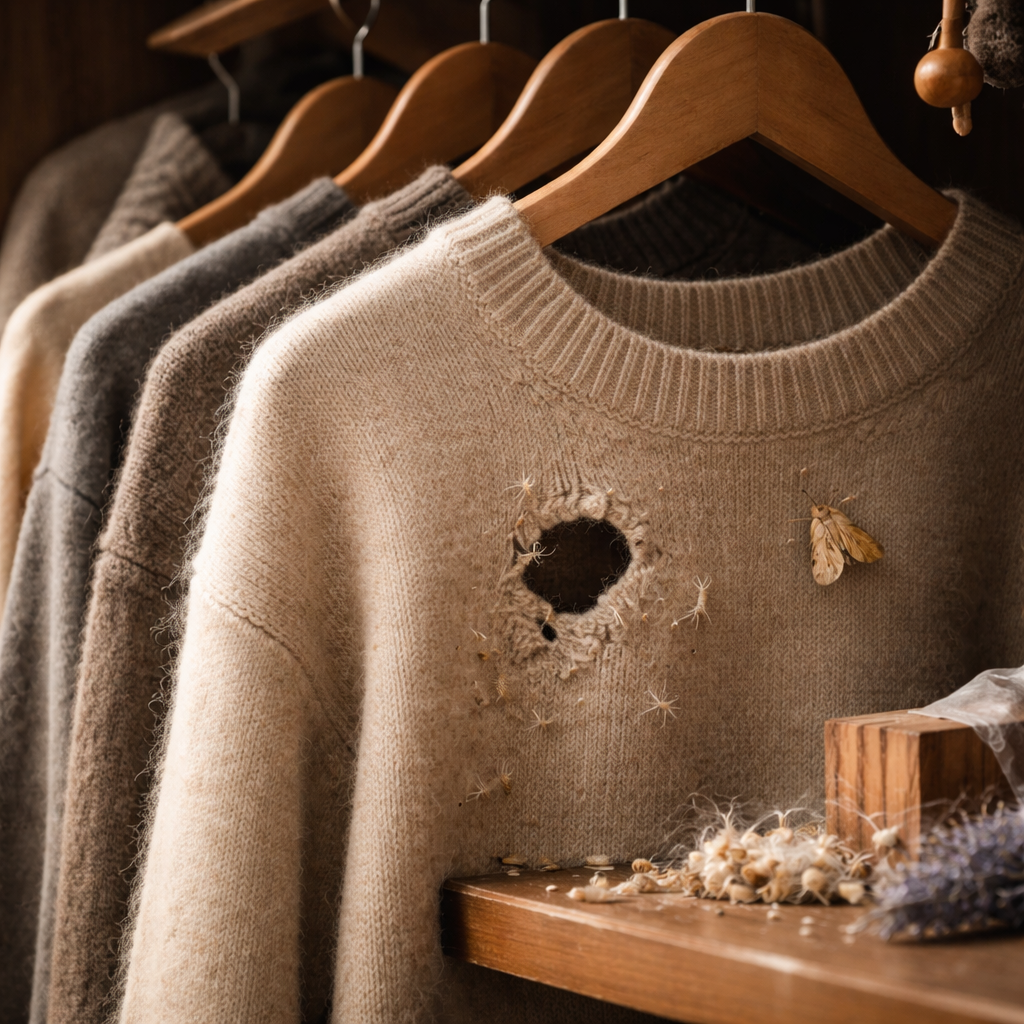
You open your closet to grab a favorite sweater, and there it is — a small, irregular hole that wasn’t there last season. If this sounds familiar, you already know how to get rid of moths in a closet is a question worth taking seriously before the damage spreads further. Clothes moths are quiet, methodical, and surprisingly good at staying hidden. But they’re not unbeatable.
What you’re actually dealing with: clothes moths vs. pantry moths
Before doing anything, it helps to know which type of moth has moved in. Not all moths eat fabric — pantry moths are drawn to stored grains and dry food, while clothes moths specifically target natural fibers. The two species most commonly found in wardrobes are Tineola bisselliella (webbing clothes moth) and Tinea pellionella (case-bearing clothes moth).
Here’s the part that surprises most people: adult moths don’t actually eat your clothes. It’s their larvae that do the damage. The adult lays eggs in dark, undisturbed areas — deep in your closet shelves, between folded woolens, or tucked inside the lining of a rarely-worn coat. The eggs hatch into tiny larvae that feed on keratin, the protein found in wool, cashmere, silk, fur, and even feathers.
The first signs you shouldn’t ignore
Moth infestations often go unnoticed for months because the insects prefer darkness and stillness. By the time you spot the evidence, the cycle may already be well established. Watch out for these indicators:
- Irregular holes in wool, cashmere, or silk garments
- Silky tubes or webbing on fabric surfaces or along seams
- Small, cream-colored larvae crawling on shelves or inside storage boxes
- Tiny moths fluttering near the closet or wardrobe — they tend to run rather than fly
- A musty or unpleasant smell coming from stored clothing
If you notice even one of these signs, treat it as a confirmed infestation rather than a fluke. Acting early makes every step that follows far more effective.
Step-by-step: clearing moths out of your closet
Getting rid of a moth infestation requires a combination of immediate action and longer-term prevention. Doing only one or the other typically leads to the problem returning within a few months.
Empty everything out first
Take every single item out of the closet — clothes, boxes, shoes, accessories, and anything stored on shelves. This is the only way to properly assess the damage and clean every surface. While you’re sorting through items, shake each garment gently over a light-colored surface to spot any larvae or eggs you might otherwise miss.
Wash or freeze affected garments
Heat and cold are both reliable ways to kill moth eggs and larvae. Washing at 60°C (140°F) or above is effective for fabrics that can handle it. For delicate items like cashmere or wool that can’t be machine washed at high temperatures, sealing them in a plastic bag and placing them in the freezer for at least 72 hours works just as well. After freezing, allow the garments to return to room temperature gradually before unpacking.
Dry cleaning is another reliable option for high-value pieces — the solvents used in the process are lethal to larvae and eggs at any stage of development.
Deep clean the closet itself
Once the closet is empty, vacuum every surface thoroughly — shelves, walls, floor, corners, and any cracks or crevices where eggs can hide. Use the narrow attachment to get into gaps between shelf boards or along baseboards. After vacuuming, immediately seal and dispose of the vacuum bag outside your home, as it may contain live larvae or eggs.
Wipe down all surfaces with a cloth dampened with white vinegar or a diluted cedar oil solution. Both have repellent properties and help neutralize the scent trails that moths use to locate nesting spots.
What actually works — and what doesn’t
There’s a lot of conflicting advice out there about moth control, so it’s worth being clear about which methods have real effectiveness behind them.
| Method | Effectiveness | Notes |
|---|---|---|
| Cedar blocks or cedar-lined drawers | Moderate repellent | Works only on young larvae; loses potency over time — sand periodically to refresh the scent |
| Lavender sachets | Mild repellent | Pleasant smell but limited against an active infestation; better for prevention |
| Pheromone moth traps | Good for monitoring and reducing adult males | Won’t eliminate a full infestation but helps track activity levels |
| Mothballs (naphthalene or paradichlorobenzene) | High — kills larvae and eggs | Toxic fumes; not suitable for enclosed living spaces without strong ventilation |
| Freezing (72+ hours at -18°C) | Very high | Safe for most fabrics; no chemicals involved |
| Professional pest control | Very high | Best option for severe or recurring infestations |
How to store clothes so moths never come back
Prevention is considerably easier than treatment. Once your closet is clean, a few consistent habits will dramatically reduce the risk of another infestation taking hold.
Moths are attracted to soiled fabric — body oils, perspiration, and food residue give larvae a nutritional boost. Always clean garments before storing them for an extended period, especially natural fiber pieces like wool coats or cashmere sweaters you put away for the warmer months.
- Store seasonal clothing in airtight bags or sealed containers rather than loose on a shelf
- Use vacuum-seal storage bags for bulky items like duvets, blankets, and heavy knitwear
- Keep cedar blocks or sachets in drawers and on shelves, and replace or refresh them regularly
- Periodically air out your wardrobe — moths thrive in still, undisturbed environments
- Avoid storing clothes in cardboard boxes long-term, as moths can chew through cardboard
When the problem keeps coming back
If you’ve cleaned the closet, treated your garments, and moths still reappear a few months later, there may be a secondary source you haven’t located. Check adjacent storage areas — attics, basements, under-bed storage boxes, and even upholstered furniture, which can harbor moth larvae just as easily as a wardrobe. Old rugs, taxidermy, dried floral arrangements, and pet hair buildup are all potential nesting grounds.
In persistent cases, calling a professional exterminator is a rational choice rather than a last resort. Modern pest control services use targeted treatments that are far less disruptive than older chemical methods, and a professional inspection can identify infestation sources that are genuinely difficult to spot without experience.
The key takeaway is simple: moths are a manageable problem when you deal with them systematically. A combination of thorough cleaning, proper garment care, smart storage habits, and the right deterrents will keep your wardrobe protected without turning it into a chemistry project.