
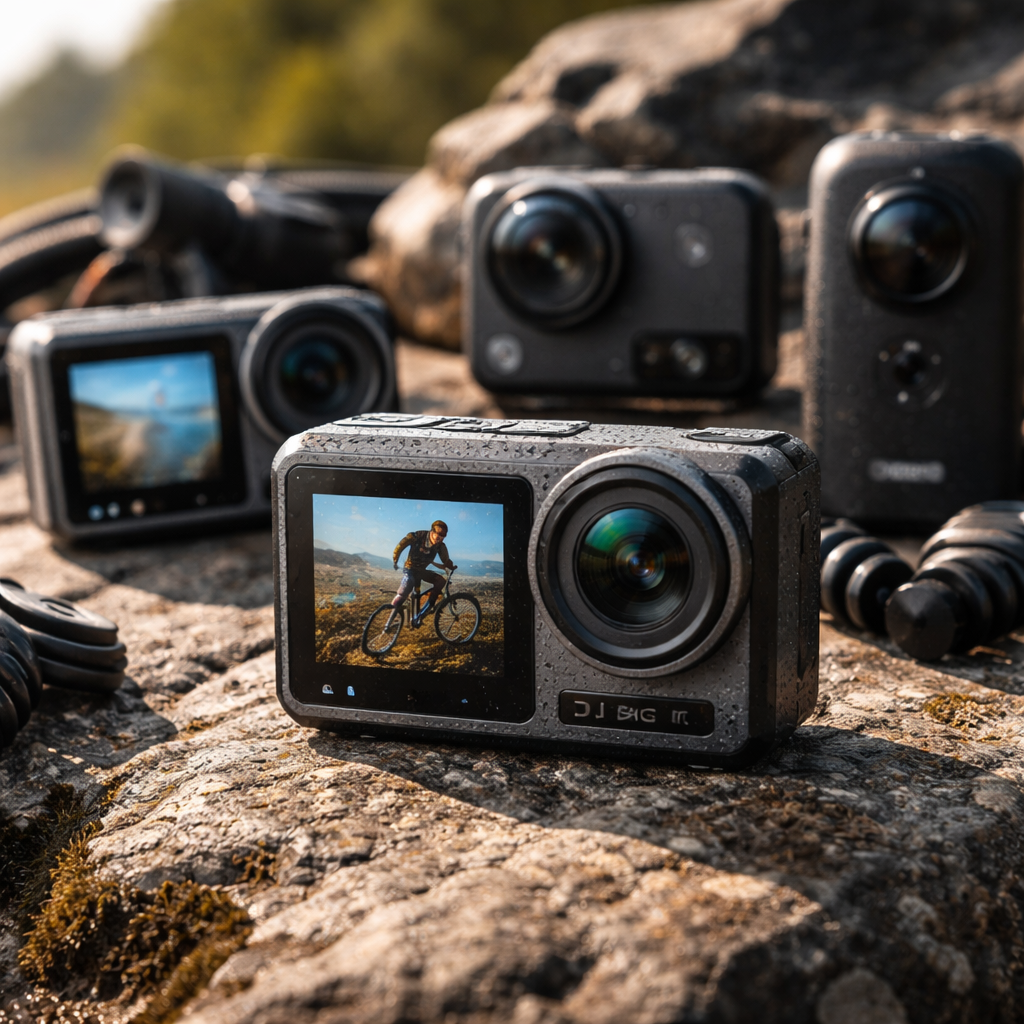
Not every adventure camera needs a GoPro logo on it to deliver stunning footage — and more people are discovering this with every passing season. The search for a reliable alternative to GoPro has grown significantly as the market expanded with compelling options that match or even surpass what the iconic brand offers, often at a fraction of the price.
Why people start looking beyond GoPro
GoPro built its reputation on rugged design, solid image stabilization, and a loyal community. But it also comes with a premium price tag, a subscription-based ecosystem, and occasional software frustrations that push users to explore what else is out there. Some need a camera for casual weekend hikes. Others are serious about underwater videography or motorsport filming. The point is — different use cases call for different tools, and GoPro is not always the best fit.
What’s changed in recent years is the quality gap between GoPro and its competitors has narrowed considerably. Budget-friendly action cameras now support 4K resolution, have decent electronic image stabilization, and come with waterproof housings right out of the box.
The strongest contenders worth your attention
When it comes to action cameras that genuinely compete with GoPro on performance, a few names keep surfacing in reviews, forums, and hands-on tests.
| Camera | Key Strength | Best For |
|---|---|---|
| DJI Osmo Action series | Dual screens, strong stabilization | Vloggers, cyclists, travelers |
| Insta360 Ace Pro | AI-powered features, excellent low light | Content creators, night shooting |
| Sony RX0 II | 1-inch sensor, cinema-grade quality | Professional use, compact setups |
| Akaso Brave series | Affordable, feature-rich | Beginners, casual adventurers |
| Insta360 X series | 360-degree capture, reframe in post | Sports, immersive content |
Each of these cameras has its own personality. The DJI Osmo Action, for instance, feels like a direct GoPro competitor in terms of form factor and use case — but with a front-facing screen that many GoPro models still lack. Insta360 cameras, on the other hand, bring a completely different workflow to the table with their 360-degree capture and AI reframing tools.
What actually matters when choosing an action camera
Before picking any camera, it helps to get clear on what you actually need it to do. The spec sheet rarely tells the whole story.
- Video stabilization — electronic stabilization (EIS) quality varies wildly between brands and even between models from the same brand
- Battery life — some cameras drain fast in cold weather or when recording in higher resolutions
- Waterproofing — check whether it’s built-in or requires a separate housing, and at what depth rating
- App and ecosystem — editing software, firmware updates, and cloud features differ significantly
- Mount compatibility — some cameras use proprietary mounting systems that limit accessory options
- Low-light performance — determined largely by sensor size, not just megapixel count
A camera that shoots 5K but struggles in dim light or has clunky software may deliver worse real-world results than a simpler model that handles everyday shooting conditions with ease.
Budget cameras that punch above their weight
If spending $300–$500 on a camera feels like too much for occasional use, the good news is that the sub-$150 segment has matured. Brands like Akaso, Campark, and Dragon Touch offer action cameras with 4K recording, image stabilization, and included accessories kits. They won’t match the color science or stabilization of DJI or GoPro, but for casual trail runs, family trips, or learning the basics of action footage, they get the job done.
One practical tip: always check whether the “4K” label on budget cameras refers to true 4K at 30fps or interpolated upscaling. This distinction directly affects footage quality and editing flexibility.
Before buying, search for sample footage from the specific model on YouTube. Real-world video tests in different lighting and weather conditions will tell you far more than any spec comparison chart.
360-degree cameras — a category worth considering separately
Insta360 and Ricoh Theta have turned 360-degree cameras into a legitimate tool for content creators, athletes, and travel filmmakers. The concept is different from a standard action camera — you capture everything around you, then decide your “shot” during editing. This gives tremendous creative flexibility, especially for solo shooting where you can’t rely on a second camera operator.
The Insta360 X4 and its predecessors are particularly popular among mountain bikers, skiers, and motorcyclists because the invisible selfie stick trick — where the camera is mounted on an extended pole that disappears from the 360 footage — creates cinematic shots that would otherwise require a drone or a dedicated camera crew.
Mirrorless and compact cameras as action camera alternatives
This angle often gets overlooked. Depending on your use case, a small mirrorless camera like the Sony ZV-E10, Fujifilm X-S20, or even a compact like the Sony RX100 series might serve you better than any dedicated action camera. These cameras offer interchangeable lenses, larger sensors, and superior audio quality — all areas where action cameras typically fall short.
The trade-off is obvious: they’re bulkier, not inherently waterproof, and require more deliberate handling. But if you’re filming travel content, short documentaries, or anything where image quality and versatility matter more than wearability, this path is worth exploring seriously.
The decision comes down to how you actually shoot
There’s no universal best GoPro alternative — and that’s actually a good thing. The market has diversified enough that whether you’re a beginner looking for an affordable waterproof camera for summer holidays, a content creator who wants AI-assisted editing workflows, or a professional who needs cinema-quality footage in a compact body, there’s a camera built with your needs in mind.
The smartest move is to define your three most important shooting scenarios before browsing options. Once you know whether you prioritize stabilization, low-light performance, battery life, or ecosystem simplicity, the right camera tends to become obvious pretty quickly — with or without that famous GoPro branding.