
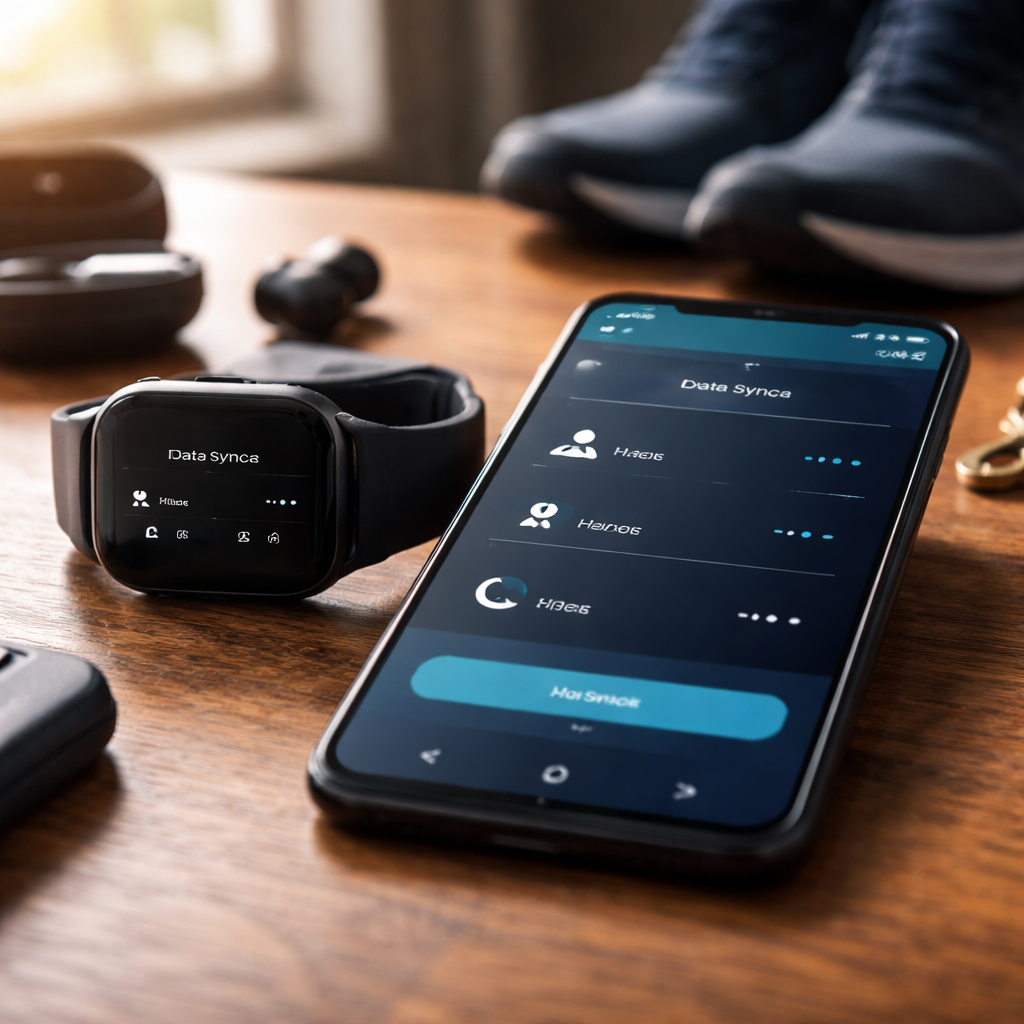
You opened your fitness app, and nothing updated — no steps, no heart rate, no sleep data. If fitness tracker syncing not working is the exact problem you’re dealing with right now, you’re definitely not alone. This issue frustrates millions of users across every major platform, from Fitbit and Garmin to Apple Watch and Samsung Galaxy Watch. The good news is that most syncing failures come down to a handful of fixable causes, and you don’t need to be tech-savvy to sort them out.
Why syncing breaks in the first place
Before diving into fixes, it helps to understand what’s actually happening behind the scenes. Your fitness tracker communicates with your smartphone or computer primarily through Bluetooth. When that connection drops, becomes unstable, or gets blocked by another process, data simply stops flowing. But Bluetooth isn’t always the culprit. App permissions, outdated firmware, full device storage, and even power-saving modes can silently interrupt the sync without showing you a clear error message.
Sometimes the issue is on the server side — the brand’s cloud infrastructure experiences outages or maintenance windows that temporarily block data from uploading. In those cases, your device has recorded everything correctly; it’s just waiting for a clear path to send it.
Start with the basics before anything else
It sounds obvious, but a surprising number of sync issues resolve themselves with a few straightforward steps. Run through this checklist before attempting anything more complex:
- Make sure Bluetooth is enabled on your phone and that the tracker is within a reasonable range (ideally within 10 feet / 3 meters).
- Close the companion app completely and reopen it — don’t just minimize it.
- Restart your fitness tracker by holding the side button or following the manufacturer’s reset instructions.
- Restart your smartphone as well, since pending system processes can block Bluetooth connections.
- Check that the companion app has permission to access Bluetooth and location services in your phone’s settings.
- Make sure your tracker’s battery is above 20% — low battery levels often cause syncing to pause automatically.
If any of these steps resolves the problem, great. If not, the issue likely runs a bit deeper.
Bluetooth pairing conflicts and how to clear them
One of the most underestimated causes of failed syncs is a corrupted or conflicted Bluetooth pairing. Over time, devices accumulate saved Bluetooth connections, and sometimes those entries get corrupted or duplicated. The fix here is to unpair your tracker from your phone completely, then re-pair it as if it were brand new.
Go into your phone’s Bluetooth settings, find your tracker in the list of paired devices, and choose “Forget” or “Remove.” Then open the companion app and follow its setup process to connect the device again. This forces a clean handshake between the two devices and resolves a significant number of persistent syncing problems.
If you’re using an Android device, also check whether Battery Optimization is turned on for the companion app. Android’s aggressive power management can kill background processes that handle sync — disabling optimization for the fitness app specifically often makes a dramatic difference.
App and firmware updates: the silent fix
Manufacturers regularly release firmware updates for their trackers and updates for their mobile apps. These patches often address exactly the kind of connectivity and data-transfer bugs that cause syncing to fail. Running outdated software is one of the most common reasons people experience persistent sync problems without understanding why.
Check the app store on your phone for a pending update to the companion app. To update your tracker’s firmware, open the companion app and navigate to the device settings — most apps will show you whether an update is available and walk you through the installation. Keep in mind that firmware updates usually require the tracker to be sufficiently charged and connected to Wi-Fi (for the phone) during the process.
Platform-specific issues worth knowing
Different ecosystems have their own quirks. Here’s a quick reference for the most common platform-related causes:
| Platform / Device | Common sync issue | Recommended fix |
|---|---|---|
| Fitbit (Android) | Background sync disabled by battery saver | Disable battery optimization for Fitbit app |
| Apple Watch (iOS) | Health app permissions revoked after iOS update | Re-enable Health permissions in iPhone Settings |
| Garmin (Android/iOS) | Garmin Connect app cache corrupted | Clear app cache or reinstall the app |
| Samsung Galaxy Watch | Galaxy Wearable app conflict with Samsung Health | Force-stop both apps, then relaunch |
| Xiaomi Mi Band / Zepp | Zepp app not running in background | Allow autostart for Zepp in phone settings |
Understanding the specific behavior of your platform helps you skip general troubleshooting and go straight to the solution that actually matches your situation.
When to clear the app cache or reinstall
If the syncing issue persists after everything above, clearing the companion app’s cache is a safe next step on Android. Go to Settings → Apps → [Your Fitness App] → Storage, then tap “Clear Cache.” This won’t delete your health data (which is stored in the cloud), but it removes temporary files that may be causing errors.
If clearing the cache doesn’t help, a full reinstall is worth trying. Uninstall the app, restart your phone, then download the app fresh from the store and log back in. Your historical data will sync back from the cloud once you’re connected again.
Before uninstalling, make sure your account is set up with a username and password — not just a social login you might forget. Losing access to your account after reinstalling is a real and preventable problem.
Checking for service outages on the brand’s end
If your tracker shows data locally but the app simply won’t update, the problem might have nothing to do with your setup. Major fitness platforms occasionally experience server-side issues that block cloud sync temporarily. You can check the official status pages of brands like Fitbit, Garmin, or Apple, or search for recent reports on community forums and sites like Downdetector.
In these situations, the only realistic option is to wait. Your tracker will continue recording data in its local memory and push it to the app once the service is restored.
What to do when nothing works
If you’ve worked through every step and the sync still isn’t functioning, it’s time to contact the manufacturer’s support team directly. Before reaching out, gather the following information to speed up the process:
- Your tracker’s model name and current firmware version
- Your phone model and operating system version
- The version of the companion app you’re running
- A brief description of when the problem started and what you’ve already tried
Most brands offer live chat, email support, and community forums where experienced users often share solutions that aren’t in official documentation. In some cases, a hardware defect — particularly in the Bluetooth chip — may be the root cause, and a warranty replacement is the only path forward.
Keep your setup healthy going forward
Once your tracker is syncing again, a few simple habits will prevent the issue from coming back. Keep both your app and your tracker’s firmware up to date as soon as updates are available. Periodically restart both your phone and your tracker — just like a computer, they benefit from a fresh start. Avoid letting your tracker’s battery drain completely on a regular basis, as deep discharges can occasionally cause firmware instability. And if you switch phones, always use the official migration process provided by the app rather than installing fresh and hoping the pairing transfers automatically.
Fitness trackers are genuinely useful tools, but they depend on a chain of small technical conditions all working in harmony. When one link breaks, the whole chain stops. Knowing how that chain works — and how to repair it — means you spend less time debugging and more time actually moving.