
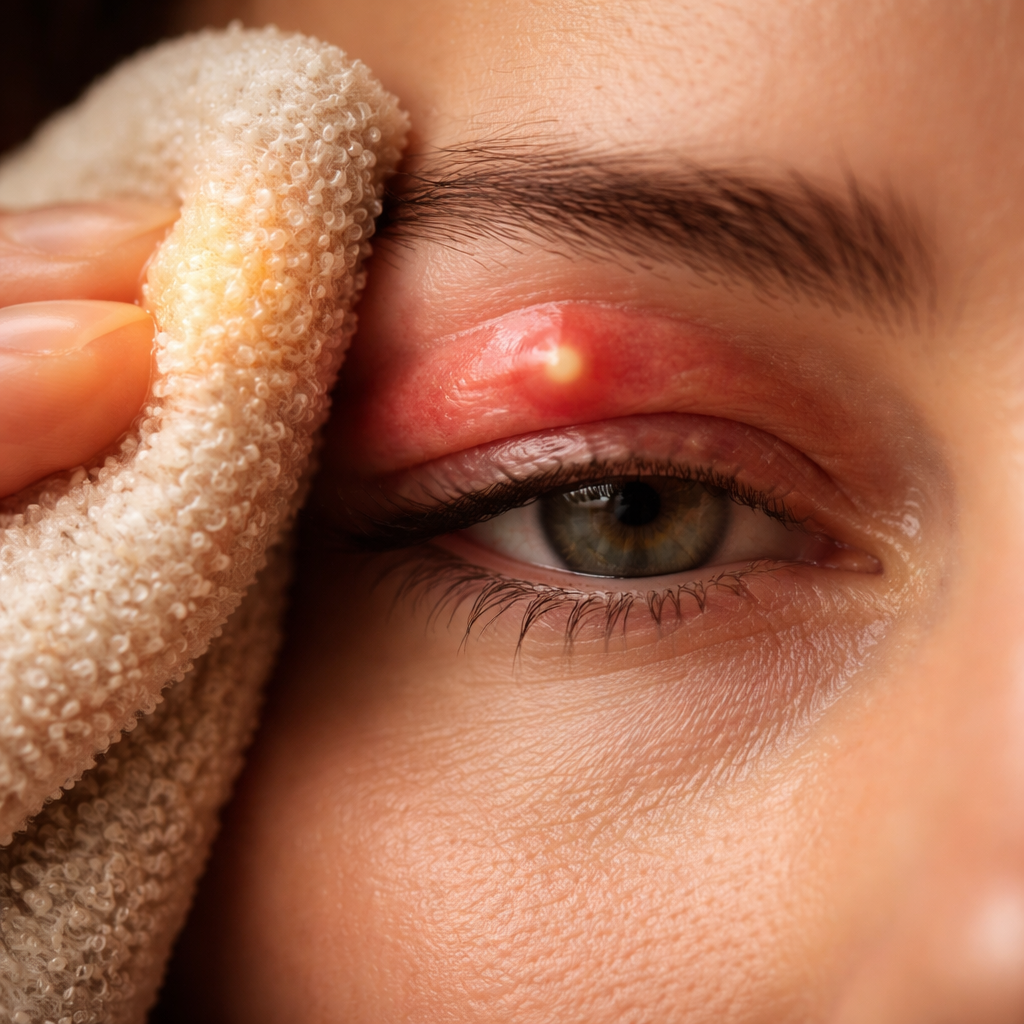
Waking up with a red, swollen bump on your eyelid is never a pleasant surprise — and if you’ve been desperately searching for how to get rid of a stye overnight, you’re definitely not alone. Styes are one of those small but genuinely uncomfortable problems that can disrupt your day, affect your confidence, and make even blinking feel unpleasant. The good news? There are real, evidence-based steps you can take to speed up healing and relieve discomfort fast.
What exactly is a stye and why does it form?
A stye (medically known as a hordeolum) is a small, painful lump that develops on or inside the eyelid. It forms when an oil gland or hair follicle at the base of the eyelashes becomes blocked and infected — most commonly by Staphylococcus bacteria. The result is localized swelling, redness, tenderness, and sometimes a visible white or yellow head, similar to a pimple.
External styes appear on the outer edge of the eyelid and are the most common type. Internal styes develop on the inner surface of the lid and tend to be slightly more painful. Both types typically resolve on their own within one to two weeks, but targeted care can meaningfully shorten that timeline.
The one thing that actually works: warm compresses
If you read nothing else in this article, read this: applying a warm compress is the single most effective home treatment for a stye. Heat increases blood circulation to the area, helps soften the blocked material inside the gland, and encourages the stye to drain naturally. Ophthalmologists consistently recommend this approach as a first-line treatment.
“Warm compresses applied for 10–15 minutes, four times a day, remain the cornerstone of stye management. They promote drainage and provide meaningful symptom relief.” — American Academy of Ophthalmology guidance on eyelid conditions
To do it correctly, soak a clean cloth in warm (not scalding) water, wring it out, and hold it gently against the closed eyelid. The cloth cools quickly, so reheat it every few minutes to maintain consistent warmth throughout the session. A hard-boiled egg or a purpose-made heated eye mask can also hold heat longer if you prefer a more convenient option.
Step-by-step overnight routine to reduce a stye
Consistency matters more than any single action. Here’s a practical evening routine that gives your eye the best chance of looking noticeably better by morning:
- Remove all eye makeup before touching the area. Mascara and eyeliner can introduce additional bacteria and slow healing significantly.
- Wash your hands thoroughly with soap and water before and after touching your eye.
- Apply a warm compress for 10–15 minutes. Repeat this two to three times before bed if possible.
- Clean the eyelid margin gently using a diluted baby shampoo solution or a pre-made eyelid scrub pad. This removes debris and excess oils around the lash line.
- Avoid wearing contact lenses until the stye has fully healed, as lenses can trap bacteria against the eye surface.
- Do not attempt to pop or squeeze the stye. Doing so can push the infection deeper or spread bacteria to other glands.
- Sleep on a clean pillowcase — bacteria from fabric accumulate quickly and can worsen the infection overnight.
What helps and what to skip
The internet is full of home remedies for styes, and not all of them are created equal. Some suggestions are genuinely helpful; others range from ineffective to potentially harmful. Here’s a clear breakdown:
| Remedy | Evidence / Safety | Verdict |
|---|---|---|
| Warm compress | Strongly supported by ophthalmology guidelines | Do this |
| Eyelid hygiene (gentle cleansing) | Recommended alongside warm compresses | Do this |
| Over-the-counter lubricating eye drops | Can relieve irritation and dryness around the stye | Helpful |
| Tea bags on the eye | Warmth may help; no evidence the tea itself adds benefit | Neutral — warmth is the key factor |
| Toothpaste or garlic on the eyelid | No evidence; risk of chemical irritation and corneal damage | Avoid completely |
| Popping or squeezing | Can spread infection and worsen inflammation | Never do this |
One popular claim suggests that rubbing a gold ring on a stye will help it heal. There is no scientific basis for this. The perceived benefit likely comes from the gentle warmth and friction, not the metal itself.
When to see a doctor instead of waiting it out
Most styes respond well to home care and resolve without medical intervention. However, there are situations where visiting a doctor is the right call rather than a cautious overreaction.
Seek medical attention if you notice any of the following:
- The stye has not improved at all after 48–72 hours of consistent warm compress treatment
- Swelling is spreading beyond the eyelid to the cheek or surrounding facial tissue
- You experience changes in your vision
- The entire eyelid becomes swollen, not just a localized bump
- You develop a fever or feel generally unwell alongside the eye symptoms
- A stye recurs repeatedly in the same location
In persistent or severe cases, a doctor may prescribe a topical antibiotic ointment or, less commonly, perform a minor in-office procedure to drain the stye. Oral antibiotics are rarely needed but may be considered when infection appears to be spreading.
How to prevent styes from coming back
If you’ve had one stye, you’re statistically more likely to develop another — particularly if certain habits or underlying conditions are contributing factors. A few consistent practices can dramatically reduce recurrence risk.
People with blepharitis (chronic eyelid inflammation) or rosacea are more prone to recurring styes. Managing the underlying condition is key to breaking the cycle.
- Never sleep in eye makeup. Mascara in particular clogs the meibomian glands along the lash line.
- Replace eye makeup products regularly — mascara should be replaced every three months.
- Avoid touching your eyes with unwashed hands throughout the day.
- Perform regular gentle eyelid hygiene, especially if you have oily skin or a history of blepharitis.
- Stay hydrated and maintain a balanced diet. Omega-3 fatty acids found in fish, flaxseed, and walnuts support healthy meibomian gland function.
- If you wear contact lenses, follow proper cleaning and replacement schedules without shortcuts.
The realistic expectation: what one night can actually do
Let’s be straightforward: no home remedy will make a stye vanish entirely in a single night. A stye is a localized bacterial infection, and the body needs time to resolve it. What you can realistically achieve overnight with diligent warm compress application and good eyelid hygiene is a meaningful reduction in swelling, less pain, and a better chance the stye will begin draining on its own within the next day or two.
Most styes reach their peak discomfort within the first two days and then gradually improve. Starting treatment the moment you notice symptoms — rather than waiting to see if it gets worse — is consistently the most effective strategy. The earlier you begin applying heat and keeping the area clean, the shorter your recovery will be.
Think of overnight care not as a cure, but as giving your immune system the optimal conditions to do its job as efficiently as possible. That shift in perspective makes the process feel less frustrating and more empowering.