
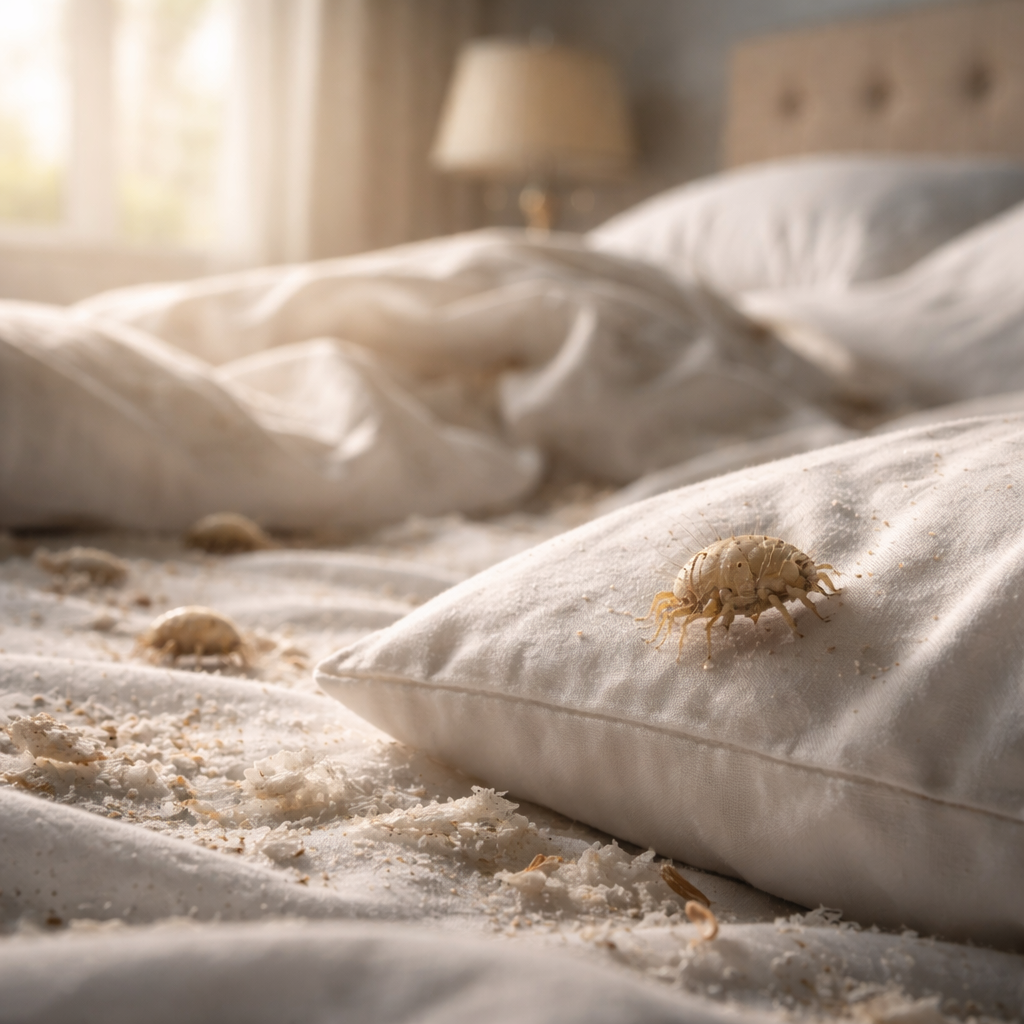
Most people wash their sheets regularly and still wake up with a stuffy nose, itchy eyes, or skin irritation — and the culprit is almost always invisible. If you’ve been wondering how to get rid of dust mites in bedding, the answer involves more than just washing your pillowcase once a week. These microscopic creatures thrive in warm, humid environments and feed on dead skin cells shed naturally during sleep, making your mattress and bedding an ideal habitat.
Why your bedding is their favorite place
Dust mites don’t bite, and they’re not parasites in the traditional sense. What makes them problematic is their waste — specifically, the proteins found in their fecal matter, which trigger allergic reactions in sensitive individuals. A single mattress can harbor millions of them, and standard laundering at low temperatures barely makes a dent in the population.
Understanding where they concentrate most helps prioritize your cleaning efforts. They tend to cluster in layers closest to the human body — mattress surfaces, pillow fillings, duvets, and fitted sheets. The deeper layers of a thick mattress can also retain moisture from sweat, creating an almost perfect microclimate for mite colonies to multiply.
The temperature rule that actually works
Research consistently shows that washing bedding at 60°C (140°F) or higher kills dust mites effectively. Anything below that temperature may clean the fabric but won’t significantly reduce the live mite population. This is one of the most straightforward, evidence-backed steps you can take — and it costs nothing extra if your washing machine supports high-temperature cycles.
According to allergy research, washing at 60°C eliminates over 95% of dust mites in fabric, while lower temperatures leave the majority alive even after a full wash cycle.
For items that can’t tolerate high heat — certain delicate pillow covers or decorative bedding — freezing is a practical alternative. Placing items in a sealed plastic bag and leaving them in the freezer for 24 to 48 hours kills mites through cold exposure, though it won’t remove the allergens themselves. After freezing, wash the items in cool water to rinse out the dead mites and their residue.
What to do with your mattress
You can’t throw a mattress in the washing machine, which makes it the trickiest piece of bedding to manage. Here’s where a structured approach makes a real difference:
- Use a dust mite-proof mattress encasement — these zippered covers are tightly woven to block mites from penetrating or escaping. They’re washable and last for years.
- Vacuum your mattress surface regularly using a vacuum with a HEPA filter. Standard vacuums can recirculate allergens back into the air, so filter quality matters.
- Steam cleaning the mattress surface with a handheld steamer reaches temperatures well above 60°C, killing mites on contact in the upper layers.
- Allow the mattress to air out in dry conditions whenever possible. Mites struggle to survive when relative humidity drops below 50%.
Mattress encasements in particular are underused but incredibly effective. Once the mattress is sealed, the mites trapped inside gradually die off without access to food or moisture, and no new colonies can establish on the surface.
Humidity is the hidden factor
Dust mites absorb moisture directly from the air rather than drinking water. This means controlling indoor humidity is one of the most powerful long-term strategies for reducing their populations — not just in bedding, but throughout the bedroom. A relative humidity level kept consistently below 50% makes the environment significantly less hospitable for mites to reproduce.
| Humidity Level | Effect on Dust Mites |
|---|---|
| Above 70% | Rapid reproduction and colony growth |
| 50–70% | Mites survive but reproduce more slowly |
| Below 50% | Reproduction halted, population declines over time |
| Below 35% | Mites dehydrate and die within weeks |
A basic hygrometer — an inexpensive device that measures air humidity — is a useful tool to keep in the bedroom. If readings consistently sit above 55%, a dehumidifier or improved ventilation can bring levels down to a range where mite control becomes much easier to maintain.
Pillows and duvets deserve specific attention
Pillows accumulate dead skin cells, sweat, and moisture faster than most people realize. Washing them every few months at high temperatures — where the filling material allows — is a good baseline habit. Synthetic-fill pillows tend to tolerate hot washes better than down alternatives, though many down pillows can also be safely laundered with care.
For duvets, the same temperature logic applies. If the care label permits hot washing, use it. If not, consider replacing heavily used duvets every few years, as older bedding with compacted filling tends to trap more allergens over time and becomes harder to clean thoroughly.
Pillow protectors — separate from your decorative pillowcases — act as a washable barrier between you and the pillow filling, and they’re one of the simplest upgrades for allergy-prone sleepers.
Building habits that actually stick
Managing dust mites in bedding isn’t a one-time task — it’s an ongoing routine. The good news is that a few consistent habits go a long way toward reducing allergen exposure without requiring significant effort each time.
- Wash all bedding (sheets, pillowcases, duvet covers) at 60°C or above every one to two weeks.
- Air out bedding daily when possible — pulling back the duvet for at least 30 minutes in the morning reduces moisture buildup.
- Keep bedroom windows open in dry weather to improve airflow and lower humidity naturally.
- Avoid letting pets sleep in the bed — pet dander adds another layer of allergens that compounds the mite problem.
- Minimize soft furnishings near the bed, such as decorative cushions or fabric headboards, which can also harbor mites.
Small behavioral shifts like pulling back the duvet each morning rather than making the bed immediately — allowing warmth and moisture to dissipate — have genuine scientific backing. Studies on mite survival have noted that exposed bedding dries out faster and supports fewer mites over time compared to tightly made beds that trap heat and humidity.
When results feel slow — what you might be missing
If you’ve been following standard advice and still notice allergy symptoms in the bedroom, it’s worth looking beyond the bed itself. Carpets, curtains, and upholstered furniture near the sleeping area all contribute to the overall mite load in the room. A bedroom with hard flooring, minimal fabric window treatments, and regular damp-dusting of surfaces will support your bedding efforts far more effectively than treating the mattress in isolation.
For people with diagnosed dust mite allergies or asthma triggered by indoor allergens, consulting an allergist can also be valuable. Immunotherapy — specifically allergen desensitization — is a clinically established option that addresses the body’s reaction to mite proteins over time, complementing your environmental control measures rather than replacing them.
The combination of consistent high-temperature washing, physical barriers like encasements and pillow protectors, and genuine humidity control creates a compounding effect. No single step solves the problem entirely, but together they shift the environment away from conditions that mites need to survive — and that shift is what makes a lasting difference in sleep quality and overall wellbeing.