
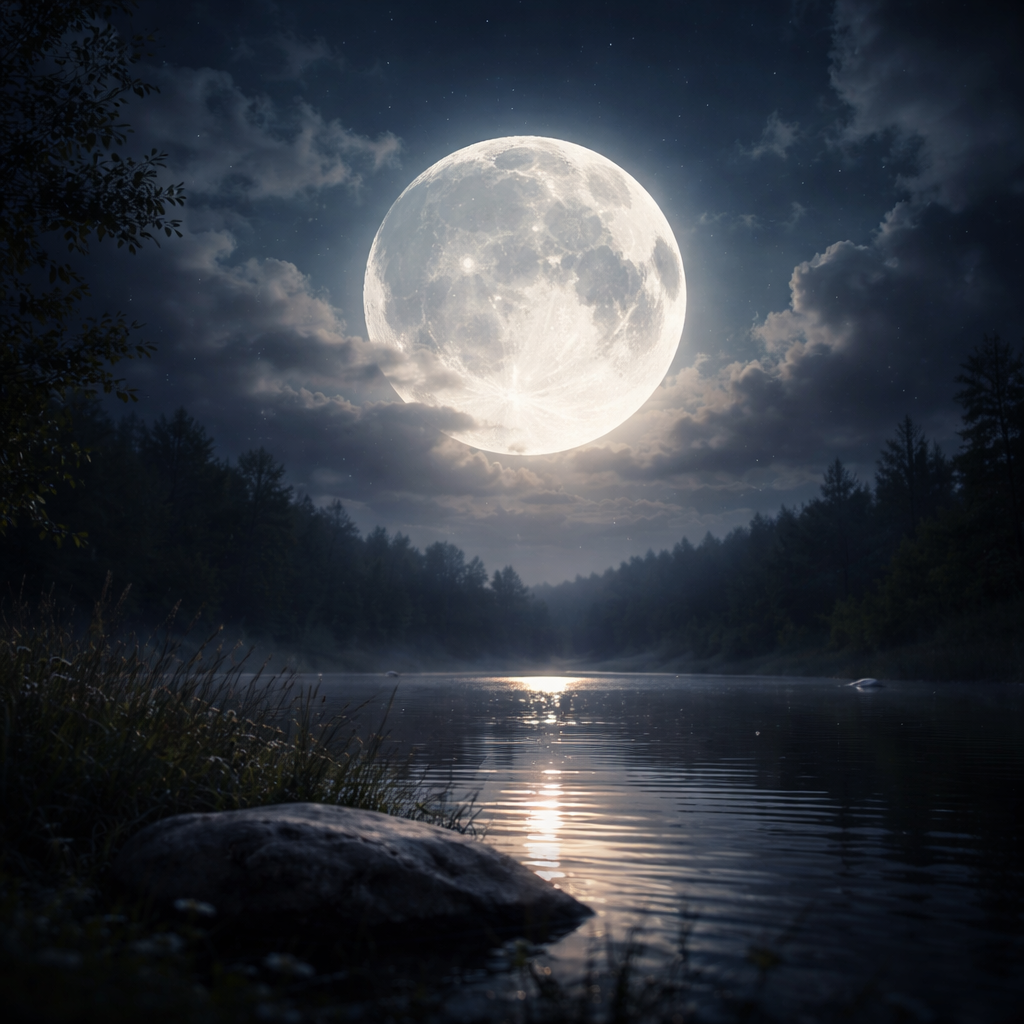
Almost everyone has woken up at some point wondering what does dreaming about the moon mean — whether the dream left a feeling of awe, unease, or quiet wonder. Moon dreams are among the most commonly reported and symbolically rich experiences in sleep, and they rarely feel random. There’s usually something emotionally charged about them, even if you can’t immediately put your finger on what.
Why the moon shows up in your dreams at all
The moon has been a psychological and cultural symbol for thousands of years — tied to cycles, emotion, intuition, and the unconscious mind. In Jungian psychology, the moon is often associated with the shadow self and the hidden aspects of personality that we don’t always acknowledge in waking life. So when it appears in a dream, it’s rarely a coincidence.
Dream researchers and psychologists generally agree that recurring symbols in dreams tend to reflect inner emotional states. The moon, specifically, is linked to how we process feelings, relationships, and transitions. If you’re going through a major life change — ending a relationship, starting a new career path, or dealing with unresolved emotional tension — the moon might appear as your mind’s way of marking that shift.
What different moon phases in dreams typically represent
The phase of the moon you see in your dream often carries its own layer of meaning. Here’s how dream analysts and psychologists have interpreted the most common variations:
| Moon Phase in Dream | Common Symbolic Interpretation |
|---|---|
| Full moon | Emotional peak, clarity, heightened intuition, completion of a cycle |
| New moon | New beginnings, potential, something not yet revealed |
| Crescent moon | Growth, gradual progress, hope or anticipation |
| Blood moon or red moon | Intense emotion, fear, transformation, or warning signals from the subconscious |
| Fading or disappearing moon | Loss, endings, feeling of uncertainty or abandonment |
These interpretations aren’t fixed rules — context matters enormously. How you felt during the dream, who else was present, and what was happening around the moon all shape what your subconscious may be communicating.
The emotional tone of the dream changes everything
Two people can dream of a full moon and come away with completely different experiences. One might feel peaceful and grounded, while another wakes up anxious or unsettled. Dream psychology emphasizes that the emotional response you have within the dream is often more meaningful than the symbol itself.
“Dreams are not about what you see — they’re about what you feel while seeing it.”
If your moon dream felt serene and luminous, it may reflect a period of self-awareness or emotional balance in your waking life. If it felt threatening — a moon falling from the sky, an eclipse blocking out all light — your subconscious might be processing fear of losing control or a sense that something important is coming to an end.
Common moon dream scenarios and what they suggest
Beyond the phase of the moon, specific scenarios that appear in lunar dreams each carry their own set of associations:
- Touching or reaching the moon — often tied to ambition, a longing for something just out of reach, or spiritual aspiration
- Multiple moons in the sky — can reflect confusion, conflicting emotions, or a sense of being pulled in different directions
- Moon reflecting on water — linked to emotional depth, introspection, and the relationship between the conscious and unconscious mind
- Moon falling from the sky — frequently associated with anxiety about major change or fear of losing stability
- Being on the moon — can symbolize detachment from everyday life, a desire for perspective, or feeling isolated
- A bright, unusually large moon — often connected to heightened intuition or a situation in waking life that feels overwhelming but also significant
None of these interpretations should be treated as absolute. They serve as starting points for reflection, not conclusions.
How to actually use this information
Understanding lunar dream symbolism is only useful if you do something with the insight. Here are a few grounded practices that can help you decode what your mind is working through:
Keep a dream journal by your bed. Write down not just what happened, but how you felt — before, during, and after the dream. Patterns become visible over time, and the moon may appear repeatedly during specific emotional periods in your life.
You might also try asking yourself a few questions after waking from a moon dream:
- What’s currently in transition in my life?
- Am I avoiding something emotionally that I haven’t fully acknowledged?
- Was the dream feeling tied to a specific relationship or life situation?
- Have I been ignoring my instincts or intuition recently?
These questions aren’t about finding a single “correct” answer. They’re about using the dream as a doorway into honest self-reflection — something that psychology consistently links to better emotional regulation and decision-making.
When moon dreams keep coming back
Recurring dreams about the moon are worth paying closer attention to. In sleep research, recurring dream themes are often connected to unresolved psychological tension — something your waking mind keeps sidestepping. If the moon appears in your dreams repeatedly over weeks or months, it may be worth exploring what emotional thread connects those periods of time.
This doesn’t mean you need to consult a therapist over every dream (though speaking to a professional is always a valid option if dreams are causing distress). Often, simply acknowledging the emotional content of the dream — rather than dismissing it — is enough to interrupt the cycle.
Your dreams, your meaning
There’s no universal dictionary of dream symbols that applies to every person equally. Cultural background, personal history, and current emotional state all shape what any symbol — including the moon — means to you specifically. A person who grew up near the ocean and spent nights watching the moon rise over water will have a very different subconscious relationship with it than someone who grew up in a city and rarely looked at the night sky.
What matters most is staying curious about your inner life rather than searching for a definitive answer. Moon dreams tend to arise during emotionally significant periods — and that alone is worth noticing. Whatever the specific imagery, these dreams are your mind doing what it does every night: sorting, processing, and trying to make sense of the life you’re living.