
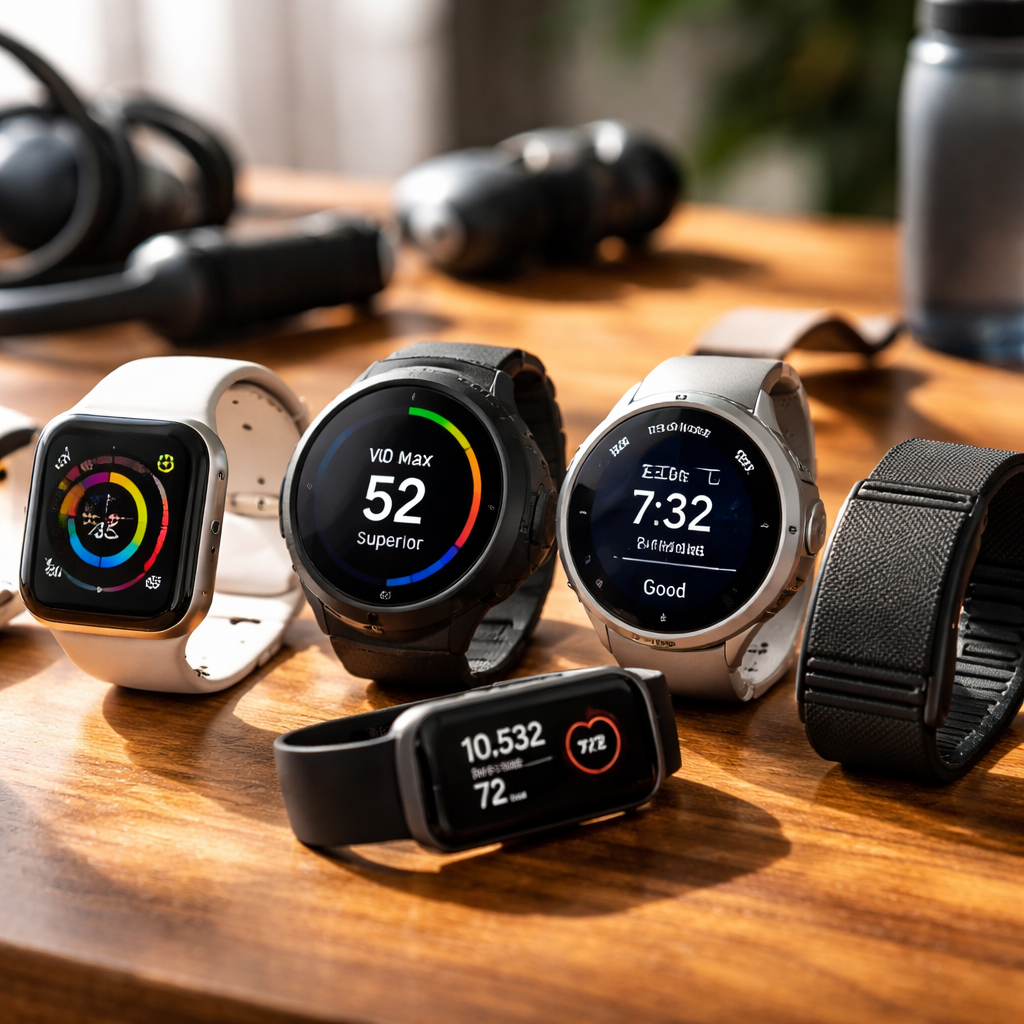
Most people don’t realize how much the fitness tracker market has expanded until they actually start shopping around. If you’ve been looking for a solid alternative to Fitbit, you’re not alone — thousands of users switch or explore other options every month, driven by different priorities: longer battery life, more accurate sleep tracking, better sport modes, or simply a different price point.
Why People Look Beyond Fitbit
Fitbit has built a loyal following over the years, and for good reason. Its app is intuitive, the step-counting is reliable, and the ecosystem is well-developed. But it’s not a perfect fit for everyone. Some users find the subscription model (Fitbit Premium) frustrating, since many useful features are locked behind a paywall. Others run into syncing issues with Android devices or feel the GPS accuracy doesn’t meet their needs as runners or cyclists.
Beyond technical complaints, there’s also the question of style, health data depth, and compatibility with other apps. Someone deep in the Apple ecosystem will naturally gravitate toward a device that connects seamlessly with their iPhone and Health app. A serious endurance athlete may need metrics that consumer-grade Fitbit devices simply don’t offer. These are real, practical reasons — not just marketing noise.
The Strongest Contenders Worth Your Attention
Let’s break down the most talked-about options across different use cases. Each of these devices brings something distinct to the table.
| Device | Best For | Standout Feature |
|---|---|---|
| Apple Watch Series (SE or newer) | iPhone users, health monitoring | ECG, blood oxygen, tight iOS integration |
| Garmin Vivosmart / Forerunner | Runners, outdoor athletes | Advanced GPS, VO2 max, Body Battery score |
| Samsung Galaxy Fit / Galaxy Watch | Android users | Sleep coaching, BioActive sensor |
| Amazfit Band / GTR series | Budget-conscious users | Long battery life, wide sport mode library |
| Whoop Strap | Recovery-focused athletes | Strain and recovery scoring, no screen design |
This isn’t an exhaustive list, but it covers the range from casual wearers to performance-focused athletes — which is exactly the kind of spectrum you need to consider before making a decision.
Apple Watch: When Ecosystem Matters More Than Anything
If you use an iPhone, the Apple Watch is hard to argue against. The health sensors have been continuously improved, and the watchOS platform gives developers tools to build genuinely useful health apps that go far beyond step counting. Features like irregular heart rhythm notifications, crash detection, and cycle tracking make it one of the most comprehensive health wearables available for everyday consumers.
The downside is battery life — typically around 18 hours with always-on display enabled. If you’re someone who forgets to charge devices or wants continuous multi-day tracking, this is a real limitation. The Apple Watch SE offers a more affordable entry point while keeping most of the core health features intact.
Garmin: Built for People Who Take Movement Seriously
Garmin occupies a very specific and well-earned space in the wearable market. Their devices are built around athletic performance — not just tracking steps, but understanding how your body responds to training load. The Body Battery feature, for instance, uses heart rate variability, stress levels, and sleep quality to give you a single score representing how recovered you are. It’s surprisingly accurate and genuinely useful for planning training days.
Garmin’s approach is data-first. If you want to understand your fitness at a deeper level, not just count calories, their ecosystem rewards that curiosity.
Battery life on Garmin devices is another major advantage — many models last 5 to 7 days on a single charge in smartwatch mode, and some GPS-enabled sport watches go even longer in basic tracking mode. For travelers or people with unpredictable schedules, this matters a lot.
Budget-Friendly Doesn’t Mean Feature-Poor
Amazfit and similar brands have quietly become serious players in the wearable space. Devices like the Amazfit Band 7 or GTR Mini offer heart rate monitoring, SpO2 tracking, stress measurement, and dozens of sport modes — often for under $60. The battery life frequently reaches two weeks or more, which is something premium brands struggle to match.
The trade-off tends to be in software polish and app ecosystem depth. Zepp (Amazfit’s companion app) has improved considerably, but it still doesn’t match the maturity of Garmin Connect or Apple Health in terms of long-term trend analysis and third-party integrations. If you’re someone who wants to connect your data to MyFitnessPal, Strava, or a similar platform, check compatibility before purchasing.
A Few Questions to Ask Yourself Before Buying
Choosing a fitness tracker is more personal than it might seem. The “best” device depends entirely on your lifestyle, habits, and what you actually want to improve or monitor. Here are some things worth thinking through:
- Do you primarily use an iPhone or Android phone? Some devices work far better in one ecosystem than the other.
- How often are you realistically willing to charge a device? If the answer is “once a week,” battery life should be near the top of your list.
- Are you tracking general wellness, or do you have specific athletic goals like marathon training or cycling performance?
- Do you care about wearing it as jewelry or fashion — or is function all that matters?
- Are you comfortable paying a monthly subscription for premium insights, or do you prefer a one-time purchase with full feature access?
Answering these honestly will narrow down your options faster than any spec comparison chart.
What the Data Actually Shows About Wearable Accuracy
One topic that doesn’t get enough attention in wearable reviews is accuracy — specifically, how well these devices measure what they claim to measure. Heart rate tracking during steady-state activities (like walking or light jogging) is generally reliable across most modern wearables. Where differences emerge is during high-intensity intervals, strength training, or swimming, where wrist-based optical sensors struggle with motion artifacts.
Sleep tracking is another area with meaningful variation. Devices that use heart rate variability data alongside movement tend to produce more nuanced results than those relying only on accelerometer data. Garmin and Whoop have invested heavily in sleep staging accuracy, while Apple has added retroactive sleep stage detection in newer models. Calorie burn estimates, on the other hand, remain notoriously inconsistent across all brands — treat them as ballpark figures rather than precise measurements.
The Right Choice Depends on Who You Are, Not What’s Most Popular
There’s no universally correct answer here. A device that works brilliantly for a triathlete will feel like overkill for someone who just wants to hit 8,000 steps a day and sleep better. A sleek, fashion-forward smartwatch might be perfect for someone who wears it to work and social events but frustrating for a trail runner who needs ruggedness and GPS precision.
What’s worth noting is that the wearable market has matured enough that you genuinely don’t have to compromise on core features regardless of budget. Even entry-level devices now include heart rate monitoring, sleep tracking, and basic workout detection. The differences between tiers are more about data depth, build quality, battery performance, and ecosystem richness than about having fundamental features or not.
Take the time to identify what you actually want to change or understand about your health, and let that drive the decision rather than brand loyalty or what’s trending. That’s the approach that leads to a device you’ll actually wear — and actually benefit from.