
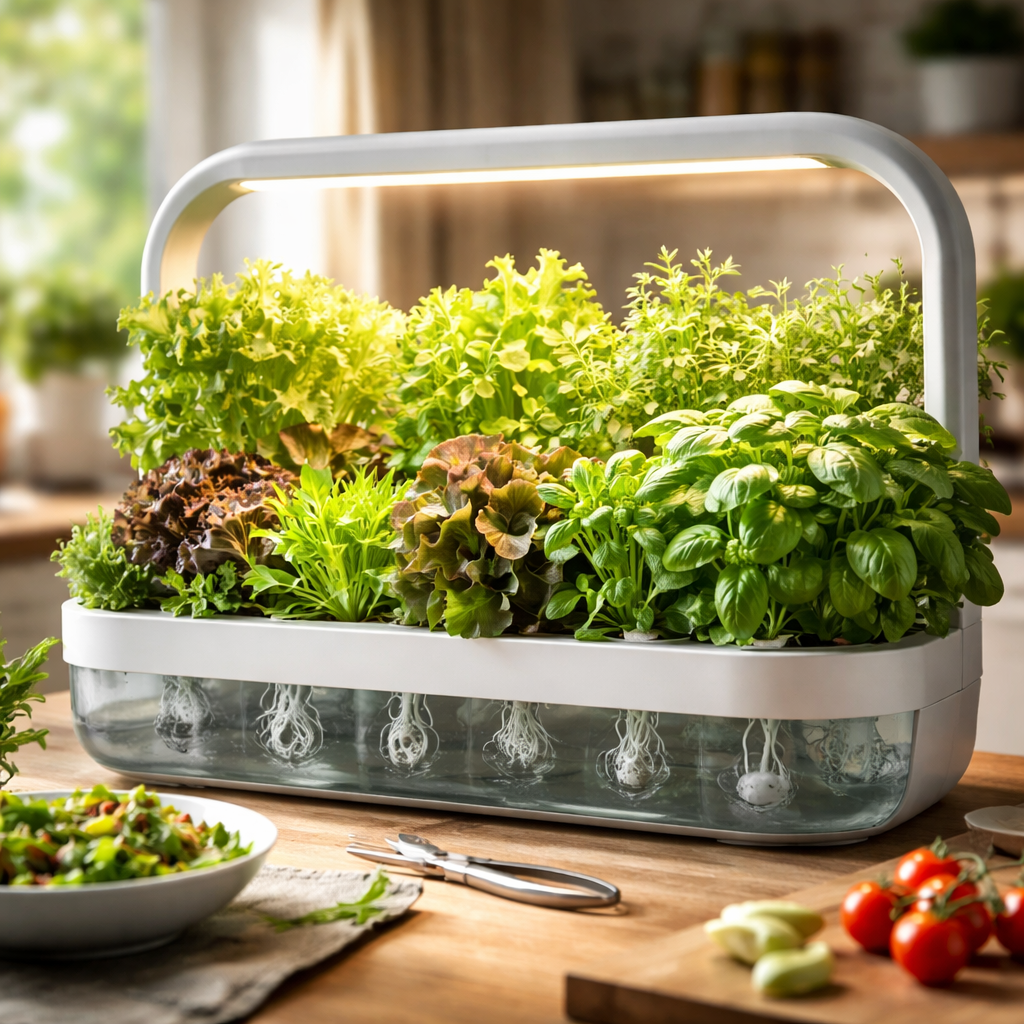
Most people assume you need a backyard, good soil, and a reliable climate to grow food at home — but none of that is actually true. The advantages of hydroponics for home gardening challenge nearly every traditional assumption about what it takes to cultivate fresh produce, and the results speak for themselves: faster growth, higher yields, and plants that thrive in spaces as small as a kitchen countertop.
Why soil is no longer the starting point
In conventional gardening, soil serves as both a support structure and a nutrient delivery system. Hydroponics separates these two functions entirely. Plants are anchored in inert growing media — such as clay pebbles, rockwool, or perlite — while nutrients are delivered directly to the roots through water. This direct access is one of the core reasons hydroponic plants grow noticeably faster than their soil-grown counterparts.
Without the need to push roots through dense soil in search of minerals, plants redirect that energy into leaf and fruit development. Studies in controlled growing environments have consistently shown that hydroponic lettuce, for example, can reach harvest size in roughly half the time compared to soil cultivation. That kind of efficiency matters a great deal when you’re working with limited space or want a consistent supply of fresh greens year-round.
Space efficiency that actually works in real homes
One of the most practical benefits of indoor hydroponic gardening is how well it adapts to real-world living conditions. Apartment dwellers, people with no outdoor space, or anyone renting a home without garden access can still grow food with a modest setup placed near a window or under a grow light.
Vertical hydroponic systems take this even further. By stacking growing channels or using tower-style planters, you can cultivate a surprisingly large number of plants within a footprint no bigger than a standard floor lamp. This vertical approach also improves air circulation around plants, which naturally reduces the risk of mold and pest infestations.
| Growing method | Space needed | Time to harvest (lettuce) | Water usage |
|---|---|---|---|
| Traditional soil gardening | Outdoor plot or large pots | 45–60 days | High |
| Home hydroponics | Countertop or wall-mounted | 25–35 days | Up to 90% less |
Water conservation — a benefit that’s easy to overlook
Hydroponic systems recirculate water rather than letting it drain away or evaporate into open ground. The nutrient solution cycles back to the reservoir and is reused, meaning consumption drops dramatically compared to watering a soil-based garden. For home growers conscious of utility costs or living in areas where water is a limited resource, this is a genuinely significant advantage.
Hydroponic systems use up to 90% less water than conventional soil gardening — a figure supported by agricultural research institutions including NASA, which has explored hydroponics as a food-growing solution for space missions.
This closed-loop approach also means fewer nutrients leach into the environment, making home hydroponics a comparatively low-impact way to grow food.
Fewer pests, less intervention
Soil harbors a wide range of insects, fungi, and pathogens that can devastate a home garden. When you remove soil from the equation, you also eliminate a significant portion of the pest pressure that soil-based growers deal with regularly. Aphids, fungus gnats, and root rot-causing organisms all thrive in moist soil — conditions that simply don’t exist in a properly maintained hydroponic setup.
This doesn’t mean hydroponic gardens are completely problem-free, but the types of issues you encounter are generally easier to identify and manage. Because the root zone is visible and accessible, early signs of nutrient deficiency or root discoloration can be caught before they escalate.
Control over what goes into your food
Home hydroponic growing gives you full visibility into the nutrient solution your plants receive. Unlike store-bought produce — where growing practices are rarely disclosed in detail — you decide exactly which minerals and in what concentrations your plants are fed. For families focused on clean eating or individuals with specific dietary considerations, this level of transparency is genuinely valuable.
Beyond nutrients, the absence of herbicides and pesticides (which are commonly used in commercial agriculture) means your harvest is as close to chemical-free as home growing can get. This connects to one of the broader reasons people turn to nutrient film technique systems, aeroponic setups, and other soilless growing methods in the first place: knowing exactly what they’re eating.
What grows well — and what you should know before starting
Hydroponics works exceptionally well for a specific category of crops. Fast-growing, shallow-rooted plants are the easiest to manage and deliver the most satisfying results for beginners.
- Lettuce and other leafy greens (arugula, spinach, kale)
- Fresh herbs — basil, mint, cilantro, parsley
- Cherry tomatoes and smaller pepper varieties
- Strawberries, particularly everbearing types
- Cucumbers (with adequate vertical support)
Root vegetables like carrots or potatoes are not well-suited to most home hydroponic systems due to the depth they require. Similarly, large fruiting trees and sprawling vine crops need far more structural support and light intensity than a typical indoor setup can provide.
Before investing in equipment, it’s worth mapping out what you actually want to grow and matching that to an appropriate system. A simple countertop unit is more than enough for a continuous supply of salad greens and herbs. Expanding to tomatoes or peppers calls for a more robust setup with stronger lighting and a larger reservoir.
Growing food at home is more accessible than it’s ever been
The barrier to entry for home hydroponics has dropped considerably. Ready-made systems designed specifically for beginners are widely available, many requiring nothing more than filling a reservoir, adding a nutrient solution, and placing seedlings. The learning curve is real but manageable — most newcomers produce their first harvest within a month of setting up a basic system.
There’s also a practical psychological benefit that doesn’t get mentioned often enough: growing food at home, watching plants develop day by day, and eventually harvesting something you’ve tended yourself carries a quiet satisfaction that’s genuinely hard to replicate. It turns an abstract interest in sustainable living into something tangible, visible, and edible.
Whether the motivation is reducing grocery bills, eating fresher produce, using space creatively, or simply experimenting with something new — home hydroponics delivers on each of those fronts in ways that conventional gardening often can’t, especially for people without access to outdoor growing space.