
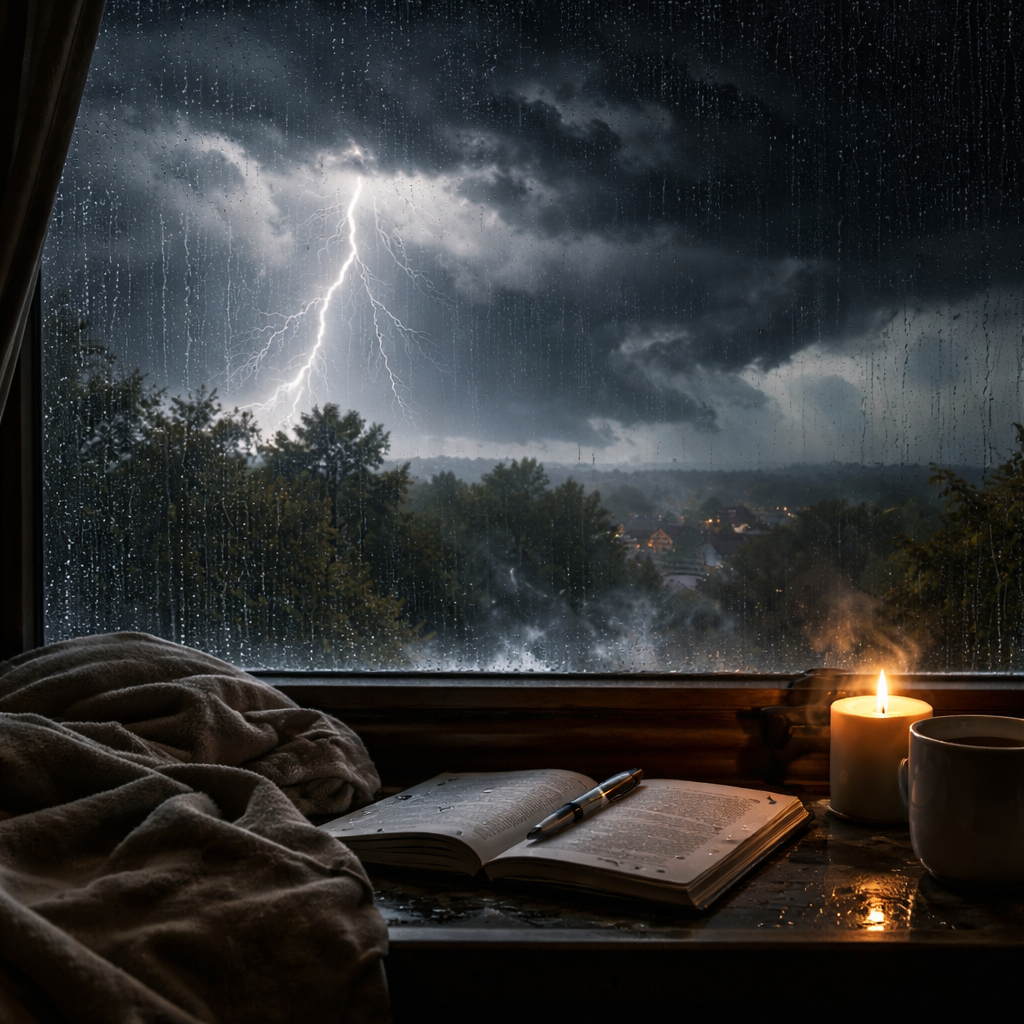
Most people wake up from a storm dream with their heart still racing — and the question lingers: what does dreaming about a storm mean, and should you actually pay attention to it? The short answer is: it depends on the context, your emotions during the dream, and what’s going on in your waking life. Storm dreams are rarely random noise. They tend to show up at moments of internal pressure, change, or unresolved tension.
Why storm dreams get under your skin
Storms in dreams are intense by nature — they’re loud, unpredictable, and often feel threatening even when nothing physically happens to the dreamer. This intensity is exactly why psychologists and dream analysts take them seriously. The emotional charge of a storm dream often mirrors something the subconscious mind is processing but hasn’t yet surfaced in conscious thought.
Dream research doesn’t claim that every dream carries symbolic meaning — but recurring storm imagery, or dreams vivid enough to wake you up, are worth reflecting on. They frequently coincide with life transitions, high-stress periods, or bottled-up emotions that haven’t found a healthy outlet.
Breaking down the most common storm dream scenarios
Not all storm dreams are created equal. The details matter — where you are, whether you’re alone, what the storm does, and how you feel during it all shift the interpretation significantly.
| Dream scenario | Common psychological association |
|---|---|
| Watching a storm from inside a safe building | Awareness of external chaos without feeling overwhelmed; observing conflict from a distance |
| Being caught in a storm with no shelter | Feeling exposed, unprepared, or lacking support in a real-life situation |
| A storm that suddenly clears | Anticipation of resolution; a subconscious sense that a difficult period is ending |
| Trying to warn others about an incoming storm | Anxiety about people around you; feeling responsible for outcomes outside your control |
| Enjoying or feeling drawn to the storm | Craving intensity, change, or release; sometimes linked to creative energy |
These patterns aren’t rigid rules — they’re starting points for reflection. Context always wins over a generic symbol dictionary.
What emotions during the dream actually tell you
Here’s something that often gets overlooked: the content of the storm matters less than how you felt while experiencing it. Two people can dream of an identical tornado — one wakes up terrified, the other wakes up exhilarated. Those are not the same dream psychologically.
The emotional residue of a dream — that lingering feeling after you wake — is often a more reliable signal than the imagery itself.
Fear during a storm dream is often connected to anxiety about loss of control — whether in relationships, work, finances, or health. Anger showing up during a storm can reflect suppressed frustration or unresolved conflict. And if you felt strangely calm or even peaceful in the middle of the storm, that might suggest a growing internal resilience or acceptance of something difficult.
The connection between storm dreams and waking life stress
Sleep researchers have consistently found that emotional and psychological stress directly influences dream content. When you’re under sustained pressure, your brain uses REM sleep to process unresolved emotional material — and storms are one of the mind’s go-to metaphors for overwhelm.
This doesn’t mean the dream is predicting anything. It means your nervous system is doing its job — flagging something that needs attention. Common real-life triggers for storm-related dreams include:
- Periods of major change — a new job, a move, the end of a relationship
- Ongoing conflict with someone close to you that hasn’t been addressed
- A decision you’ve been avoiding or feel forced into
- Physical exhaustion combined with emotional overload
- A general sense of instability or uncertainty about the future
Recognizing the trigger doesn’t dissolve the dream, but it does take away some of its power. When you understand what the storm is standing in for, it becomes information rather than just a disturbing image.
Cultural and symbolic layers worth knowing
Across many cultures and throughout recorded history, storms have served as symbols of transformation, divine force, and upheaval. In Jungian psychology, storms are sometimes interpreted as manifestations of the shadow self — the parts of your personality or experience that you haven’t fully integrated. This isn’t a mystical claim; it’s a framework for understanding why the same archetypal image keeps appearing in dreams across different people and cultures.
Lightning in a storm dream often adds a layer of sudden clarity or shock — an insight that cuts through confusion, but also carries a sense of danger or urgency. Thunder without lightning can suggest that something powerful is approaching but hasn’t fully arrived yet. Flooding caused by a storm frequently appears in dreams during periods when emotions feel like they’ve exceeded their container — when you simply can’t hold everything together anymore.
How to actually use this when you wake up
Understanding storm dream symbolism is only useful if you do something with it. Here’s a practical approach that doesn’t require any belief in the supernatural — just honest self-reflection.
Tip: Keep a simple notebook by your bed. Right after waking from a vivid dream, write down three things: what happened, how you felt, and what situation in your current life it might connect to. Even a few sentences is enough to start noticing patterns.
After writing it down, ask yourself these questions:
- Is there something in my life right now that feels out of control?
- Am I avoiding a conversation or decision that’s building tension?
- Did the dream make me feel helpless, or did I manage to navigate the storm?
- Has this same dream or a similar one appeared before — and if so, when?
These aren’t rhetorical questions. They’re meant to be answered honestly, even if the answers are uncomfortable. The storm in your dream isn’t there to frighten you — it’s there because something is asking for your attention.
When the storm passes — and what that means too
Some people dream of the aftermath of a storm rather than the storm itself — fallen trees, flooded streets, a strange quiet. These post-storm dreams are worth noting separately. They often reflect a sense of having already been through something difficult and now surveying the damage. There can be grief in these dreams, but also a particular kind of stillness that comes after crisis.
If the landscape in your dream is damaged but you feel okay — maybe even relieved — that’s a meaningful signal. It may reflect that you’ve processed something significant, consciously or not, and that you’re beginning to move forward even if you haven’t fully registered it yet in your waking mind.
Storm dreams, at their core, are the mind’s way of externalizing internal weather. They’re not omens, and they’re not disorders. They’re a language — one that becomes more readable the more honestly you’re willing to look at your own life.