
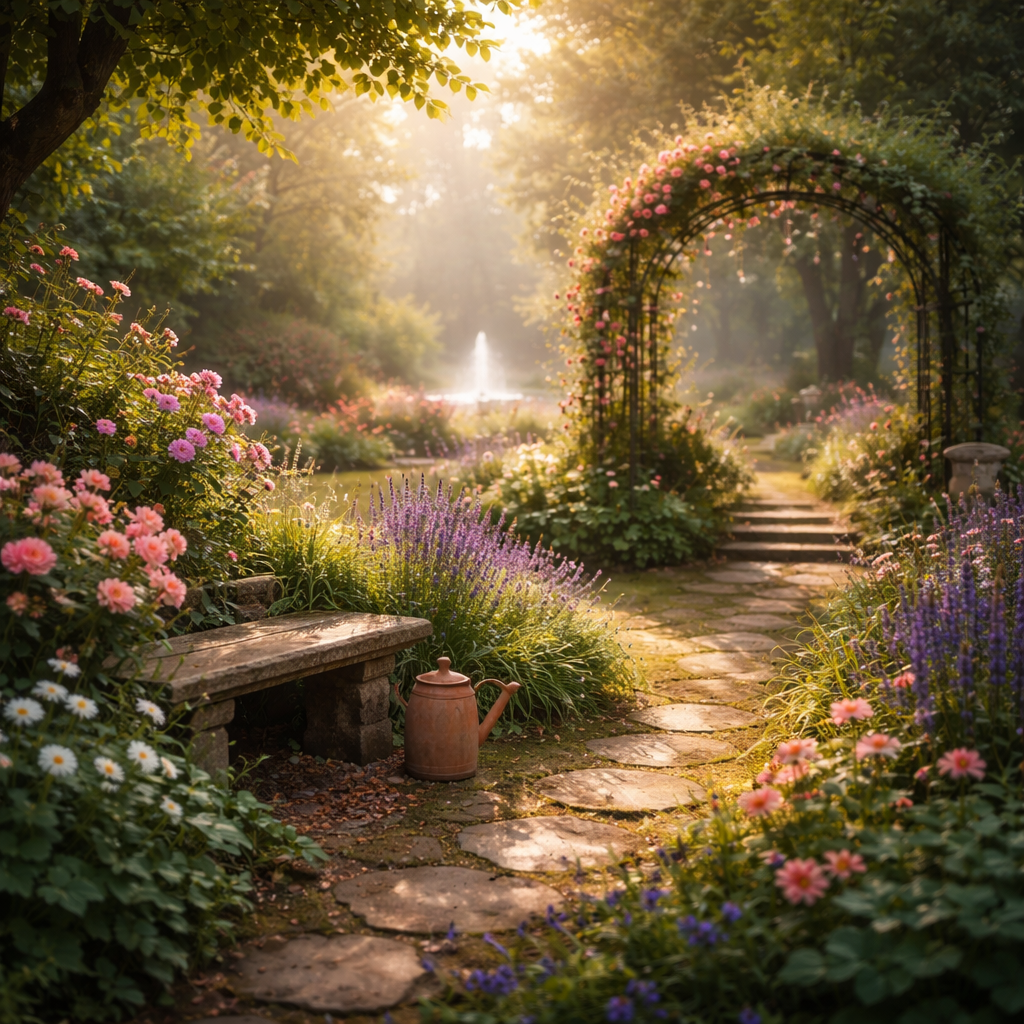
Most people wake up from a garden dream with a quiet, lingering feeling — something between calm and curiosity. If you’ve ever wondered what does dreaming about a garden mean, you’re not alone: this is one of the most emotionally rich dream symbols that psychologists and dream researchers consistently find across cultures and age groups.
Why gardens show up in dreams more often than you’d think
Dreams about natural spaces, and gardens in particular, tend to appear during periods of inner change. Unlike dreams about falling or being chased, garden dreams rarely feel alarming. They carry texture — the smell of soil, the sound of wind through leaves, the feeling of something growing. That sensory richness is actually meaningful: it suggests your subconscious is engaging with themes of nurturing, development, and the passage of time.
From a psychological standpoint, Carl Jung described the garden as a symbol of the cultivated self — a space where the wild and the controlled exist in balance. More contemporary dream analysts connect garden imagery to how a person relates to their own emotional or creative life. Are things blooming? Are they withering? Is the garden yours to tend, or are you just a visitor?
What the condition of the garden reveals
Dream interpretation isn’t a fixed science, but there are consistent patterns that emerge across research and reported dream experiences. The state of the garden you dream about tends to mirror something about your inner world at the time of the dream.
| Garden condition in the dream | Possible psychological association |
|---|---|
| Lush, blooming, well-kept | Sense of growth, fulfillment, creative energy |
| Overgrown or wild | Feeling overwhelmed, neglected potential, unresolved emotions |
| Dry or barren | Emotional exhaustion, creative block, a need for rest or renewal |
| Being actively tended or planted | Working toward a goal, investing in relationships or projects |
| Flooded or destroyed | Fear of losing something built over time, anxiety about change |
It’s worth noting that these associations aren’t diagnoses. They’re prompts — starting points for reflection rather than conclusions.
Specific elements that change the meaning
A garden isn’t just a garden. The details inside the dream shift its meaning considerably. Here’s what specific elements often represent in the context of dream symbolism:
- Flowers in bloom — emotional openness, joy, or the beginning of something new in personal life
- Vegetables or fruit — reward for effort, themes of abundance or harvest after hard work
- Weeds — something in your life that is draining energy or attention without producing results
- A garden wall or fence — a sense of boundary, privacy, or the desire for protection
- Someone else tending the garden — a feeling that others are shaping something that should be yours to control
- A forgotten or hidden garden — suppressed memories, untapped potential, or aspects of yourself you haven’t explored
The people present in the dream matter too. A garden visited alone often signals introspection, while a shared garden tends to reflect a relationship — its health, its imbalance, or its potential.
What dream research actually says
It’s easy to get swept up in symbolic interpretation, but it helps to ground the discussion in what sleep research tells us. Dreams are generated during REM sleep, when the brain processes emotional memories and consolidates experiences. Recurring themes — like a garden that appears in multiple dreams — may indicate unresolved emotional content that the brain keeps returning to.
“Dreams are not messages sent from somewhere else. They are the brain’s attempt to make sense of what matters to us emotionally.” — based on findings from sleep research in cognitive neuroscience
This means a garden dream isn’t necessarily telling you something supernatural — it may simply be your mind working through feelings of growth, loss, control, or longing that haven’t been fully processed during waking hours.
How to use a garden dream for self-reflection
Whether or not you believe in dream symbolism, these kinds of dreams are genuinely useful as a reflective tool. When you wake from a vivid garden dream, try the following before the memory fades:
- Write down everything you remember — colors, smells, who was there, what you were doing
- Notice the emotional tone: did the dream feel peaceful, anxious, melancholic, exciting?
- Ask yourself what in your waking life might connect to those feelings
- Pay attention to recurring elements if the dream comes back — patterns are more meaningful than single instances
When the dream keeps returning
Recurring dreams about a garden — especially if they carry a consistent emotional charge — are sometimes worth discussing with a therapist or counselor, not because something is wrong, but because repeated dream imagery often points to something the conscious mind hasn’t fully addressed. This doesn’t mean the dream holds the answer, but it can be a doorway into a conversation worth having with yourself.
People going through major life transitions — career shifts, the end of relationships, grief, creative reinvention — frequently report vivid nature dreams, gardens included. It’s as if the sleeping mind reaches for metaphors of growth and cycles because those are the exact themes being navigated in real life.
Gardens, the mind, and what we’re really tending
At their core, garden dreams seem to come back to one central question: what are you cultivating in your life, and are you giving it the attention it needs? That question is worth sitting with regardless of what any dream dictionary says. The garden — whether lush or neglected, familiar or strange — is rarely just scenery. It tends to be a mirror.
So the next time you find yourself walking through a dream garden, pay attention to how you feel in it. That feeling, more than any symbol or color or plant, is probably where the real meaning lives.