
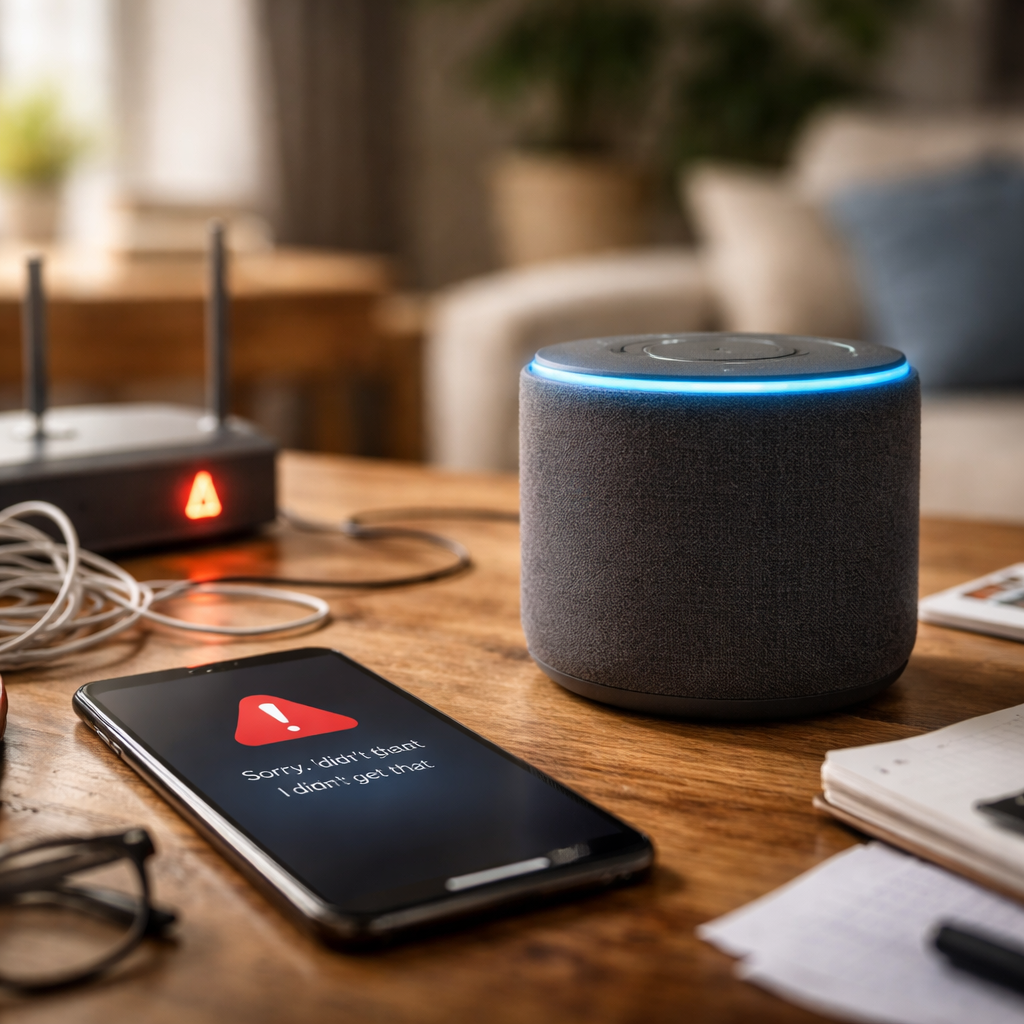
Picture this: you ask your voice assistant something simple, and instead of a helpful response, you get silence, an error, or a completely wrong answer. If your voice assistant not working has become a recurring frustration in your daily routine, you are far from alone — and the good news is that most issues behind this problem are surprisingly fixable without any technical background.
Why voice assistants fail more often than we expect
Voice-activated technology has come a long way, but it still depends on a surprisingly fragile chain of conditions: internet connectivity, microphone access, software permissions, server availability, and even ambient noise levels. When even one link in that chain breaks, the assistant stops responding correctly. Understanding where the breakdown happens is the first real step toward solving it.
Before diving into specific fixes, it helps to know which category your problem falls into. Is the assistant not responding at all? Is it mishearing commands? Is it responding but giving irrelevant answers? Each of these points to a different root cause.
The most common culprits behind the silence
Most voice assistant failures trace back to a small group of repeating issues. Here is what tends to go wrong most frequently across devices — whether you are using Siri, Google Assistant, Alexa, or Cortana:
- Unstable or missing internet connection (cloud-based assistants require constant connectivity)
- Microphone blocked physically or disabled in system permissions
- Wake word detection turned off or misconfigured
- Outdated app or operating system version
- Corrupted app cache interfering with voice recognition
- Background noise exceeding the microphone’s noise-cancellation threshold
- Server-side outages on the provider’s end
Interestingly, many users spend time troubleshooting their device when the actual problem sits on the provider’s servers. A quick check of the platform’s status page can save significant time.
Step-by-step: what to actually check and in what order
Troubleshooting works best when done systematically. Jumping between random fixes rarely resolves anything and often creates confusion about what changed. The sequence below moves from the simplest checks to the more involved ones.
| Step | What to check | Why it matters |
|---|---|---|
| 1 | Internet connection | Most assistants cannot function offline |
| 2 | Microphone permissions | System updates often reset app permissions |
| 3 | App and OS updates | Bugs in older versions cause recognition failures |
| 4 | Clear app cache | Corrupted data can block voice processing |
| 5 | Recheck wake word settings | Settings may have reverted after an update |
| 6 | Restart the device | Clears temporary system conflicts |
| 7 | Reinstall the assistant app | Resolves deep software-level corruption |
Microphone issues deserve special attention
The microphone is the physical gateway for every voice command, and it is often overlooked. A case or screen protector covering the mic port, a single app holding exclusive microphone access, or even a software toggle in accessibility settings can completely block voice input.
On both Android and iOS, go to Settings, find the voice assistant app, and confirm that microphone access is explicitly set to “Always” or “While using the app” — anything more restrictive will cause intermittent failures.
On smart speakers like Amazon Echo or Google Nest, physical mute buttons are easy to press accidentally. Check that the mute indicator light is off before assuming the device has a deeper problem.
When the assistant hears you but responds incorrectly
This is a different category of failure and often the more frustrating one. The assistant activates, processes the request, but either misunderstands the command or gives an irrelevant response. This typically points to voice recognition accuracy issues rather than connectivity or permission problems.
Several factors affect speech recognition quality:
- Accent or dialect not well-represented in the assistant’s training data
- Background sounds like TV, music, or traffic overwhelming the signal
- Speaking too quickly or at an unusual distance from the microphone
- Language settings mismatched with the language being spoken
Most assistants offer a voice retraining option buried in their settings. Running through this process, especially in a quiet environment, can dramatically improve recognition accuracy over time.
A practical tip block worth bookmarking
Quick-fix checklist when nothing else is obvious: toggle airplane mode on and off to reset the network stack, force-close the assistant app completely before reopening it, and check if a VPN or firewall on your network is blocking assistant traffic. These three steps solve a surprisingly large percentage of unexplained failures.
Platform-specific quirks worth knowing
Each major voice assistant has its own set of known issues that go beyond general troubleshooting. Siri on iPhone can stop working after a major iOS update until the device is fully restarted. Google Assistant on Android sometimes loses its default app status when a competing launcher is installed. Alexa on Echo devices occasionally needs to be deregistered and re-linked to the account after a firmware update.
Knowing these patterns saves time. If a general restart and permission check does not resolve things, searching the specific assistant’s support forum with the device model number often surfaces known bugs that already have official fixes or workarounds.
Getting your assistant back on track for good
Once the immediate problem is resolved, a few habits help prevent it from returning. Keeping the assistant app and device OS updated is the single most effective long-term strategy, since many voice recognition improvements and bug patches arrive silently through updates. Reviewing app permissions after each major system update takes less than a minute and prevents the most common permission-reset failures.
Voice technology works best when the environment supports it — a clean microphone, a stable connection, and correct language settings are not optional extras but baseline requirements. Treating them as part of regular device maintenance, rather than something to check only when things break, keeps the assistant responsive and reliable day to day.
The gap between a broken voice assistant and a smoothly functioning one is almost always smaller than it seems. With the right sequence of checks and a bit of patience, most people resolve the issue entirely on their own — no technician required.