
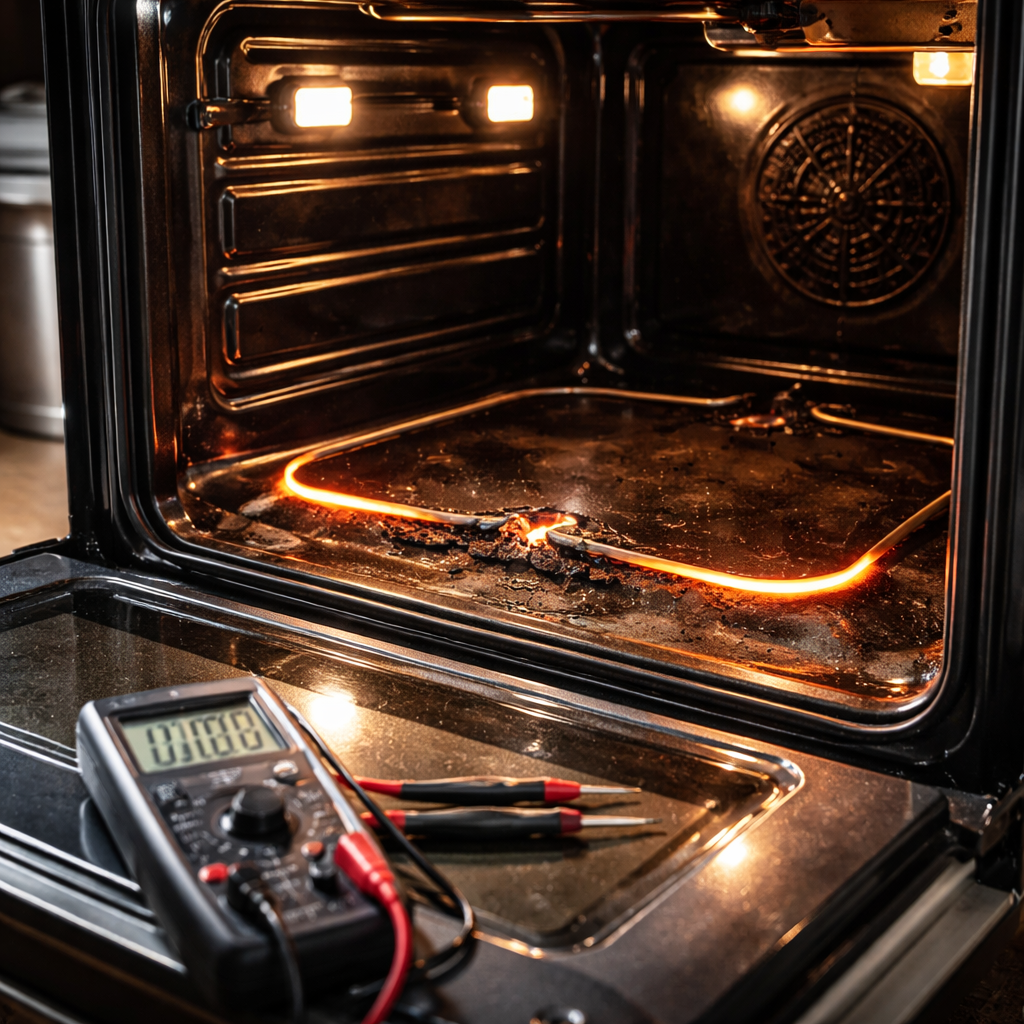
When an oven heating element not working situation hits right before dinner, it can feel like the whole kitchen has turned against you. The good news is that most heating element failures follow a predictable pattern — and once you understand what’s actually happening inside your oven, you can make a smart decision about whether to fix it yourself or call a technician.
What the heating element actually does (and why it fails)
The heating element is a metal coil or rod — typically made from nichrome wire encased in a metal sheath — that converts electrical energy into heat. In most electric ovens, there are two elements: a bake element at the bottom and a broil element at the top. Gas ovens work differently, using an igniter instead, but for electric models, the element is the heart of the entire heating system.
Over time, these elements go through thousands of heat cycles — expanding when hot, contracting when cool. That repeated stress causes the internal wire to weaken, develop thin spots, and eventually break. Moisture from spills can also corrode the element casing from the outside. In many cases, the failure is gradual: you may notice uneven baking or longer preheat times before the element stops working entirely.
How to tell which element has failed
Before assuming the worst, a quick visual inspection often tells you everything you need to know. Open the oven, look at both elements carefully. A broken heating element usually shows one or more of these signs:
- A visible crack, hole, or burn spot on the element surface
- Dark blistering or bubbling along the metal casing
- One section that appears duller or discolored compared to the rest
- The element glows only partially when the oven is turned on
- No glow at all — even after several minutes of preheating
If nothing looks obviously damaged, the next step is to test the element with a multimeter. Set it to measure resistance (ohms). A working heating element typically reads between 10 and 50 ohms depending on the model. A reading of zero or infinity means the circuit is broken and the element needs to be replaced.
A multimeter test takes less than five minutes and removes all the guesswork. If you’ve never used one before, it’s still straightforward — there are only two probes and two terminals on the element.
Other reasons your oven might not be heating properly
Not every heating problem points directly to a faulty element. Before replacing anything, it’s worth ruling out a few other causes that are just as common but far simpler to resolve.
| Possible cause | What to check | DIY or professional? |
|---|---|---|
| Tripped circuit breaker | Check your electrical panel for a tripped breaker | DIY |
| Blown thermal fuse | Locate fuse behind back panel, test with multimeter | DIY with some experience |
| Faulty oven control board | Look for burnt spots on the board or error codes on display | Professional recommended |
| Broken temperature sensor | Test sensor resistance — it should change with temperature | DIY or professional |
| Wiring issue at element terminal | Inspect wire connections at the back of the element | DIY with caution |
A faulty oven temperature sensor is particularly easy to overlook. If the sensor sends incorrect readings to the control board, the oven may think it has already reached the target temperature and cut power to the element early — making it look like the element has failed when it hasn’t.
Replacing a bake element: what the process actually involves
Replacing a bake or broil element is one of the more manageable oven repairs a homeowner can do without professional help. That said, it’s important to go in with realistic expectations about what’s involved.
First, disconnect the oven from power completely — either unplug it or switch off the dedicated circuit breaker. Never work on an oven that is still connected to electricity, even if it’s turned off at the dial. Once the power is off, remove the oven racks for easier access and unscrew the element from its mounting brackets at the back of the oven cavity.
As you pull the element forward, two wire connectors will become visible behind the back wall. These connectors slide off the element terminals. Take a photo before disconnecting them — it makes reassembly much easier, especially if the wires look similar. Attach the new element, reconnect the wires, screw the brackets back in, and restore power.
Always source a replacement element using your oven’s exact model number. Generic elements may fit physically but deliver the wrong wattage, which affects cooking performance and can shorten the lifespan of your oven’s control board.
When it’s smarter to call a repair technician
Some situations genuinely call for a professional. If you’ve replaced the element and the oven still doesn’t heat, the problem almost certainly lies elsewhere — in the control board, wiring harness, or relay board. These components are more expensive, more delicate, and require a proper diagnosis before spending money on parts.
Also consider the age of the appliance. If your oven is already ten or more years old and requires a repair that costs more than half the price of a comparable new model, replacement often makes more financial sense than repair. A technician can give you a realistic cost estimate and help you make that calculation based on the specific fault.
A few things worth doing before any repair
- Write down your oven’s make, model, and serial number — you’ll need this when ordering parts or describing the problem to a technician
- Check if the appliance is still under warranty before paying for anything out of pocket
- Search for the service manual for your specific model — many manufacturers provide these for free online and they contain wiring diagrams and component specs
- If the oven is a slide-in or built-in model, check whether pulling it out requires disconnecting a gas line — in that case, a professional must handle the work
Getting your oven back to full function
Most heating element failures are straightforward to diagnose and relatively inexpensive to fix. The key is not to guess — use a multimeter, check the most common failure points in a logical order, and match the replacement part precisely to your oven’s specifications. Whether you tackle the repair yourself or hand it off to a technician, understanding what’s actually wrong puts you in a much stronger position to make the right call without wasting money on unnecessary parts or service visits.