
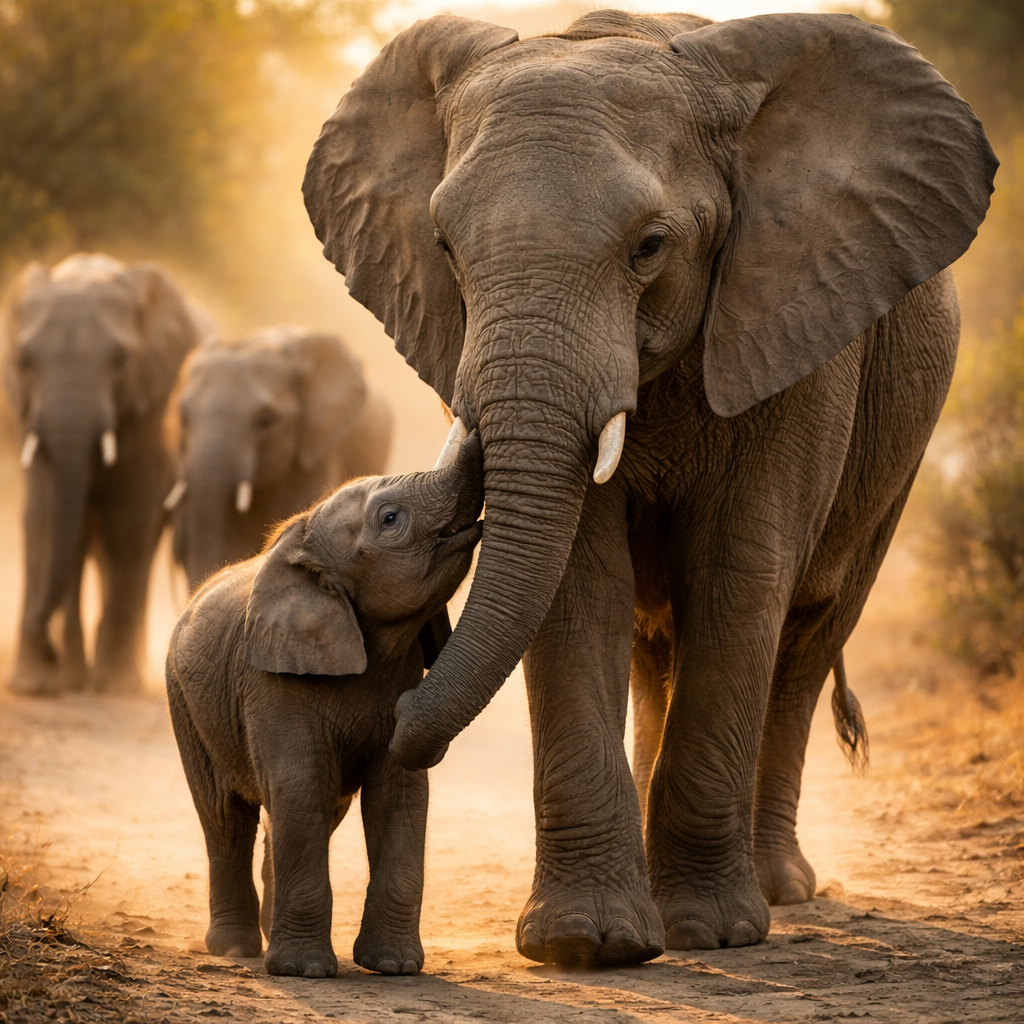
Few tattoo symbols carry as much emotional weight as the elephant — and when people explore the meaning of elephant tattoos for family, they often discover layers of symbolism that go far deeper than aesthetics. Elephants are one of the rare animals in the natural world that actively grieve their dead, care for injured members of the herd, and make collective decisions about where the group travels. These behavioral traits have shaped how humans interpret elephant imagery across cultures — and why so many people choose this animal to represent their most important relationships.
Why elephants became a symbol of family in the first place
The connection between elephants and family isn’t a modern invention. In African and Asian cultures, elephants have long been observed living in tight-knit matriarchal groups led by the oldest female. She guides younger elephants, mediates conflicts, and carries decades of collective memory about water sources, migration routes, and safe shelter. This is not instinct alone — it is learned, shared knowledge passed down through generations.
That image — of wisdom passed from elder to younger, of protection and belonging — translates almost perfectly into what many people feel about their own families. A tattoo of an elephant, or a group of elephants walking together, becomes a quiet but powerful statement: this is who I belong to, and this is who I protect.
What different elephant tattoo designs communicate
The design you choose shapes the meaning significantly. Here is how some of the most common elephant tattoo concepts are typically interpreted in the context of family:
| Design | Common family-related meaning |
|---|---|
| Mother and calf | Parental love, protection of children, unconditional bond |
| Elephant herd in a line | Unity of the family unit, generational connection |
| Single elephant with trunk raised | Strength, good fortune brought to loved ones |
| Elephant silhouette with names or dates | Memorial or tribute to specific family members |
| Geometric or minimalist elephant | Modern take on family values — structure and balance |
The mother and calf pairing is probably the most emotionally direct option. It leaves very little ambiguity — this is about a specific bond between parent and child. People who have lost a parent or a child sometimes choose this design as a form of permanent tribute.
Cultural perspectives that inform the symbolism
Understanding where this symbolism comes from adds authenticity to the choice. Across different traditions, elephants carry slightly different but often complementary meanings:
- In Hinduism, Lord Ganesha — depicted with an elephant head — represents wisdom, new beginnings, and the removal of obstacles. Families often pray to Ganesha before major life events, which makes elephant imagery deeply tied to family milestones.
- In many sub-Saharan African traditions, the elephant represents communal memory and ancestral connection — the idea that the past lives within the present generation.
- In Thai culture, the elephant has historically symbolized royal protection and good fortune — qualities that family members wish for one another.
- In Western tattoo culture, the elephant increasingly functions as a symbol of loyalty and emotional intelligence — traits valued in close relationships.
None of these meanings contradict each other. That is part of why elephant tattoos have become so versatile — they hold space for grief, celebration, protection, and memory all at once.
“Elephants never forget” is not just a saying — it reflects documented behavior. Elephants recognize family members they haven’t seen in years and show physical signs of joy upon reunion. That kind of loyalty resonates deeply with people who value family above everything else.
Placement and how it shapes the message
Where you place an elephant tattoo also contributes to how it reads — both visually and personally. There is no single correct answer, but placement often reflects the intimacy of the meaning behind the piece.
Many people who get family-related elephant tattoos choose the chest or the area near the heart — the intention is obvious and personal. Others place it on the forearm or wrist, making it visible as a daily reminder of who they are and where they come from. Large back or thigh pieces allow for more detailed herd compositions, which works especially well for people who want to represent multiple family members or generations within a single image.
- Think about whether the piece is a tribute, a celebration, or a daily reminder — this helps the artist understand the emotional tone.
- Discuss whether you want the design to grow over time (adding figures for new family members, for instance).
- Research artists who specialize in animal realism or illustrative styles if detail is important to you.
- Consider whether cultural elements from a specific tradition feel right for your personal connection to the symbol.
When an elephant tattoo becomes more than decoration
Some of the most meaningful elephant tattoos people share publicly are memorial pieces — created after a loss. Losing a parent, a sibling, or a child leaves people searching for ways to carry that person forward. A permanent image becomes a physical anchor for memory. The elephant’s association with never forgetting makes it a natural choice for grief tattoos that are not about sadness, but about continuing to hold someone close.
Others use elephant family tattoos to mark a turning point — the birth of a child, surviving a period of family crisis, or reconciling with an estranged relative. In this sense, the tattoo functions less as a statement and more as a private ritual — something you carry on your skin as evidence that what you went through mattered and that your connections endured.
There is also a growing trend of matching or complementary elephant tattoos shared between family members — a mother and daughter each getting a version of the same design, or siblings choosing a small elephant as a shared emblem. These pieces are explicitly about relationship rather than individual expression, and they tend to be among the most emotionally charged tattoo choices people make.
Choosing the right meaning for your own piece
The honest answer is that no single interpretation is more valid than another. Elephant tattoo symbolism is broad enough to hold very different personal stories — and that breadth is exactly what makes it endure as a popular choice. What matters most is that you understand what the image means to you, and that the design reflects that meaning clearly enough that you will still feel connected to it decades from now.
A well-chosen family tattoo does not need to explain itself to strangers. It needs to mean something real to the person wearing it — and in that sense, the elephant already has everything it needs to carry the weight of that kind of story.