
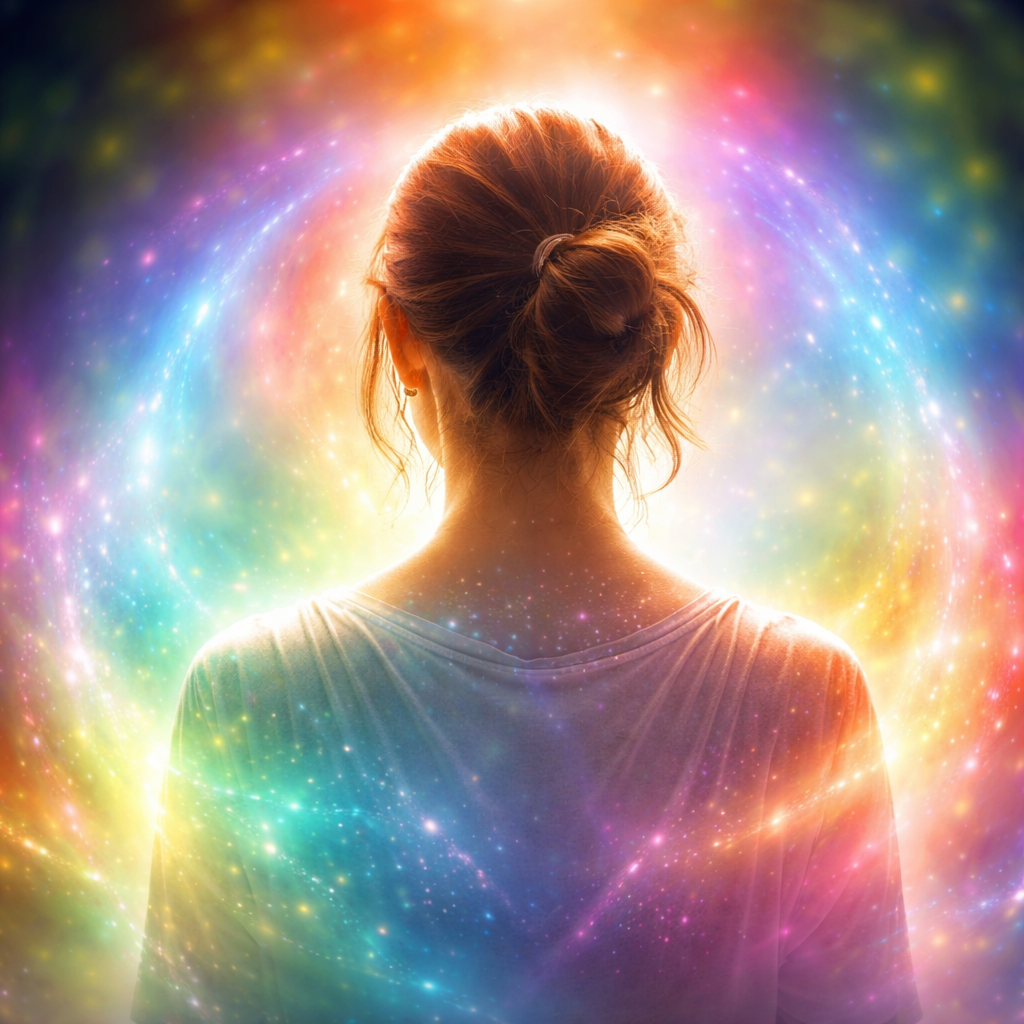
What if the invisible layer surrounding every person could tell you more than words ever would? The meaning of aura colors and energy has fascinated healers, spiritual practitioners, and curious minds for centuries — and today, even people with no background in metaphysics are drawn to understanding what these color frequencies might reveal about emotional states, health patterns, and personal growth.
What an aura actually is — and why it matters
An aura is described as a luminous field of energy that surrounds living beings. While mainstream science hasn’t formally validated auras as measurable phenomena in the traditional sense, certain forms of biofeedback photography — such as Kirlian photography — have long captured what appears to be energetic emissions around the human body. In holistic health traditions, including Ayurveda and various schools of energy medicine, the aura is considered a direct reflection of a person’s physical, emotional, and spiritual condition.
Think of it less like a mystical concept and more like a dynamic map — one that shifts depending on stress levels, emotional wellbeing, relationships, and internal beliefs. The colors within this field aren’t random; each carries specific associations rooted in centuries of observation and practice.
Reading the colors: what each shade communicates
Different aura colors correspond to different layers of experience — mental clarity, emotional resilience, creativity, or spiritual depth. Here’s a breakdown of the most commonly recognized colors and their established associations:
| Aura Color | Primary Association | Common Indicators |
|---|---|---|
| Red | Vitality and physical energy | Strong willpower, passion, or unresolved anger |
| Orange | Creativity and emotional flow | Enthusiasm, social energy, sensual awareness |
| Yellow | Intellect and optimism | Mental activity, curiosity, playfulness |
| Green | Healing and balance | Empathy, growth, love of nature |
| Blue | Communication and truth | Calm expression, intuition, sensitivity |
| Indigo | Perception and inner wisdom | Deep intuition, strong moral compass |
| Violet/Purple | Spiritual awareness | Visionary thinking, connection to higher purpose |
| White | Purity and high-frequency energy | Spiritual protection, rare clarity |
| Black or Grey | Energy blockages or shielding | Unresolved trauma, exhaustion, emotional withdrawal |
It’s worth noting that most people carry multiple colors in their aura at any given time. The dominant color often reflects the current life focus, while secondary shades reveal underlying emotional or spiritual layers.
How aura colors shift over time
One of the most important things to understand about aura energy is that it isn’t fixed. A person going through grief may temporarily show deeper grey or muddy tones. Someone falling in love often radiates warm oranges and pinks. During periods of spiritual seeking, violet frequencies tend to become more prominent.
“The aura is not who you are permanently — it’s who you are right now, in this moment of your life.”
— A widely shared perspective in contemporary energy healing traditions
This fluidity is actually good news. It means that working on emotional healing, changing habitual thought patterns, or addressing physical health concerns can directly influence the quality and vibrancy of your energetic field.
The role of chakras in aura color interpretation
Aura colors and chakra energy are deeply intertwined systems. In many healing traditions, the seven main chakras — from the root at the base of the spine to the crown at the top of the head — each correspond to a color frequency. When a particular chakra is balanced and active, its color often appears clearly in the aura. When it’s blocked or overactive, that area may appear murky, dim, or absent.
- Root chakra (red) — safety, survival instincts, grounding
- Sacral chakra (orange) — creativity, pleasure, emotional connection
- Solar plexus chakra (yellow) — confidence, personal power, identity
- Heart chakra (green or pink) — love, compassion, forgiveness
- Throat chakra (blue) — authentic expression, listening, truth
- Third eye chakra (indigo) — intuition, clarity, perception beyond the surface
- Crown chakra (violet or white) — spiritual connection, expanded consciousness
Understanding this connection can make aura reading feel much more grounded and practical — rather than abstract, it becomes a tool for identifying where energy may need attention in your daily life.
Practical ways to sense and work with aura energy
You don’t need to be a trained psychic to begin developing sensitivity to your own energetic field. Many practices used in integrative wellness communities are accessible to anyone willing to slow down and pay attention.
Beyond visual sensing, there are other reliable approaches:
- Meditation focused on body awareness can help you feel subtle energy shifts
- Journaling emotional states daily reveals patterns that often mirror chakra and aura fluctuations
- Spending time in nature consistently supports aura cleansing, particularly green and blue environments
- Sound healing, breathwork, and mindful movement practices like yoga or tai chi are widely used to restore energetic balance
Common misconceptions worth clearing up
It’s easy to stumble across oversimplified charts online that assign rigid personality types to aura colors. While these can serve as a starting point, experienced practitioners consistently emphasize that aura reading is nuanced — context matters enormously. A bright red aura on an athlete during training carries a completely different meaning than the same color on someone in the middle of a conflict.
Similarly, dark or murky colors in an aura aren’t inherently “bad.” They often signal areas calling for attention and care, not judgment. A person with a heavy grey tone may simply be exhausted and in need of rest — not spiritually flawed in any way.
Your energy field is always speaking — learning to listen changes everything
Whether you approach the aura as a spiritual reality or simply as a metaphor for the way your inner life radiates outward, the practice of paying attention to it tends to create meaningful shifts. People who explore their own energetic patterns often report greater self-awareness, improved emotional regulation, and a clearer sense of personal boundaries.
The colors and qualities of aura energy aren’t fixed truths about who you are — they’re invitations to understand where you are right now, and where you might want to move next. That kind of awareness, however you arrive at it, is always worth cultivating.