
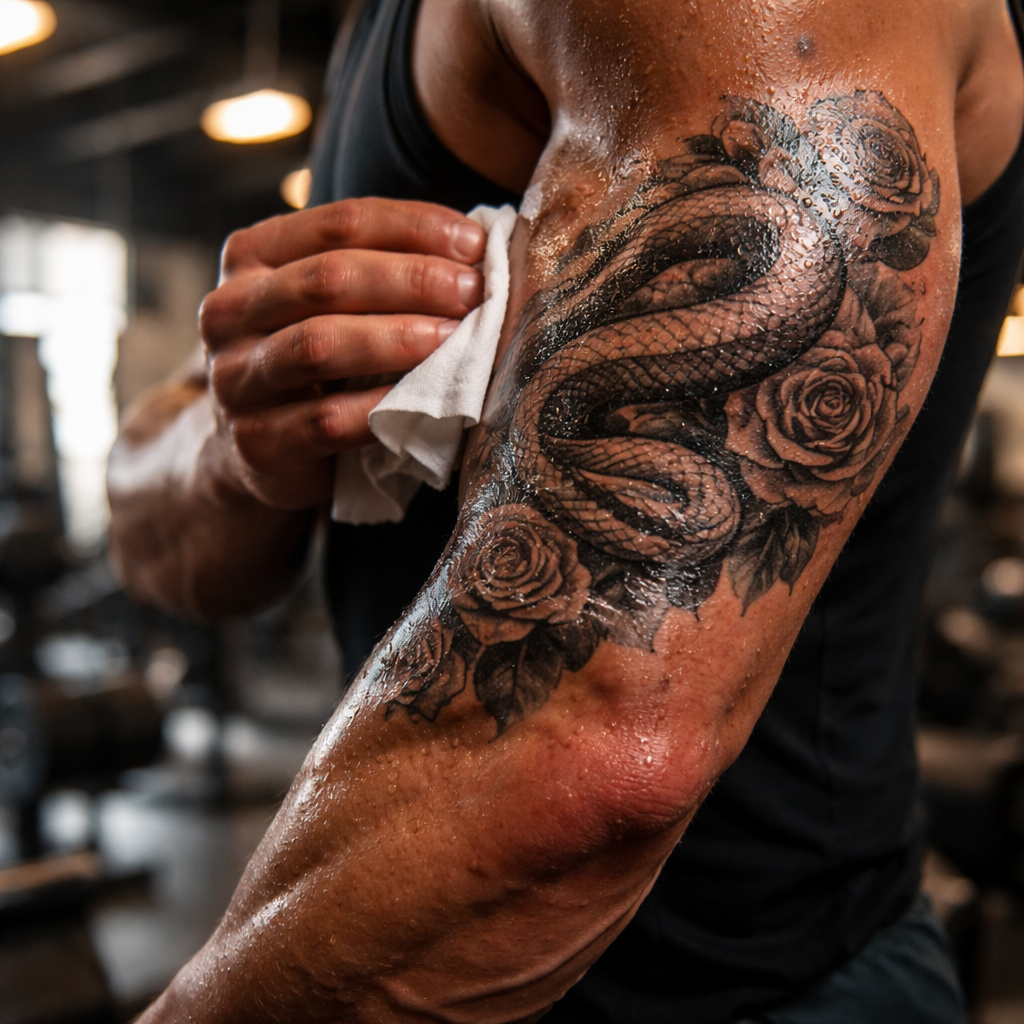
Most tattoo artists will tell you to hold off on the gym for at least a few days — but the real answer to whether it is safe to workout after getting a tattoo depends on how fresh the ink is, where it’s placed on your body, and what kind of exercise you’re planning to do. It’s not a simple yes or no, and that’s exactly what makes this question worth digging into properly.
What actually happens to your skin after a tattoo session
A fresh tattoo is essentially an open wound. The needle punctures the skin thousands of times to deposit pigment into the dermis layer, which triggers your body’s natural healing response — inflammation, fluid production, and gradual skin regeneration. This process typically takes two to four weeks for the surface to heal, though deeper tissue healing can take up to three months.
During those first few days, the skin is at its most vulnerable. It’s sensitive to friction, bacteria, and excess moisture — all of which are very much present in a typical workout environment.
The specific risks of exercising too soon
Returning to training before your tattoo has had time to settle creates several real problems. Understanding them helps you make a smarter decision rather than just following vague “wait a week” advice.
- Sweat introduces bacteria into the broken skin, increasing the risk of infection — especially in gym environments where surfaces carry a high bacterial load.
- Stretching the tattooed area during movement can distort the ink before it has settled, potentially affecting the sharpness and quality of the design.
- Friction from clothing, equipment, or even your own skin can irritate the healing wound and cause scabbing to lift prematurely.
- Increased blood flow and sweating can push ink out of the skin in the early healing stage, leading to patchy or faded areas.
- Tight gym wear over a fresh tattoo creates a warm, moist environment that slows healing and raises infection risk.
Dermatologists consistently advise avoiding strenuous physical activity for a minimum of 48 hours after getting tattooed, with many recommending up to two weeks depending on the tattoo’s size and placement.
How placement changes everything
Location matters more than most people realize. A small tattoo on your upper back behaves very differently during exercise than one on your inner elbow, shin, or ribcage. High-movement zones are the most problematic because the skin flexes repeatedly with every rep or step.
| Tattoo Location | Risk Level for Exercise | Recommended Rest Period |
|---|---|---|
| Upper back or shoulder blade | Low to moderate | 3–5 days (avoid pressing against benches) |
| Inner arm or elbow crease | High | 10–14 days minimum |
| Ribcage or torso | High | 10–14 days (breathing and twisting affect healing) |
| Calf or shin | Moderate | 5–7 days (avoid running and leg press) |
| Wrist or hand | High | 10–14 days (constant joint movement) |
| Upper thigh or glute | Moderate to high | 7–10 days |
What you can actually do in the meantime
Skipping intense workouts doesn’t mean you have to go completely inactive. Light activity that doesn’t strain the tattooed area, cause heavy sweating, or involve contact with gym equipment is generally acceptable after the first 48 hours — as long as you’re paying attention to how your skin responds.
For example, if you have a fresh tattoo on your calf, gentle upper-body stretching or seated mobility work might be fine. If it’s on your forearm, lower-body work with no gripping involved could be an option after a few days. The key is avoiding anything that directly stresses or contacts the healing skin.
Practical tips for athletes and active people
- Cover the tattoo with a sterile, breathable bandage if you must be in a gym environment — but never wrap it airtight.
- Wash the tattooed area gently with unscented antibacterial soap immediately after any light activity that caused sweating.
- Avoid swimming pools, saunas, and open water entirely until the skin is fully healed — chlorine and bacteria are particularly harmful to fresh ink.
- Wear loose, soft clothing over the tattoo if you’re moving around, rather than tight compression gear.
- Stay well hydrated — proper hydration supports faster skin repair from the inside.
Signs that something is wrong
Whether or not you’ve exercised, it’s important to know what normal healing looks like versus early signs of infection or ink rejection. Normal healing involves mild redness, some swelling in the first day or two, light peeling, and itching as the skin regenerates. These are expected and manageable.
What’s not normal — and should prompt a visit to a healthcare provider — includes spreading redness beyond the tattoo border, unusual warmth or pus, a fever, or skin that becomes increasingly painful days after the session rather than improving. Exercising too soon is one of the most common contributing factors to these complications, particularly in large tattoos with significant skin trauma.
Getting back to your routine the right way
Once the surface skin has healed — typically after two weeks for most people — you can generally ease back into your full routine. Start lighter than usual for the first session back, pay attention to any discomfort around the tattooed area, and continue moisturizing the skin with a fragrance-free lotion to support the ongoing deeper healing.
It also helps to plan your tattoo timing intentionally. If you have a competition, race, or intensive training block coming up, consider scheduling the tattoo afterward — or at least four to six weeks before, so you’re not navigating recovery during peak training demand. Many serious athletes and fitness enthusiasts work around this by timing new ink during deload weeks or planned rest periods.
Your tattoo represents something meaningful enough that you chose to put it on your body permanently. Giving it a proper chance to heal — even if that means stepping back from the gym for a short stretch — is simply part of respecting that decision. The workout will still be there. The quality of your healed tattoo depends on what you do right now.