
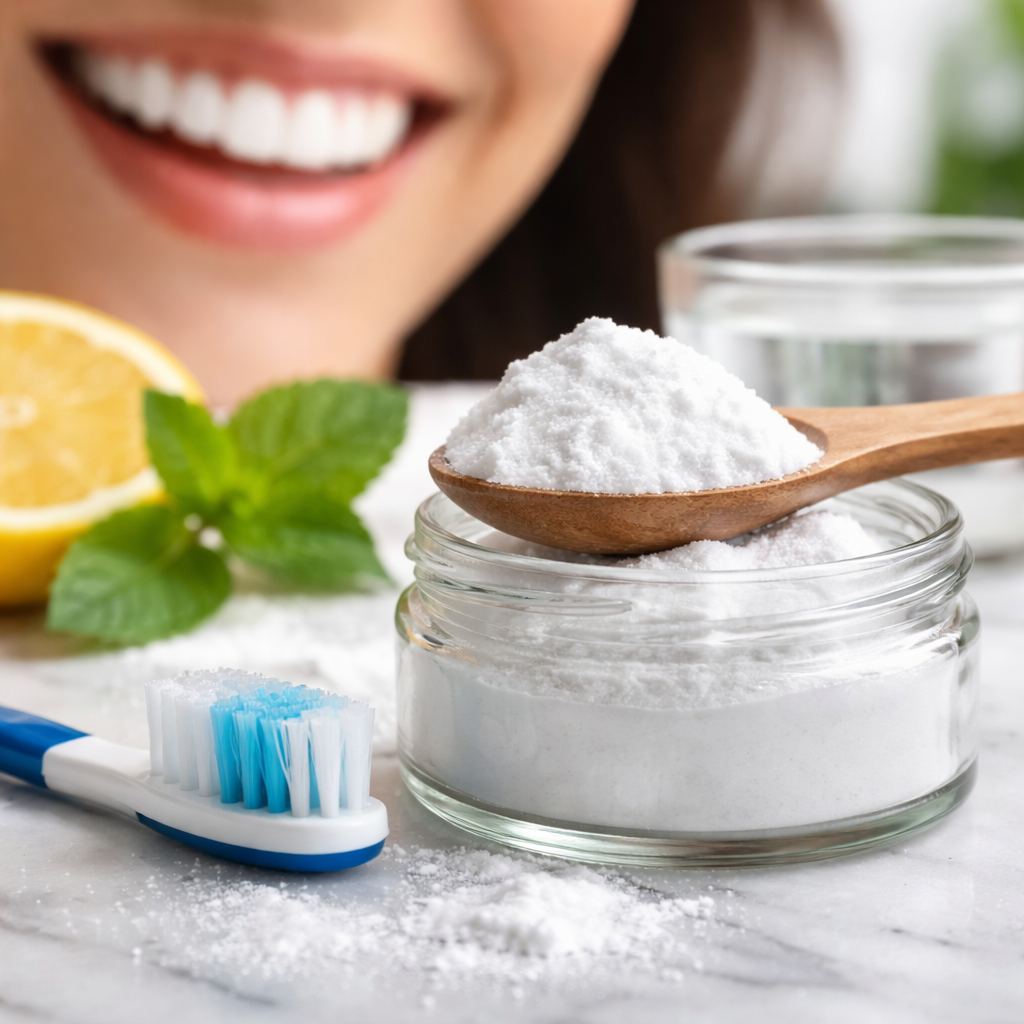
A bright smile is something most people want, but the cost of professional whitening treatments keeps many looking for alternatives — and baking soda often ends up at the top of that list. So, is it safe to use baking soda to whiten teeth, or is this one of those home remedies that sounds better than it actually is? The answer is more nuanced than a simple yes or no, and understanding the science behind it can save your enamel and your expectations.
What baking soda actually does to your teeth
Baking soda, known chemically as sodium bicarbonate, is a mild abrasive. When you rub it against tooth surfaces, it physically scrubs away surface stains — the kind caused by coffee, tea, red wine, and tobacco. It also creates an alkaline environment in the mouth, which can temporarily neutralize acids produced by bacteria.
This is not the same as bleaching. Baking soda does not penetrate enamel to break down deep pigments the way hydrogen peroxide-based products do. What it offers is more of a polishing effect — removing extrinsic stains that sit on the surface rather than inside the tooth structure.
The safety question: what research says
Studies published in dental journals have examined sodium bicarbonate as a dental care ingredient for decades. The general finding is consistent: baking soda is considered safe for tooth enamel when used correctly and in moderation. Its Relative Dentin Abrasivity (RDA) score is low — around 7, compared to some whitening toothpastes that score over 100. A lower RDA means less wear on the tooth surface.
According to the American Dental Association, dentifrices containing sodium bicarbonate are effective at removing stains and have a favorable safety profile when used as directed.
That said, “safe when used correctly” comes with real conditions. Overuse, aggressive brushing technique, or combining baking soda with highly acidic ingredients — like lemon juice, which appears in countless DIY recipes — can erode enamel over time. Enamel does not regenerate. Once it’s gone, it’s gone.
How to use it without causing damage
If you decide to incorporate baking soda into your oral care routine, doing it thoughtfully makes all the difference. Here’s what actually matters:
- Use it no more than two to three times per week. Daily use increases abrasion risk over time.
- Mix a small amount with water to create a paste — not with vinegar, citrus juice, or other acidic liquids.
- Brush gently with a soft-bristled toothbrush. Pressure does not improve results; it only increases wear.
- Rinse thoroughly afterward and follow up with a fluoride toothpaste to remineralize the enamel.
- Do not use baking soda if you have braces, dental veneers, or crowns — it can damage bonding materials.
Who should be more cautious
Not everyone starts from the same baseline, and that matters here. People with already thin or sensitive enamel, those prone to gum recession, or anyone with existing dental restorations should consult a dentist before experimenting with any abrasive home remedy — including baking soda.
| Situation | Recommendation |
|---|---|
| Healthy enamel, no restorations | Generally safe with moderate, careful use |
| Sensitive teeth or thin enamel | Use with caution; consult a dentist first |
| Braces or orthodontic appliances | Avoid — can damage adhesives and wires |
| Veneers, crowns, or bonding | Avoid — abrasives can dull and degrade surfaces |
| Active gum disease or open sores | Do not use until treated by a professional |
Realistic expectations vs. the hype
One thing worth addressing honestly: baking soda will not give you the dramatic results that professional whitening delivers. If your teeth are stained from years of coffee drinking, you may notice a subtle difference. If your discoloration is intrinsic — caused by antibiotics like tetracycline, genetics, or fluorosis — baking soda will have virtually no visible effect at all.
It’s a useful addition to a routine for surface maintenance, not a replacement for professional care or evidence-based whitening products. Treating it as the former makes sense. Treating it as a miracle cure sets you up for disappointment — or worse, damaged enamel from overuse while chasing results that won’t come.
The bottom line on this old-school remedy
Baking soda occupies a legitimate, if limited, place in dental hygiene. The science supports its use as a gentle stain remover with a low abrasivity profile, and many commercial toothpastes already include it as an ingredient for exactly that reason. The risks come not from the ingredient itself, but from how people use it — too frequently, too aggressively, or combined with substances that amplify damage rather than results.
Used occasionally, gently, and with realistic expectations, it can be a cost-effective way to polish surface stains between dental visits. But it works best as a complement to a solid oral hygiene routine — not as a shortcut around one. Your enamel is not something you can afford to experiment with carelessly, and the good news is you don’t have to: the guidelines here are clear enough to use this remedy confidently and wisely.