
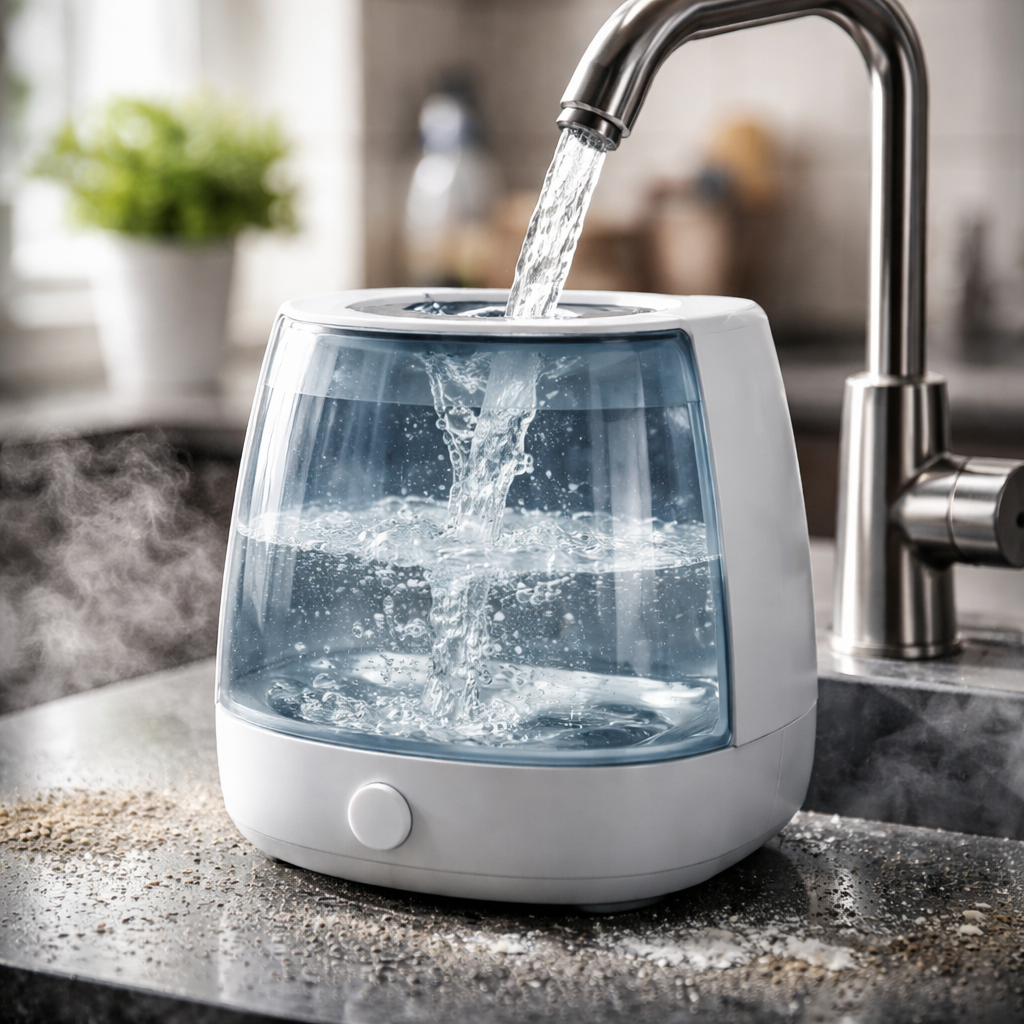
Most people never think twice before filling their humidifier straight from the kitchen tap — and that’s exactly where problems can quietly begin. Is it safe to use a humidifier with tap water? The short answer is: it depends on where you live and what type of humidifier you own. But the longer answer involves white dust, mineral buildup, bacteria, and what you’re actually breathing every night.
What’s actually in your tap water
Tap water isn’t pure H₂O. Depending on your location, it contains varying levels of dissolved minerals — primarily calcium and magnesium — as well as chlorine, fluoride, and in some areas, trace heavy metals. These are perfectly fine for drinking in regulated amounts, but when that water gets vaporized and dispersed into the air, things get more complicated.
Hard water, which is common across much of North America and Europe, has a particularly high mineral content. When a humidifier heats or vibrates that water into mist, those minerals don’t disappear — they end up either coating the inside of your device or floating into the air as fine white particles.
The white dust problem and why it matters
If you’ve ever noticed a chalky white residue on furniture near your humidifier, that’s mineral dust settling out of the mist. Ultrasonic humidifiers are especially prone to this because they use high-frequency vibration rather than heat to produce vapor — and that process disperses minerals along with the water droplets.
The EPA (U.S. Environmental Protection Agency) has noted that ultrasonic and cool-mist humidifiers can disperse minerals from tap water into the air, and that inhaling these particles may irritate the lungs — particularly for people with asthma or respiratory conditions.
Warm mist or steam humidifiers handle this differently. Because they boil the water first, most minerals are left behind as scale inside the tank rather than released into the air. That doesn’t make them maintenance-free — scale buildup is a real issue — but it does reduce airborne mineral exposure significantly.
Humidifier type vs. water type: a practical comparison
| Humidifier Type | Tap Water Risk Level | Main Concern |
|---|---|---|
| Ultrasonic (cool mist) | High | Mineral dust dispersed into air |
| Evaporative | Medium | Mineral deposits on wick filters |
| Warm mist / Steam | Lower | Scale buildup inside the tank |
| Impeller | High | Similar to ultrasonic — airborne minerals |
This doesn’t mean you can never use tap water — millions of people do every day without noticeable harm. But understanding your device type helps you make a more informed decision about whether to switch water sources or simply clean more frequently.
The bacterial growth angle people often ignore
Minerals aside, there’s another concern with tap water in humidifiers: stagnant water becomes a breeding ground for bacteria and mold. This isn’t unique to tap water — distilled water can also develop microbial growth if the tank isn’t cleaned regularly. However, certain minerals and organic matter in tap water can accelerate this process.
Breathing in mist contaminated with bacteria or mold spores can trigger respiratory symptoms, allergic reactions, or worsen existing conditions. This is sometimes referred to as “humidifier fever” — a flu-like reaction caused by inhaling contaminated mist.
When distilled water is worth it
Distilled water has had its minerals removed through the evaporation and condensation process, making it the cleanest option for humidifier use. The EPA specifically recommends distilled water for ultrasonic humidifiers to minimize airborne mineral exposure.
The trade-off is cost and convenience. Buying distilled water regularly adds up, especially if you run a humidifier through an entire winter season. Some people invest in a home distiller or a demineralization filter, which reduces the long-term cost while keeping water quality consistent.
- Distilled water: best for ultrasonic and impeller humidifiers, reduces white dust and mineral buildup
- Filtered water (pitcher or faucet filter): reduces chlorine and some minerals, but not as effective as distilled
- Tap water: acceptable for steam humidifiers with regular descaling; less ideal for cool-mist types
- Demineralization cartridges: some humidifier brands offer these as accessories — they help reduce mineral output when using tap water
Who should be more careful
For most healthy adults, using tap water occasionally in a well-maintained humidifier is unlikely to cause serious problems. But there are groups for whom the risks deserve more attention:
- Children and infants, whose lungs are still developing
- People with asthma, bronchitis, or other chronic respiratory conditions
- Anyone with compromised immune function
- Individuals with known sensitivities to airborne particles
If you fall into any of these categories — or if someone in your household does — switching to distilled water and keeping the humidifier meticulously clean isn’t overcautious. It’s simply the right call.
The bottom line you can actually use
Using tap water in a humidifier isn’t inherently dangerous, but it’s not without trade-offs. The key variables are your humidifier type, your local water hardness, and how consistently you clean the device. A steam humidifier with hard tap water and weekly descaling is a very different situation from an ultrasonic humidifier running uncleaned for weeks on mineral-heavy water.
If you want to keep things simple: use distilled water in cool-mist and ultrasonic models, tap water is more tolerable in steam-based ones, and clean your device far more often than you think you need to. Your air quality — and the lifespan of your humidifier — will both reflect the effort.