
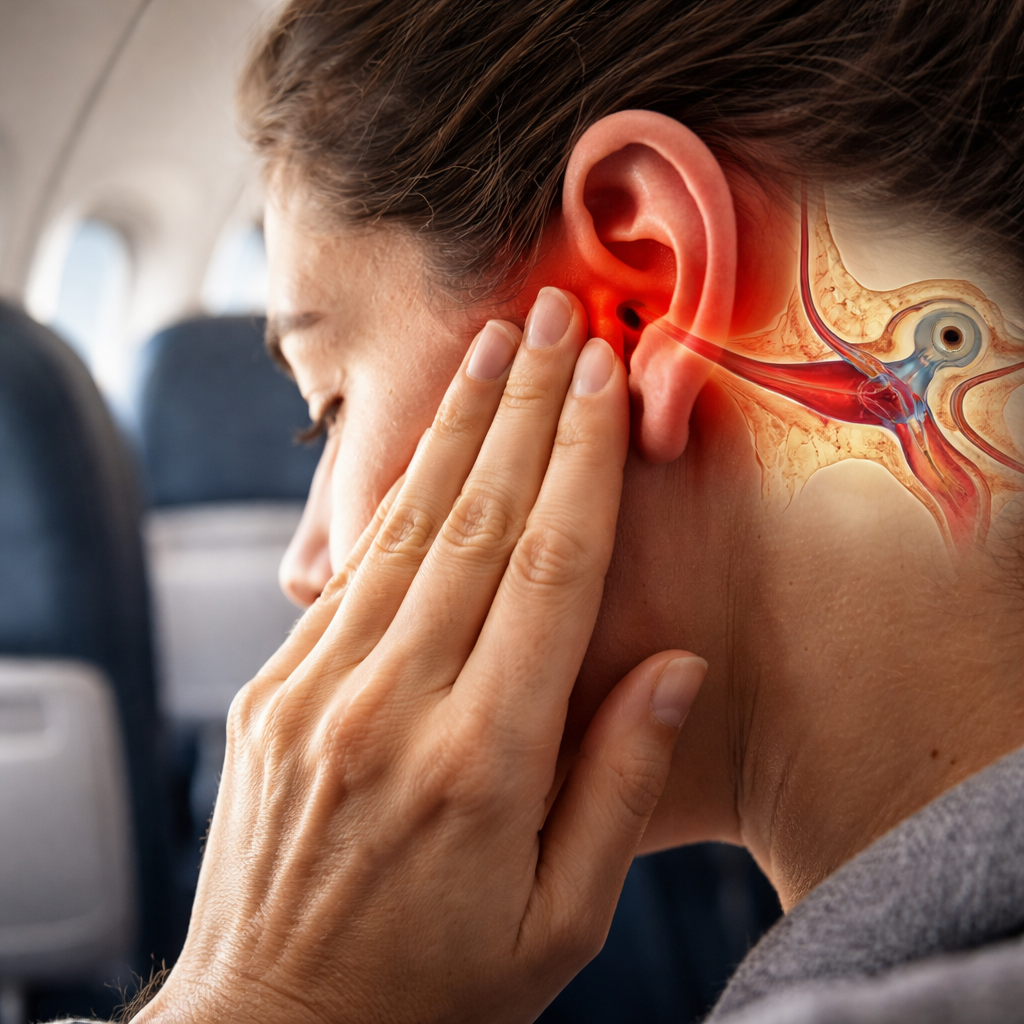
Most doctors will tell you the same thing: flying with an ear infection is not just uncomfortable — it can genuinely make your condition worse. The question of whether is it safe to fly with an ear infection doesn’t have a one-size-fits-all answer, but understanding what actually happens to your ears at altitude will help you make a smarter, safer decision before you book that flight.
What Happens to Your Ears During a Flight
Every time a plane ascends or descends, the air pressure in the cabin changes rapidly. Your body handles this through the Eustachian tube — a small channel connecting the middle ear to the back of the throat. Under normal circumstances, it equalizes pressure automatically with a little help from yawning or swallowing.
When you have an ear infection, that tube is often swollen, blocked, or filled with fluid. The result? Pressure can’t equalize properly. This leads to a painful buildup that, in serious cases, can rupture the eardrum. It’s not a theoretical risk — it happens to real passengers on routine flights every year.
Outer, Middle, and Inner Ear Infections: Not the Same Risk
The type of ear infection matters a great deal when assessing your flight risk. These three types behave very differently under pressure changes.
| Type of Infection | Location | Flight Risk |
|---|---|---|
| Outer ear infection (otitis externa) | Ear canal | Generally lower — no pressure equalization issue |
| Middle ear infection (otitis media) | Behind the eardrum | High — Eustachian tube blockage causes pressure pain |
| Inner ear infection (labyrinthitis) | Inner ear / vestibular system | High — can worsen dizziness and disorientation in the air |
If you have otitis media or any infection affecting the inner ear, flying is genuinely risky and should ideally be postponed until your doctor clears you. Swimmer’s ear (otitis externa), on the other hand, typically doesn’t involve the Eustachian tube, so pressure changes pose less of a problem — though discomfort is still possible.
Symptoms That Should Ground You Immediately
There are certain warning signs that strongly suggest you shouldn’t board a plane at all. Pay attention if you’re experiencing any of the following:
- Sharp or throbbing ear pain that worsens when you bend over
- Significant hearing loss or muffled hearing in one or both ears
- Fluid or discharge from the ear canal
- Fever above 38°C (100.4°F)
- Dizziness, vertigo, or difficulty maintaining balance
- A feeling of fullness or pressure that doesn’t resolve
Any combination of these symptoms paired with a confirmed infection is a strong signal to reschedule your travel if at all possible. Temporary discomfort on a flight can turn into a medical issue that takes weeks to resolve.
“Barotrauma — injury caused by pressure changes — is one of the most common ear complaints among air travelers. In patients with active middle ear infections, the risk increases significantly.”
— American Academy of Otolaryngology
When Flying Might Still Be Unavoidable
Sometimes the flight can’t wait — a family emergency, a non-refundable ticket, a critical work obligation. In these situations, there are evidence-based strategies that can reduce discomfort and minimize potential damage.
- Use a nasal decongestant spray (like oxymetazoline) 30–60 minutes before takeoff and before descent — this can help open the Eustachian tube.
- Try the Valsalva maneuver: pinch your nose, close your mouth, and gently blow to equalize pressure. Never do this forcefully if you suspect a perforated eardrum.
- Stay awake during descent — you need to actively equalize pressure, and sleeping through it prevents you from doing so.
- Chew gum or suck on hard candy during takeoff and landing to encourage swallowing.
- Wear filtered earplugs designed for aviation pressure — they slow the rate of pressure change reaching the eardrum.
- Stay well-hydrated throughout the flight, as dry cabin air thickens mucus and can worsen blockage.
It’s worth noting that oral decongestants like pseudoephedrine can also help, but they carry side effects including elevated heart rate and difficulty sleeping — speak with a pharmacist or physician before using them, especially if you have cardiovascular conditions.
Children and Ear Infections on Planes
Parents often face this dilemma more acutely than adults traveling alone, because ear infections are extremely common in young children, and kids have narrower, more horizontal Eustachian tubes that drain less efficiently.
If your child has an active middle ear infection with fever or severe pain, most pediatricians recommend avoiding air travel until symptoms have resolved. If travel is unavoidable, breastfeeding or giving a bottle during takeoff and descent can help infants equalize pressure through the swallowing reflex. For older children, chewing gum works well. Always consult your child’s doctor before making the call.
Before You Book: A Quick Self-Check
If you’re not sure whether your ear situation is serious enough to warrant changing your travel plans, run through these honest questions before making a decision:
- Have you seen a doctor and received a diagnosis — or are you self-diagnosing?
- Are you currently on antibiotics, and if so, for how many days?
- Is your pain manageable with standard over-the-counter pain relief?
- Do you have any history of eardrum perforations or ear surgery?
- Is the infection in one ear or both?
A physician — particularly an ENT specialist — is your best resource here. A short phone or video consultation before your flight can save you from significant pain or lasting hearing damage. Many airlines also allow medical rescheduling with documentation, so it’s worth a quick call to the carrier as well.
Your Ears Deserve the Same Respect as the Rest of Your Body
Hearing loss from barotrauma is typically temporary, but it can occasionally persist — especially if the eardrum ruptures or if fluid becomes trapped in the middle ear for extended periods. Most people who fly with mild ear discomfort land safely, but the risk rises steeply when there’s an active infection involved.
The smart move is straightforward: if your infection is mild, your Eustachian tube is partially functional, and you take preventive steps, you can likely get through a flight without serious consequences. But if you’re in significant pain, running a fever, or dealing with balance issues — the runway isn’t going anywhere. Neither is your destination. Give your ears the time they need to heal, and travel will be a far more enjoyable experience on the other side.