
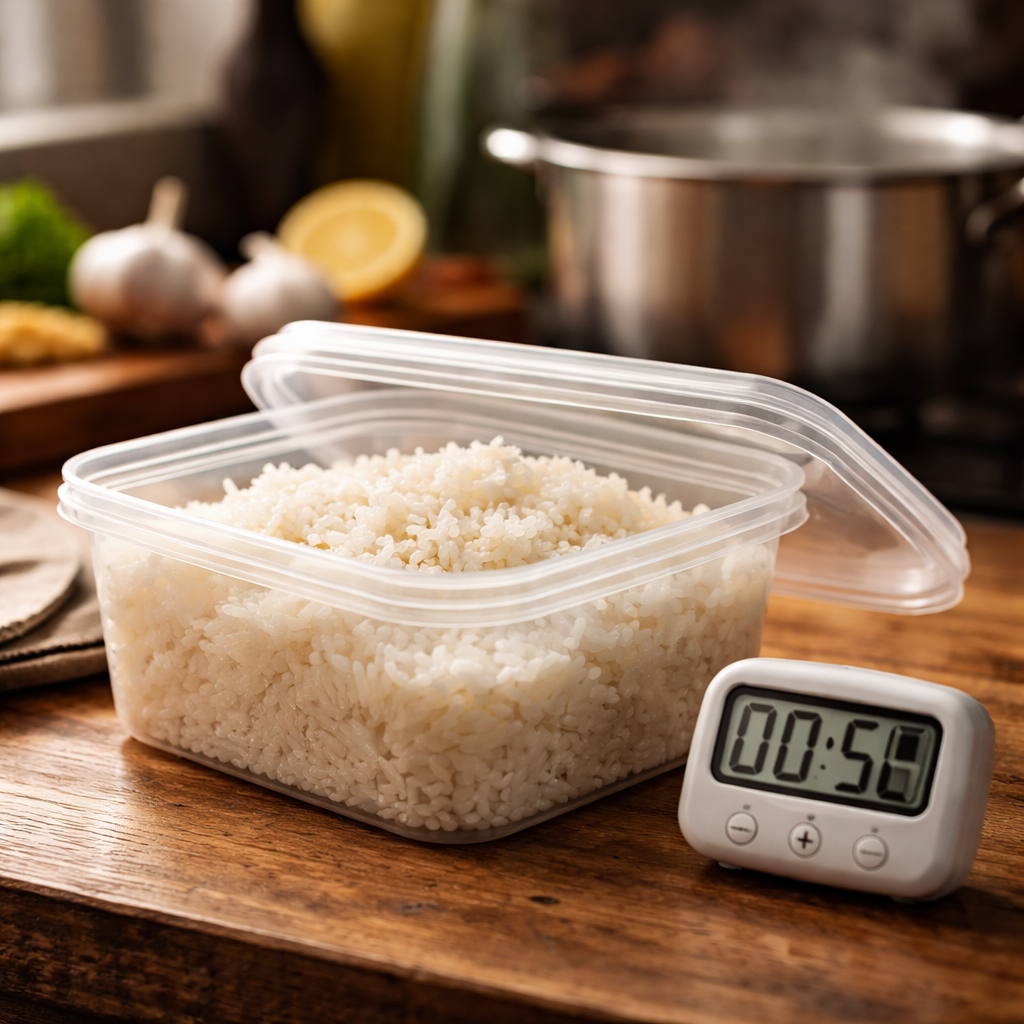
Most home cooks have asked themselves at some point: is it safe to eat rice that was reheated? The short answer is yes — but only when it has been stored and warmed up correctly. Rice is one of those foods that looks completely harmless sitting in the fridge, yet carries a genuine food safety risk that catches many people off guard.
Why rice becomes risky after cooking
The issue is not the reheating itself. It is what happens between cooking and reheating. Cooked rice can harbour a bacterium called Bacillus cereus, which is naturally present in the environment and often survives the cooking process in spore form. When rice is left at room temperature, those spores can germinate, and the bacteria multiply rapidly — producing toxins that no amount of heat can destroy.
This is the core problem. You can reheat rice to a safe internal temperature and still get food poisoning, because the toxins produced by Bacillus cereus are heat-stable. They survive even when the rice is piping hot.
The UK Food Standards Agency specifically warns that rice should never be left sitting out for more than one hour after cooking, and should be refrigerated quickly to prevent bacterial growth.
The storage window that actually matters
Refrigerating leftover rice promptly is the single most important step in making it safe to reheat later. Once rice cools down enough to handle — ideally within an hour — it should go into a sealed container in the fridge. Properly stored, cooked rice is safe to eat within one to two days. Beyond that, the risk increases noticeably even if the rice smells and looks fine.
Freezing is a much safer option for longer storage. Rice frozen within an hour of cooking and reheated from frozen retains both safety and texture far better than rice that has been sitting in the fridge for several days.
| Storage method | Maximum safe duration | Notes |
|---|---|---|
| Room temperature | 1 hour maximum | Bacterial toxins can form quickly |
| Refrigerator (below 5°C / 41°F) | 1–2 days | Store in an airtight container |
| Freezer (below -18°C / 0°F) | Up to 1 month | Best quality within the first 2 weeks |
How to reheat rice without making it a health hazard
The method matters just as much as the timing. Regardless of whether you use a microwave, stovetop, or oven, the goal is to heat rice thoroughly and evenly all the way through — not just on the surface. Cold spots are where bacteria survive.
- Microwave: Add a tablespoon of water per cup of rice, cover loosely, and heat on full power. Stir halfway through to distribute heat evenly. The internal temperature should reach at least 74°C (165°F).
- Stovetop: Add a splash of water or broth to the pan, cover with a lid, and heat on medium, stirring occasionally until steam rises throughout the rice — not just from the edges.
- Oven: Place rice in an oven-safe dish, add a small amount of water, cover tightly with foil, and heat at 150°C (300°F) for about 20 minutes.
One rule that applies across all methods: reheat rice only once. Each cooling and reheating cycle increases the chance of bacterial growth. If you have made a large batch, divide it into individual portions before refrigerating so you only take out what you need.
Signs that leftover rice should not be eaten
Rice does not always give obvious warning signs when it has gone bad, which is exactly what makes it deceptive. However, there are a few things to check before reheating.
- Unusual or sour smell that was not present when freshly cooked
- Slimy or unusually sticky texture across the whole batch
- Visible mould — even a small patch means the entire container should be discarded
- Rice that has been in the fridge for more than two days, regardless of appearance
When in doubt, throwing it out is genuinely the safer choice. Fried rice syndrome — a term used colloquially to describe food poisoning from improperly stored cooked rice — causes nausea, vomiting, and abdominal cramping, typically within one to five hours of eating contaminated rice. It is unpleasant and entirely preventable.
What types of rice are more forgiving
All cooked rice carries the same underlying risk, but texture and moisture content play a role in how quickly bacteria thrive. High-moisture rice dishes like congee or rice pudding create a more hospitable environment for bacterial growth than drier styles such as basmati or long-grain steamed rice. This does not mean wet rice dishes are inherently more dangerous — it simply means they require the same prompt refrigeration with slightly more attention to storage time.
Brown rice, which retains its bran layer, has a slightly higher fat content than white rice and can develop an off flavour more quickly in the fridge. From a food safety standpoint, the rules are identical — it is mainly a quality consideration worth knowing if you often cook with whole-grain varieties.
Building a habit that actually sticks
The practical challenge is not knowledge — most people know in theory that leaving cooked rice out too long is not ideal. The challenge is building a consistent routine around it, especially after a long day when the last thing you want to do is portion rice into containers before relaxing.
One small shift that helps: set a reminder or timer when you finish cooking a large rice batch. Even ten minutes of awareness at the right moment prevents a situation that becomes a problem the next day.
Cooking rice in smaller quantities more frequently is another approach that sidesteps the issue almost entirely. If you regularly make just enough for one meal, leftover rice storage becomes a non-issue rather than a recurring food safety calculation.
Reheated rice is safe, convenient, and a perfectly sensible part of everyday cooking — as long as the time between cooking, cooling, storing, and reheating is managed carefully. The science behind it is straightforward, and the practical steps required are genuinely minimal once they become habit.