
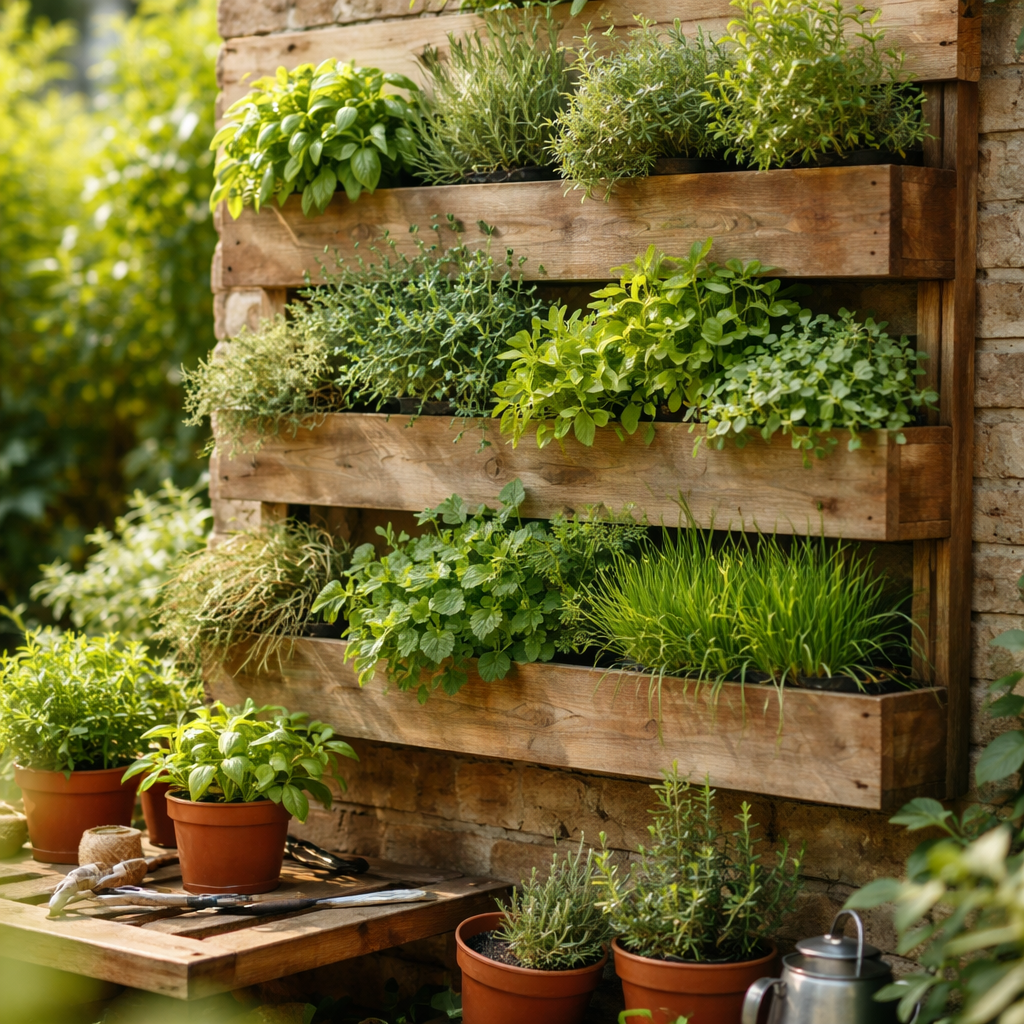
A single wall or fence can feed your kitchen all season long — if you know how to use vertical space effectively. Ideas for a vertical herb garden range from repurposed wooden pallets to stacked terracotta pots, and the best part is that many of these setups cost almost nothing to build from scratch. Whether you’re working with a tiny balcony, a shaded courtyard, or a sun-drenched fence line, growing herbs vertically changes the way you interact with your plants every single day.
Why growing up beats growing out
Horizontal garden beds demand ground space that most urban gardeners simply don’t have. A vertical structure, on the other hand, uses wall real estate that would otherwise sit empty. Beyond saving space, vertical herb gardens improve air circulation around the plants, which reduces the risk of fungal disease — something that flat, densely planted beds often struggle with. Harvesting becomes easier too: when your basil or thyme is mounted at eye level, you’re far more likely to snip a few leaves before dinner rather than forget the plant exists at all.
Structures worth considering
Not every vertical structure suits every space or every herb. Before you build or buy anything, think about how much sunlight the wall receives, whether it’s exposed to strong wind, and how often you want to water. Here’s a breakdown of the most practical options:
- Wooden pallet planter — one of the most popular DIY options. Sand it down, staple landscape fabric to the back, fill the slats with well-draining potting mix, and plant herbs directly into the gaps. Best suited for mint, chives, and parsley.
- Wall-mounted pocket planters — fabric or felt pockets hung on a rod or hook. They’re lightweight, flexible, and easy to rearrange. Ideal for smaller herbs like thyme, oregano, and coriander.
- Stacked terracotta or plastic pots — offset each pot slightly so water drains from one into the next. Works well on balconies with limited anchor points.
- PVC pipe planter — drill holes along a length of pipe, fill with soil, and hang it horizontally. A good choice for strawberries and compact herbs like chives or basil.
- Repurposed wooden crates or wine boxes — mount them flat against a wall in a grid pattern for a clean, structured look that suits both gardens and kitchen walls.
- Ladder shelf — a freestanding option that leans against a wall and holds individual pots on each rung. No drilling required, which makes it perfect for renters.
Each of these structures has a different weight load, drainage requirement, and maintenance rhythm. Choosing the wrong one for your conditions is one of the most common reasons a vertical garden fails within the first season.
Which herbs actually thrive in vertical setups
Not every herb is a good candidate for vertical growing. Herbs that develop deep tap roots — like dill and fennel — need more soil depth than a wall pocket or pallet can realistically provide. The herbs that perform consistently well in vertical gardens tend to be shallow-rooted, drought-tolerant, and compact in their growth habit.
| Herb | Light requirement | Watering frequency | Best vertical structure |
|---|---|---|---|
| Basil | Full sun (6+ hours) | Every 1–2 days | Pocket planter, pallet |
| Mint | Part shade to full sun | Every 2 days | Any — grows aggressively |
| Thyme | Full sun | Every 3–4 days | Pocket planter, stacked pots |
| Oregano | Full sun | Every 3–4 days | PVC pipe, wooden crate |
| Chives | Full sun to part shade | Every 2 days | PVC pipe, ladder shelf |
| Parsley | Part shade to full sun | Every 2 days | Pocket planter, pallet |
Mint deserves a special mention here: it spreads aggressively through runners, so planting it in its own contained pocket or pot prevents it from crowding out everything nearby. Many experienced herb gardeners keep mint completely isolated regardless of what structure they’re using.
Watering and drainage — the detail most people overlook
Vertical gardens dry out faster than ground beds. The combination of increased airflow, smaller soil volume per plant, and the way gravity pulls moisture downward means the top pockets or levels will always dry out before the bottom ones. This is one of the main reasons vertical herb gardens fail — not poor light or wrong plant choice, but inconsistent watering.
A simple drip irrigation line threaded through the pockets can remove the daily watering task entirely and deliver moisture more evenly across every level of the structure.
If you’re watering by hand, check the top pockets daily during warm weather. Press your finger about an inch into the soil — if it feels dry at that depth, water immediately. For structures without drainage holes, root rot becomes a serious risk after heavy rain, so always verify that excess water can escape freely from every compartment.
Indoor vertical herb gardens — a different approach
Moving a vertical herb wall indoors changes the rules considerably. Natural light is the most limiting factor — most herbs need at least four to six hours of direct sun, and few indoor walls can deliver that without help. A south-facing window is the best starting point, but if your space doesn’t offer one, a full-spectrum grow light mounted close to the structure will compensate effectively.
For indoor setups, a modular magnetic planter system or a wall-mounted rail with adjustable hooks gives you the flexibility to shift individual pots as plants grow or as seasons change. Herbs that adapt best to lower light indoors include mint, chives, and parsley — all of them useful year-round in the kitchen. Basil, despite being one of the most popular culinary herbs, struggles without strong direct light and is better kept near the brightest window rather than in a darker corner.
Small details that make a real difference
Beyond structure and watering, a few practical habits will keep a vertical herb garden productive rather than just decorative.
- Use a lightweight, peat-free potting mix with added perlite to improve drainage in confined spaces.
- Feed with a diluted liquid fertilizer every two to three weeks during the growing season — herbs in small containers exhaust nutrients quickly.
- Trim regularly and harvest often. Cutting stems back encourages bushier growth and prevents herbs like basil from bolting to seed.
- Rotate pots occasionally if light distribution is uneven — especially important on balconies where one side of the structure gets significantly more sun.
- Group herbs with similar watering needs together on the same level to simplify maintenance.
These aren’t complicated steps, but building them into a weekly routine is what separates a thriving vertical herb wall from one that looks neglected by midsummer.
Where to go from here
Starting small is almost always the right move. A single pallet planter with four or five herb varieties will teach you more about how vertical growing works in your specific conditions than any amount of research. Light patterns, drying rates, and plant behavior all vary depending on your exact location, wall orientation, and local climate — and those variables only reveal themselves once you actually have plants growing. Once you understand how your structure behaves through one full season, expanding to a larger setup becomes a straightforward decision rather than a leap in the dark.