
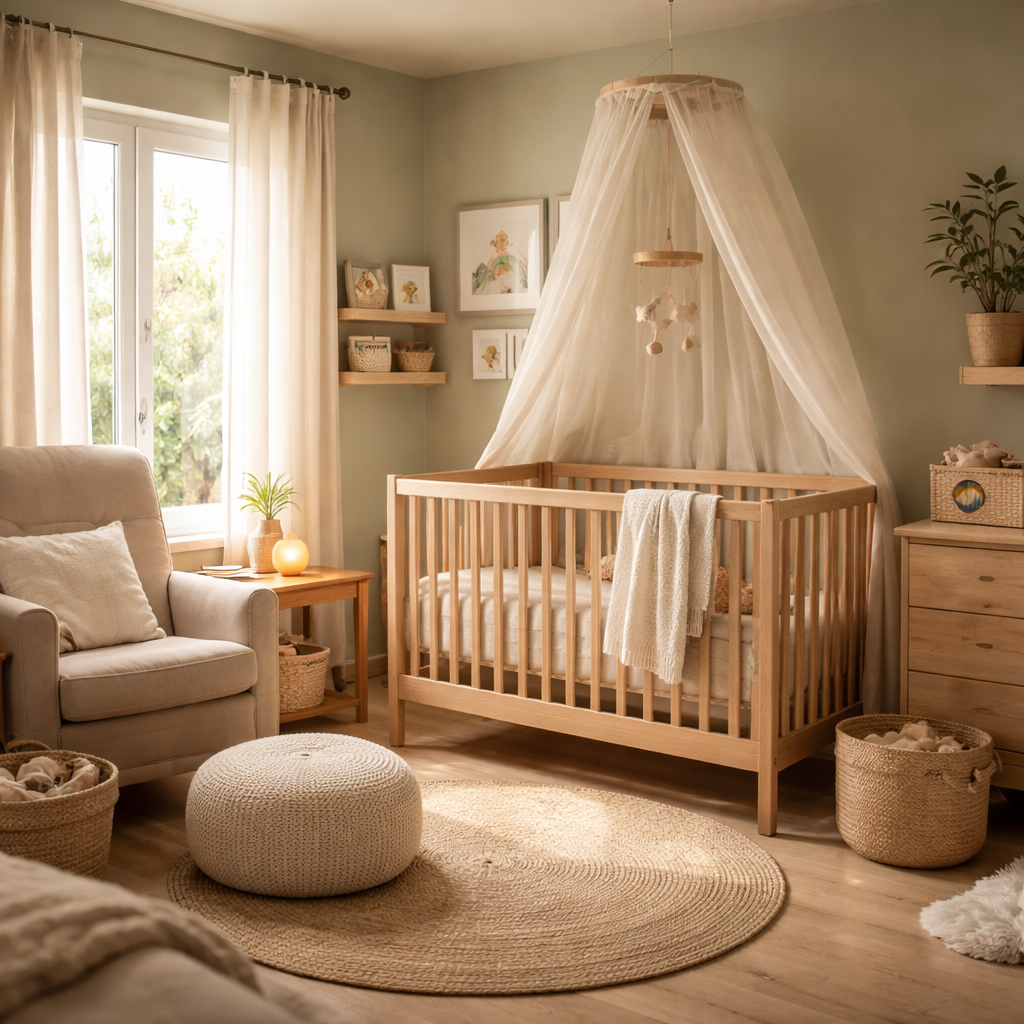
Most parents spend weeks browsing Pinterest boards and paint swatches before a single piece of furniture arrives — and yet the best ideas for a baby’s nursery decor rarely come from trends. They come from thinking about how the space will actually feel at 3 a.m. when you’re rocking a newborn and the room needs to be calm, functional, and genuinely yours.
Start with the atmosphere, not the theme
Before picking wall colors or crib styles, it helps to decide what kind of mood you want the room to carry. A nursery isn’t just a decorative project — it’s the environment your child will sleep in, feed in, and begin to perceive the world from. That shifts the priorities considerably.
Warm, muted tones like dusty sage, terracotta, warm white, or soft ochre tend to create a grounding effect that works well for sleep. Cool blues and grays can feel airy but sometimes read as clinical without the right textures to balance them. If you’re drawn to bold color, consider keeping it to one accent wall or a piece of furniture rather than the whole room — it gives you flexibility as the child grows.
A nursery doesn’t need to look like a toy store. It needs to feel like a place where both a parent and a child can breathe.
Furniture that earns its place
Space in a nursery is almost always more limited than you expect. Every piece of furniture should serve a clear purpose — and ideally more than one. A dresser with a changing topper is a classic example: it handles two functions without doubling the footprint. Similarly, a glider or rocking chair positioned near a window gives you a feeding spot, a reading nook, and a place to simply sit.
When it comes to the crib, convertible models that transition into toddler beds are worth considering. They cost more upfront but eliminate a major purchase within a year or two. Look for solid construction with adjustable mattress heights — a detail that matters more than most people realize until they’re lifting a growing baby over a fixed rail at midnight.
| Furniture piece | Primary function | Bonus function |
|---|---|---|
| Convertible crib | Sleeping | Converts to toddler/daybed |
| Dresser with topper | Storage | Changing station |
| Glider or rocker | Feeding/soothing | Reading spot as child grows |
| Ottoman with storage | Footrest | Toy or blanket storage |
Walls, textures, and the details that actually matter
Wall art in a nursery tends to age fast — cartoon characters that felt charming before birth can feel cluttered by the time your child is two. A more lasting approach is to choose pieces that are visually interesting without being theme-specific: botanical prints, abstract watercolors, simple line drawings of animals, or even framed fabric swatches.
Texture plays a surprisingly large role in how a room feels. Combining a woven rug, a knit throw, a wooden mobile, and linen curtains creates visual warmth without adding noise or complexity. This layering of natural materials — wood, cotton, wool, rattan — is one of the most reliable ways to make a nursery feel cozy rather than sterile.
For the ceiling, which babies spend an enormous amount of time staring at, consider adding something intentional. A simple wooden canopy over the crib, a fabric mobile with gentle shapes, or even a painted geometric design can give the room a sense of care and thought that a bare white ceiling simply doesn’t.
Lighting that works around the clock
Nursery lighting is one of the most underplanned elements in baby room design, and one of the most impactful. You need multiple layers: ambient light for daytime, a dimmable option for nighttime feeds, and complete blackout capability for naps.
- Install a dimmer switch on the main overhead light — it costs little and changes everything about how usable the room is after dark.
- Use blackout curtains or blackout roller blinds; sheer or light-filtering options look lovely but won’t keep a room dark enough for consistent napping.
- A small, warm-toned nightlight near the floor gives enough visibility for nighttime check-ins without fully waking the baby.
- Avoid blue-spectrum LED bulbs in the nursery — warm white (around 2700K) is much easier on developing sleep patterns.
Storage that grows with the child
Newborn storage needs and toddler storage needs are almost completely different, which is why built-in or highly specific nursery storage systems often disappoint parents within a year. Open shelving with baskets, a bookcase with adjustable shelves, and a few large bins tend to adapt better than dedicated drawer inserts or specialty organizers.
One practical approach: divide storage by frequency of use. Things you reach for daily — diapers, wipes, a spare outfit — should be within arm’s reach of the changing area. Seasonal clothing, extra bedding, and keepsake items can live higher up or in a closet. It sounds obvious, but organizing the room this way from the start saves an enormous amount of time during the exhausting early weeks.
Personalizing the space without overcommitting
One of the quieter joys of setting up a nursery is adding personal touches — a name sign above the crib, a mobile made from family photographs, a quilt sewn by a grandparent. These elements do more for the feeling of a room than almost any purchased item.
At the same time, it’s worth leaving room for the space to evolve. A child’s personality, interests, and preferences emerge quickly, and a nursery that’s too rigidly decorated around a single theme can feel disconnected from the actual child living in it. Think of personalization as a starting point, not a finished statement.
Where function and feeling meet
The nurseries that tend to hold up over time — practically and visually — are the ones built around real use rather than aesthetics alone. Soft lighting that dims to almost nothing. A comfortable chair that a parent actually wants to sit in. Surfaces that are easy to wipe down. Storage that adapts. Colors that don’t demand constant refreshing.
That balance between function and feeling isn’t a compromise — it’s the whole point. A room that works well at every hour of the day, that feels calm and personal, and that can shift as your child does: that’s not a design challenge. That’s a home.